Table of Contents >> Show >> Hide
- The night-shift food problem nobody advertises
- Why a warm meal matters more than “treat yourself”
- The food truck moment
- What hospitals are doing: food trucks as a real operational fix
- What makes a hospital food truck actually helpful (not just a cute idea)
- How a food truck supports safety and performance (without pretending it fixes everything)
- Steal these “break hacks” for the nights when the truck isn’t there
- The human side: why a parking-lot taco can feel like a lifeline
- Bottom line
- Extra experiences: 500 more words from the trenches
The shift started the way a lot of hospital shifts start: with optimism, a fresh badge swipe, and the lie you tell yourself that
this will be the night you actually take your break on time.
Then reality clocked in early. The ED waiting room filled like a concert line. A unit phone screamed every time you set it down.
Someone asked, “Do you have a second?” in the same tone people use right before a plot twist. And your stomachyour very reasonable
stomachsent a polite memo that it had not seen food since whatever you inhaled in the car.
If you’ve ever worked a chaotic hospital shift, you already know the next part: the cafeteria is closed, the vending machine is
playing “mystery snack roulette,” and the only thing available at 1:17 a.m. is a granola bar that tastes like drywall.
You’re trying to keep patients safe, keep the team moving, and keep your own brain onlinewhile your body is quietly negotiating a
shutdown.
And then… the food truck showed up.
The night-shift food problem nobody advertises
Hospitals are 24/7 operations. Food service, very often, is not. Many staff learn quickly that after-hours options can shrink to
vending machines, leftovers, or “I guess I’ll just drink coffee and pretend that counts.” The gap hits night shift the hardest,
when fewer nearby restaurants are open and the building’s own dining hours have ended.
That isn’t just an inconvenienceit’s a workflow issue. When you have limited access to real meals, you’re more likely to grab
whatever is fastest, skip eating entirely, or over-caffeinate to keep going. Shift work and long work hours are linked with fatigue
and poorer health behaviors (including eating patterns), which is the last thing you need when you’re doing high-stakes work.
It’s also why some hospitals have tried practical fixes like bringing food to staffliterally. A notable example is a
program that brought food trucks to a hospital campus overnight (think: 10 p.m. to 2 a.m.) specifically to serve third-shift
employees who otherwise had no hot-food options.
Why a warm meal matters more than “treat yourself”
Let’s be clear: this isn’t about being fancy. It’s about being functional.
1) Long shifts + missed breaks are real
Nursing and hospital work often involve extended shifts, overtime, and unpredictable surges in patient needs. Research and safety
discussions have repeatedly highlighted that long work hours and fatigue aren’t just uncomfortablethey can affect performance and
increase the risk of error. When your body is running on low fuel and low sleep, your margin for “one more thing” gets thinner.
2) Food is a stability button you can actually press
On a chaotic shift, you can’t control bed placement, staffing ratios, or whether the ED is suddenly a theme park.
But you can control whether you put something solid in your system. A real meal can help steady energy, reduce that edgy
“hangry but also too busy to be hangry” feeling, and make it easier to hydrate (because eating salty fries without water is a trap
we all fall into once).
3) “Easy calories” aren’t always the answer
The usual after-hours menuchips, candy, sodacan spike energy fast and drop it even faster. That crash, at 3 a.m., is not a vibe.
Better options don’t have to be perfect; they just have to be better than “whatever fits in my pocket.”
The food truck moment
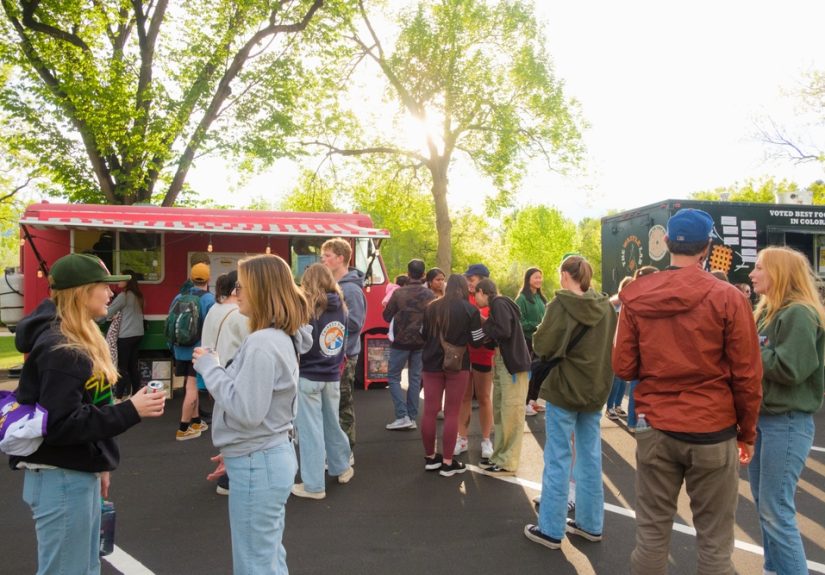
Picture a parking-lot scene that feels almost unreal: bright string lights, a small cluster of staff in scrubs, and the smell of
actual cooked food cutting through the antiseptic air of a night shift.
The line moves fastbecause nobody has time for an artisanal 45-minute wait. The truck window opens, and the person inside has the
friendly efficiency of someone who understands hospitals. You order something warm with protein. You get a drink that isn’t another
coffee. You take the first bite and feel your shoulders drop half an inch.
And here’s the weird part: nothing about your shift has changed. The call lights still exist. The charting still waits.
Yet you feel more capable of dealing with it.
That’s what a well-timed food option can do. It doesn’t solve hospital chaos. It helps you survive it.
What hospitals are doing: food trucks as a real operational fix
Food trucks on hospital campuses aren’t just a cute morale boost for a photo op (though yes, the photos are always adorable).
In several U.S. hospital settings, they’ve been used in practical ways:
- Late-night service to cover hours when cafeterias close and third-shift staff need real food.
- Employee appreciation events (Nurses Week, Hospital Week, resident wellness activities).
- Community-building that gives exhausted teams a shared “tiny good thing” in the middle of hard work.
For example, some major medical centers host multiple food trucks during Nurses Week, rotating vendors across campus days.
Other hospital systems highlight food trucks as part of wellness activities for trainees and staff. The common thread:
they’re meeting people where they actually areat work, on odd hours, with limited time.
What makes a hospital food truck actually helpful (not just a cute idea)
If the goal is “save the shift,” the details matter. A food truck works best when it’s designed for hospital reality.
Timing that matches the chaos
The best window often isn’t lunchtime; it’s the dead zone when cafeteria doors are locked and the unit is still sprinting.
Think late evening through early morning for night shift, or that awkward late-afternoon stretch when everyone’s running behind.
Speed, payment, and line flow
Nobody wants a line that requires a triage nurse. The smoothest setups use simple menus, fast ordering, and payment methods that
don’t require three separate apps, a carrier pigeon, and your childhood PIN number.
Menus that respect the job
“Comfort food” is popular for a reasonstress makes people crave warm, filling meals. But the win is having options:
something hearty, something lighter, something high-protein, something vegetarian, something that won’t ruin you if you have to
sprint immediately afterward.
Budget-friendly choices
If you want broad participation, price matters. Some hospitals subsidize meals for staff during special events, offer vouchers, or
coordinate discounts. Even a small price break can turn “I can’t justify it” into “Okay, I can do this.”
Allergies, culture, and access
Hospitals are diverse workplaces. A smart vendor lineup includes options that work for different dietary needs and preferences.
Labeling matters. So does a layout that’s accessible and close enough for someone who can only step out for 8 minutes.
How a food truck supports safety and performance (without pretending it fixes everything)
A warm meal isn’t a staffing plan, and a taco can’t replace a 30-minute uninterrupted break. But here’s why the food truck can still
meaningfully help:
-
It reduces “food friction.” Less time searching for food means more time resting (even briefly) and more time
getting back to the floor without running on fumes. - It nudges hydration. People who eat tend to drink. People who only drink coffee tend to… drink more coffee.
-
It creates a natural reset point. That moment in lineoutside the unit, shoulders down, laughing with a coworker
functions like a micro-break your nervous system recognizes. - It signals that staff needs are real. Support isn’t just posters about wellness; it’s practical access to basics.
Safety literature and workforce guidance consistently emphasize that fatigue and long work hours can negatively affect well-being and
performance. In that context, making it easier for staff to eat and recover during a shift is not “extra.”
It’s infrastructure.
Steal these “break hacks” for the nights when the truck isn’t there
Food trucks are great, but you can’t schedule your hunger around a vendor calendar. Here are realistic tactics that fit hospital life:
Build a “chaos-proof” snack kit
Keep a small stash that can survive a locker and still be edible: nuts, crackers, tuna packets, jerky, applesauce pouches,
shelf-stable protein drinks, instant oatmeal cups. Not glamorous, extremely effective.
Pair caffeine with water like it’s policy
Coffee can help alertness, but it’s not a substitute for hydration. A simple rule many shift workers use:
if you grab caffeine, grab water too.
Aim for protein + fiber when possible
You don’t need a perfect diet at 2 a.m. You need something that lasts. Protein and fiber tend to stick around longer than a sugar-only
snack.
Use “micro-meals” instead of waiting for a mythical lunch break
If you can’t take 30 minutes, take 5 minutes twice. A half sandwich now and a yogurt later is still better than nothing.
The human side: why a parking-lot taco can feel like a lifeline
The most surprising benefit of the food truck isn’t the food. It’s the moment of normal life it brings into a place that can feel
nonstop intense.
Hospital work can be emotionally heavy and cognitively demanding. Burnout discussions from major U.S. health organizations and
academic groups point to system-level stressorsworkload, hours, and resource constraintsrather than framing the problem as a
personal weakness. In that environment, small structural supports matter.
A food truck is a tiny piece of infrastructure that says: “We noticed you’re here at weird hours doing hard work. You deserve access
to a real meal.” That message lands.
Bottom line
In a chaotic hospital shift, the food truck didn’t magically lower the patient census or make charting disappear.
It did something more realistic: it kept a tired team fueled, gave them a brief moment of calm, and helped them finish strong
instead of limping across the finish line.
Sometimes “saving the shift” looks like dramatic heroics. Sometimes it looks like a warm meal handed through a window at midnight,
with a side of, “Hang in thereyou’re doing a lot.”
Extra experiences: 500 more words from the trenches
1) The ED micro-miracle. The emergency department is buzzing, and you’re three patients behind where you want to be.
A coworker mouths, “Food truck!” like they just spotted a rare bird. You try to say nobecause of course you dobut your stomach
votes “yes” louder. You walk outside and realize the air feels different. No monitors. No call lights. Just a line of tired people
making decisions like “chicken bowl” versus “tacos,” which is honestly the most control anyone has had in hours. You eat in the
corner of the ambulance bay, standing up because that’s the law of nature, and still it helps. When you go back in, you’re not a
new person, but you’re a more functional one. Your brain stops buffering. You remember the one thing you kept forgetting.
You answer the next question without snapping. That’s a win.
2) ICU brain fog, clearedslightly. In critical care, “quiet” can be the scariest word, because it usually means
something is about to happen. You’ve been charting forever, your eyes feel gritty, and you realize you’ve been sipping the same
cold coffee since last Tuesday. A colleague brings back a warm wrap from the food truck and you take two bites like someone who has
never eaten before. You also drink waterreal waterbecause the wrap makes you thirsty. A small thing happens next: the headache
eases. You stop feeling dizzy when you stand. You re-check a medication calculation and feel confident instead of shaky.
It’s not magic; it’s calories, hydration, and a brief pause. But in a place where tiny details matter, “not shaky” is a big deal.
3) The resident who finally sits down. On call, you’ve been living on hallway granola bars and the kind of snacks
patients’ families offer (bless them, always). You hear about the food truck and think, “I don’t have time.” Then you remember you
also don’t have time to make mistakes, and fatigue is not a flex. You go anyway. In line, someone from another unit cracks a joke
about how the hospital should put the truck on the org chart. Everyone laughsreal laughter, not the thin kind. You take your food
back inside, sit for four minutes, and eat like a civilized person. When you stand up, you realize your shoulders were practically
earrings. You walk back to the floor feeling a fraction more human. The shift is still hard. But now you have fuel, a clearer head,
and the memory that support can be practicalnot just inspirational posters that say “Wellness” next to a stock photo of a mountain.