Table of Contents >> Show >> Hide
- What “Eyestrain” Usually Means (And Why It Happens)
- What an Eye Patch Actually Does to Your Vision
- When Eye Patches Are Actually Used (Legit Medical Reasons)
- So…Can You Wear an Eye Patch for Eyestrain?
- What Works Better Than an Eye Patch for Eyestrain
- If You Still Want to Try a Patch: A Safer “Test Drive”
- When Eyestrain Is a Red Flag: Don’t “DIY” These Symptoms
- FAQ: Quick Answers People Actually Want
- Real-World Experiences: What People Report When They Try an Eye Patch for Eyestrain (Plus What Actually Helped)
- Conclusion
- SEO Tags
If your eyes feel like they just ran a marathon after eight hours of screens, it’s tempting to reach for a dramatic solution.
Enter: the eye patch. It’s part pirate, part “fashion statement,” and part “please don’t ask me to join another Zoom call.”
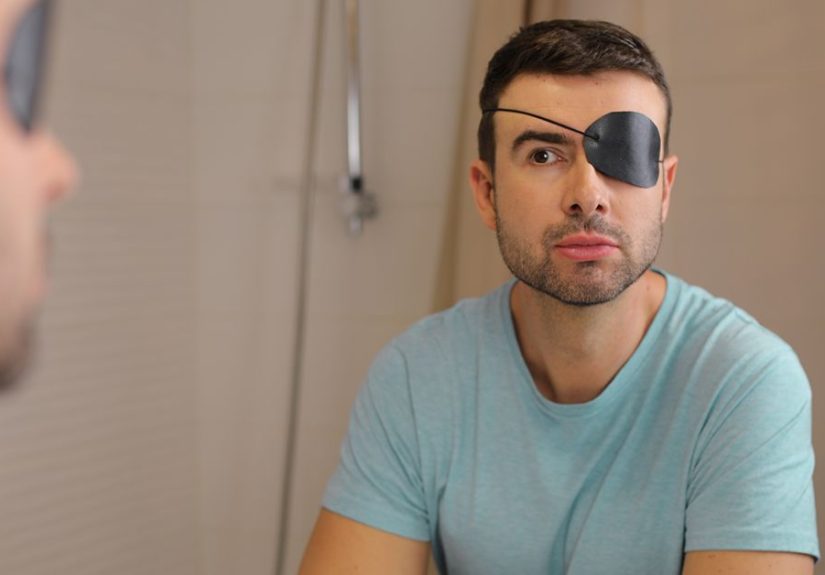
But can you actually wear an eye patch for eyestrainand will it help?
Here’s the honest, eye-doctor-approved vibe: you can wear one, but for typical eyestrain (especially digital eye strain),
it’s usually not the fix you’re looking for. Sometimes it can even make things worseor at least make you walk into a doorframe
while you’re “testing” it. Let’s break it down with real-world logic, practical tips, and a pinch of humor (because squinting at screens is already bleak).
What “Eyestrain” Usually Means (And Why It Happens)
Eyestrain is a catch-all term people use when their eyes feel tired, sore, dry, blurry, or headache-y after intense visual workthink:
staring at a laptop, driving long distances, binge-reading, or doing detailed tasks like sewing or gaming.
Digital eye strain (sometimes called computer vision syndrome) is especially common because screens encourage two bad habits:
staring without blinking and focusing up close for too long.
Common eyestrain symptoms
- Dry, burning, watery, or irritated eyes
- Blurred or fluctuating vision (especially after screen time)
- Headaches (often around the forehead/temples)
- Light sensitivity
- Neck/shoulder tension (your posture is part of the plot)
- Trouble refocusing from near to far
Important: eyestrain is often temporary and improves with rest and better habits. But if symptoms are persistent or severe,
it can be a sign of something elselike uncorrected vision needs, dry eye disease, binocular vision issues, or (rarely) other conditions
that deserve an eye exam.
What an Eye Patch Actually Does to Your Vision
An eye patch blocks vision from one eye. That’s it. It doesn’t “massage” the eye muscles, it doesn’t hydrate your tear film,
and it definitely doesn’t negotiate with your inbox to send fewer emails.
What it does do is remove binocular vision (both eyes working together), which changes how your brain processes depth, alignment,
and visual comfort. In certain situationslike double visionthis can be genuinely helpful because it removes the second image.
But for typical eyestrain, blocking one eye is like turning off one speaker because the music is too loud. You still have the same song,
you’re just hearing it in mono.
Why that matters
-
Your focusing system still works. The open eye still has to focus up close on screens and text.
So if your eyestrain is mainly from near focusing fatigue, a patch doesn’t solve the core issue. -
Your alignment system gets “hacked.” If your strain comes from eye teaming problems (how your eyes align together),
blocking one eye may reduce the effort of keeping images fusedsometimes making you feel better short-term. - You lose depth perception. This can cause its own discomfort, clumsiness, or nauseaespecially if you move around.
When Eye Patches Are Actually Used (Legit Medical Reasons)
Eye patches aren’t a quirky wellness trend. They’re a toolmost often used for specific diagnoses. Here are the big ones:
1) Amblyopia (“lazy eye”) treatment in kids
This is the classic: patch the stronger eye so the brain is forced to use the weaker eye, strengthening vision over time.
It’s usually guided by a pediatric ophthalmologist with a specific schedule, because too much patching can create new problems.
2) Double vision (diplopia) or certain nerve palsies
If your eyes aren’t aligned and you’re seeing two images, covering one eye can immediately eliminate the doubling.
This can be used as a short-term coping strategy while the underlying cause is diagnosed or treated.
Sometimes clinicians recommend patching part-time depending on the case.
3) Special situations: light sensitivity, post-procedure protection, or temporary symptom control
Some people use a patch (or a lens occluder/filter on glasses) for temporary relief with severe photophobia or neurological symptoms.
But that’s typically individualized and supervisedbecause the goal is symptom control, not “curing eyestrain.”
A quick myth-buster: patches for corneal scratches
Eye patching used to be suggested for corneal abrasions (scratches). Modern evidence and clinical guidance have shifted away from routine patching
in many cases, because it often doesn’t improve outcomes and can be uncomfortable. Bottom line: don’t self-treat eye injuries with a patch.
Get evaluated.
So…Can You Wear an Eye Patch for Eyestrain?
Yes, you can. But for typical digital eye strain, it’s usually not recommended as a go-to solution.
Here’s the practical breakdown:
When an eye patch might help (select cases)
- Eyestrain caused by double vision (even mild or intermittent). Blocking one eye can reduce the stress of trying to fuse two images.
-
Eyestrain linked to binocular vision problems (eye teaming issues). A patch may reduce short-term discomfort,
though it doesn’t correct the underlying problem. - Severe light sensitivity where reducing light input helps symptomsthough tinted lenses are often a better first-line option.
Why it often doesn’t help (and can backfire)
-
It doesn’t fix dryness. Digital eye strain frequently overlaps with dry eye symptoms triggered by reduced blinking.
A patch doesn’t make your tear film more stable. -
It doesn’t fix your prescription. If your strain is from uncorrected nearsightedness, astigmatism,
presbyopia, or the wrong computer glasses, patching won’t address the root cause. -
It can create new discomfort. Loss of depth perception, balance weirdness, headaches, and motion nausea are real.
Your brain likes having two matching camera angles. -
It can hide a symptom you should investigate. If patching “solves” your problem because you had double vision,
that’s a cluenot a finish line. Double vision deserves medical evaluation. - Kids need extra caution. Unsupervised patching schedules in children can risk creating or worsening vision development issues.
Translation: If you’re thinking of patching because your eyes feel tired after screens,
there are better, safer, more effective strategies that don’t involve walking around like a low-budget movie villain.
What Works Better Than an Eye Patch for Eyestrain
The best eyestrain relief is usually boring. (But boring is powerful.)
These strategies are widely recommended by eye-health organizations and major medical centers because they target the real causes:
focusing fatigue, dry eye symptoms, glare, and poor ergonomics.
1) The 20-20-20 rule (classic, simple, effective)
Every 20 minutes, look at something about 20 feet away for 20 seconds. This helps your focusing system relax and reminds you to blink.
Bonus: it also gives your brain a micro-vacation from spreadsheets.
2) Blink like you mean it (and consider lubricating drops)
When you stare at screens, your blink rate often dropsmaking eyes feel dry, gritty, or watery.
Try intentional blinking during intense tasks. If dryness is a big part of your symptoms, preservative-free artificial tears can help,
but frequent symptoms should be discussed with an eye care professional to rule out dry eye disease.
3) Fix your setup: distance, height, glare, and lighting
- Distance: Keep your monitor roughly an arm’s length away (adjust based on comfort and text size).
- Height: Position the screen so your gaze is slightly downward (often more comfortable and can reduce dryness).
- Glare: Reduce reflections; consider a matte screen filter if needed.
- Lighting: Match screen brightness to room lighting; avoid a “spotlight screen in a dark cave” situation.
- Text size: Increase font size and contrast so you’re not squinting.
4) Consider task-specific glasses (especially after 40)
If you’re squinting to focus up close, or you’re in that “my arms aren’t long enough” era, you may need a prescription optimized for computer distance.
Some people do better with “computer glasses” than with generic solutions.
5) Don’t over-credit blue light glasses
Blue light gets blamed for everythinglike the raccoon in the trash can. But many ophthalmology sources emphasize that digital eye discomfort
is usually driven more by how we use screens than by blue light itself.
If sleep is the issue, adjusting screen habits at night may help more than specialty lenses.
If You Still Want to Try a Patch: A Safer “Test Drive”
If you’re curious (or desperate) and want to experiment safely, treat it like a short, cautious trialnot an all-day lifestyle.
And if patching helps a lot, that’s a sign you should get evaluated for binocular vision issues or double vision.
Do this
- Use it for short periods (think minutes, not hours) during seated tasks.
- Try an occluder/filter on glasses instead of a tight patch if you’re sensitive or prone to skin irritation.
- Stop immediately if you feel dizzy, nauseated, headache-y, or more strained.
- Keep it clean (reused fabric patches can irritate skin and eyes).
Don’t do this
- Don’t drive, bike, or do risky activities with one eye covered (depth perception matters).
- Don’t patch a child’s eye without medical guidance.
- Don’t patch sudden-onset double vision and call it “fixed.” Get checked.
- Don’t use a patch for eye pain, injury, redness, discharge, or sudden vision changesthose require evaluation.
When Eyestrain Is a Red Flag: Don’t “DIY” These Symptoms
Most eyestrain is annoying but not dangerous. Still, some symptoms should prompt medical attentionespecially if they’re new, intense, or persistent:
- Sudden vision loss or a dramatic change in vision
- Eye pain (not just “tired” eyes)
- New double vision
- Flashes of light, a shower of floaters, or a curtain-like shadow in vision
- Severe headache with vision symptoms
- Redness with discharge, swelling, or light sensitivity
If any of these show up, skip the patch experiment and call an eye care professional.
FAQ: Quick Answers People Actually Want
Will an eye patch “rest” my eye?
It rests the patched eye from seeing, but your open eye still does the focusing work.
For digital eye strain, the bigger “rest” usually comes from breaks, blinking, and better ergonomics.
Can wearing an eye patch make eyestrain worse?
It canespecially if it triggers dizziness, headaches, or visual discomfort from losing binocular vision.
It may also encourage you to ignore the real cause (like needing a new prescription).
Is it okay to wear an eye patch at the computer for a little while?
Short, cautious use while seated is generally safer than wearing it all daybut it’s still not a standard eyestrain treatment.
If it helps a lot, consider an eye exam to check for alignment or focusing issues.
What if my eyestrain comes with double vision?
Covering one eye can reduce symptoms temporarily, but double vision should be evaluated to identify the cause and appropriate treatment.
Real-World Experiences: What People Report When They Try an Eye Patch for Eyestrain (Plus What Actually Helped)
The stories below are drawn from common patterns people report to eye clinics and in everyday lifethink of them as realistic “case-style” examples,
not medical advice for your specific situation. The goal is to show how eye patch experiments often play out in the real world.
The Spreadsheet Marathoner
One office worker tried an eye patch during a brutal end-of-quarter deadline. For the first few minutes, it felt oddly soothinglike turning down the volume
on visual chaos. Then the plot twist arrived: they stood up to grab coffee and immediately felt off-balance. Depth perception vanished, hallway navigation became
an extreme sport, and the “pirate chic” vibe was less fun when they bonked a shoulder on a doorframe.
What actually helped long-term: they adjusted monitor height, bumped up font size, reduced glare, and set a timer to follow the 20-20-20 rule.
Their eyes felt less dry once they consciously blinked more and used lubricating drops occasionally during heavy screen days.
The Gamer Who Thought It Was Just “Fatigue”
A gamer noticed headaches and eye tiredness after fast-paced games. They tried patching one eye andsurpriseit helped a lot. That sounds like a win,
but it was also a clue. When they eventually got checked, the exam suggested a binocular vision issue that made the eyes work overtime to keep images aligned,
especially under visual stress. The patch “worked” because it removed the need to fuse images from both eyes.
The better solution: updated prescription and a targeted vision plan (sometimes called prism correction or specific visual therapy strategies, depending on the case).
Their symptoms improved without sacrificing depth perceptionor gaming performance.
The Contact Lens Commuter
Another person wore contact lenses from early morning to late night and complained that screens felt “sandpapery.” They tried patching, hoping it would “rest”
the eye. It didn’t. The open eye still felt dry, and the patch didn’t address the burning sensation at all.
What helped: shorter contact lens wear time on screen-heavy days, better lens hygiene, occasional glasses breaks, and discussing dry eye symptoms during an eye exam.
Once dryness was managed, the “eyestrain” mostly disappeared.
The Zoom-All-Day Professional
Someone with back-to-back video meetings tried a patch after reading a tip online. They reported a brief sense of relief, but also felt more tired afterward
because one eye was doing all the focusing for hours. (It’s like making one teammate carry the whole group project.)
What worked better: computer-specific glasses, a larger monitor at a more comfortable distance, and lighting changes to cut glare. They also started “audio-only”
breaks when possiblecamera off, eyes off-screen, and a short walk. Their headaches dropped dramatically.
The Parent Who Considered Patching for a Child’s “Tired Eyes”
A parent noticed their child rubbing their eyes after tablets and wondered if patching would help. This is where caution is crucial: patching is a real medical
treatment for amblyopia in children, but it’s not a casual DIY solution for screen fatigue. Random patching schedules can create unintended visual problems.
What helped instead: screen breaks, outdoor time, better lighting, and a pediatric eye exam to check whether the child needed vision correction.
The eye rubbing turned out to be mostly dryness and fatigue from long near tasksnot something an eye patch should target.
The common thread across these experiences: if patching “helps,” it often points to an underlying issue (like alignment/double vision),
and if it doesn’t help, it’s because eyestrain is usually driven by dryness, focusing fatigue, ergonomics, or an outdated prescription.
In both cases, the most reliable path is the unglamorous one: adjust habits, optimize your setup, and get an exam if symptoms persist.
Conclusion
Wearing an eye patch for eyestrain is a bit like putting tape over the “check engine” light. It might make you feel better temporarilyespecially if your strain
is tied to double vision or eye alignment effortbut it doesn’t usually solve the real cause of digital eye strain.
If your eyes are tired from screens, you’ll usually get better results from the 20-20-20 rule, blinking more, lubricating drops when appropriate,
reducing glare, improving your workstation setup, and making sure your prescription matches your daily tasks. And if an eye patch seems to help a lot,
that’s your cue to get checkedbecause your eyes may be working harder than they should.