Table of Contents >> Show >> Hide
- First: A Quick Reality Check (So You Don’t Waste Money)
- 10 Alternatives to Straighten Teeth Without Traditional Braces
- 1) Orthodontist-Supervised Clear Aligners (The Most Popular Braces Alternative)
- 2) Dentist- or Orthodontist-Guided “Short Series” Aligners (A.K.A. Touch-Up Aligners)
- 3) Spring Aligners / Spring Retainers (Tiny Fixes, Not Big Moves)
- 4) Removable Front-Tooth Appliances (Like an Inman-Style Aligner)
- 5) Palatal Expanders (For Growing Jaws: Kids & Teens)
- 6) Functional Appliances (Jaw Guidance for Overbites in Growing Patients)
- 7) Porcelain Veneers (Cosmetic “Instant Orthodontics” for Mild Issues)
- 8) Composite Bonding (Fast, Flexible, and Great for Small Gaps)
- 9) Enameloplasty (Tooth Contouring) for Micro-Adjustments
- 10) Crowns (and Other Restorations) When Shape Is the Main Problem
- What to Avoid (Because Your Teeth Are Not a DIY Craft Project)
- How to Choose the Right Alternative (A Simple Decision Guide)
- Small Habits That Protect Your Results (No Matter Which Option You Choose)
- Conclusion
- Bonus: Real-World Experiences (What People Commonly Notice During These Options)
Want straighter teeth but the idea of traditional metal braces makes you feel like you’re about to star in a 2004 teen movie?
Good news: in 2025, there are plenty of ways to improve your smile without going full “tin grin.”
Even better news: some options are truly orthodontic (they move teeth), while others are cosmetic “illusionists” (they make teeth look straighter).
This guide breaks down 10 legitimate alternatives to braces, who they’re best for, what they can (and can’t) fix,
and how to avoid the sketchy shortcuts that can turn “glow-up” into “why does my bite feel weird now?”
First: A Quick Reality Check (So You Don’t Waste Money)
“Straight teeth” can mean two different goals:
- Functional straightening: actually moving teeth and correcting bite issues (crowding, spacing, overbite, crossbite).
- Cosmetic straightening: changing the appearance of teeth (shape, edges, small gaps, mild unevenness).
The smartest first step is a professional exam. Why? Because orthodontic treatment isn’t just about aestheticshealthy alignment helps
chewing, cleaning, and long-term wear on your teeth. If your bite is off, “cosmetic-only” fixes can look great in photos but feel wrong
when you actually use your mouth for important things… like eating.
10 Alternatives to Straighten Teeth Without Traditional Braces
1) Orthodontist-Supervised Clear Aligners (The Most Popular Braces Alternative)
Clear aligners are custom plastic trays that gradually move teeth over time. You swap sets as you progress.
They’re a go-to choice for many teens and adults because they’re discreet and removable.
- Best for: mild to moderate crowding, spacing, and many bite issues.
- Why people like it: nearly invisible, easier to brush/floss than braces.
- Watch-outs: you must wear them consistently; skipping time slows results and can derail the plan.
Example: If your front teeth are mildly crowded and you’ve got a small gap on one side, clear aligners can often address both
especially when guided by an orthodontist who can adjust the plan as your teeth respond.
2) Dentist- or Orthodontist-Guided “Short Series” Aligners (A.K.A. Touch-Up Aligners)
Sometimes you don’t need a full course of alignersjust a short “refresher.” This is common if you had braces or aligners years ago and
your teeth shifted (orthodontic relapse). A limited set of trays can nudge things back.
- Best for: small shifts after past orthodontic treatment.
- Why people like it: usually shorter than comprehensive treatment.
- Watch-outs: if your bite changed significantly, you may need a more complete plan.
3) Spring Aligners / Spring Retainers (Tiny Fixes, Not Big Moves)
Spring aligners (often called spring retainers) are removable appliances designed to correct very minor misalignmentthink “one tooth
decided to wander off a millimeter or two.”
- Best for: extremely small corrections, especially in the front teeth.
- Why people like it: lower cost and less involved than full orthodontic treatment.
- Watch-outs: limited power; not for major crowding, rotated teeth, or bite issues.
Reality check: If your teeth need a “course correction,” this can help. If they need a “plot twist,” you’ll need aligners or other orthodontic care.
4) Removable Front-Tooth Appliances (Like an Inman-Style Aligner)
Some removable orthodontic appliances are designed specifically to align the front teeth quickly. They can be useful for cosmetic alignment
(the “smile zone”), especially when the back teeth and bite are already fairly stable.
- Best for: mild anterior crowding/spacing when your bite is otherwise acceptable.
- Why people like it: targeted, removable, often faster for front teeth.
- Watch-outs: not for complex bite correction; must be planned and monitored professionally.
5) Palatal Expanders (For Growing Jaws: Kids & Teens)
If the upper jaw is too narrow, there may not be enough space for teeth to line up properly. A palatal expander gradually widens the upper arch,
which can help create room and correct crossbitesespecially in children and teens whose jaws are still developing.
- Best for: narrow palate, crossbite, crowding tied to limited upper-arch space.
- Why people like it: addresses the “space problem” at the source (the jaw), not just the teeth.
- Watch-outs: adults may need different approaches because bones are fully formed.
6) Functional Appliances (Jaw Guidance for Overbites in Growing Patients)
Functional appliances use jaw posture and muscle forces to guide growth and improve bite relationshipscommonly used for certain overbites in
adolescents. Names you might hear include Twin Block or Herbst-style appliances.
- Best for: bite correction in growing kids/teens (especially certain Class II patterns/overbites).
- Why people like it: can reduce how much tooth movement is needed later by improving jaw relationships early.
- Watch-outs: timing matters; these are most effective during growth phases.
7) Porcelain Veneers (Cosmetic “Instant Orthodontics” for Mild Issues)
Veneers are thin shells placed on the front of teeth to change their appearanceshape, size, and color. They don’t move teeth, but they can
camouflage minor crookedness, small gaps, or uneven edges so your smile looks straighter.
- Best for: mild alignment issues, small gaps, uneven tooth shapes, discoloration that won’t whiten evenly.
- Why people like it: dramatic cosmetic change in a relatively short time.
- Watch-outs: often involves removing some enamel; they’re not reversible in the same way bonding can be.
Example: If you have slightly rotated front teeth but your bite is stable, veneers can make them appear alignedwithout months of tooth movement.
8) Composite Bonding (Fast, Flexible, and Great for Small Gaps)
Dental bonding uses tooth-colored resin to change the shape or size of a toothhelpful for closing gaps, smoothing chipped edges, or making
teeth look more symmetrical. It’s often done in a single visit and typically requires minimal (or no) enamel removal.
- Best for: small gaps, minor shape issues, “one tooth looks shorter,” chips, slight unevenness.
- Why people like it: quick, generally more affordable than veneers, and often reversible.
- Watch-outs: resin can stain/chip over time; you may need touch-ups down the line.
9) Enameloplasty (Tooth Contouring) for Micro-Adjustments
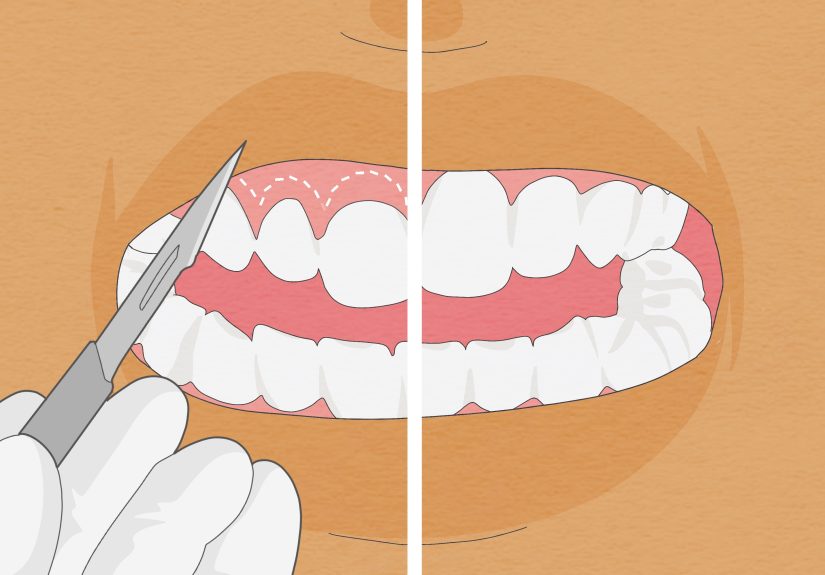
Tooth contouring removes tiny amounts of enamel to smooth edges and improve symmetry. It won’t fix true crowding, but it can make
slightly uneven teeth look more alignedespecially when the issue is shape, not position.
- Best for: small chips, pointy edges, slight uneven lengths, minor “visual crookedness.”
- Why people like it: fast, conservative, no “hardware” in your mouth.
- Watch-outs: enamel doesn’t grow back; it should only be done by a professional.
10) Crowns (and Other Restorations) When Shape Is the Main Problem
If a tooth is severely worn, broken, or misshapen, a crown can restore normal shape and functionand sometimes improve the appearance of alignment
as part of a bigger restorative plan. This isn’t an orthodontic solution, but it can be a practical “straight-looking” fix in the right situation.
- Best for: damaged or structurally compromised teeth where strength/function is the priority.
- Why people like it: combines cosmetic improvement with restoration.
- Watch-outs: more invasive than bonding/contouring; usually not the first choice for purely cosmetic concerns.
What to Avoid (Because Your Teeth Are Not a DIY Craft Project)
If you’ve seen “at-home teeth straightening hacks” onlinerubber bands, filing teeth, boil-and-bite trays, random gadgetsplease treat that content
the way you treat expired sushi: with respectful distance.
- Don’t file your teeth at home. Even reputable medical sources warn against DIY enamel removal because it’s permanent.
- Be cautious with unsupervised aligners. Moving teeth without proper diagnosis and monitoring can create bite problems and gum issues.
- Skip “unlicensed cosmetic dentistry” trends. If someone is offering veneers in a non-clinical setting, that’s not a bargainit’s a risk.
How to Choose the Right Alternative (A Simple Decision Guide)
Use this as your quick filter before you book anything:
| What you want | Best place to start | What to ask |
|---|---|---|
| Teeth actually moved into better alignment | Orthodontist-supervised clear aligners | “Is my case mild, moderate, or complex?” |
| Fix small relapse after prior treatment | Short-series aligners or minor orthodontic appliance | “Can a touch-up plan work, or do we need comprehensive care?” |
| Look straighter fast (minor issues) | Bonding, veneers, contouring | “What’s reversible? What requires enamel removal?” |
| Create more room in a narrow upper jaw | Palatal expander (often for kids/teens) | “Is growth timing a factor for me?” |
| Correct an overbite during growth years | Functional appliance evaluation | “Is a functional appliance appropriate for my bite pattern?” |
Small Habits That Protect Your Results (No Matter Which Option You Choose)
- Take hygiene seriously. Aligners cover teeth for much of the day, so brushing and cleaning trays matters.
- Wear retainers as directed. Teeth can drift over time; retention is how you keep your hard-earned results.
- Don’t ignore “my bite feels off.” That’s your mouth’s way of filing a complaint.
- Keep regular checkups. Small issues are cheaper (and easier) when caught early.
Conclusion
If you want to straighten your teeth without braces, you’ve got real optionsranging from orthodontist-supervised clear aligners (the true tooth-movers)
to cosmetic solutions like bonding, veneers, and contouring (the visual wizards).
The best choice depends on whether you need movement (alignment and bite) or makeover (shape and symmetry).
The winning strategy is simple: get a professional assessment, pick the least invasive option that genuinely meets your goal, and protect your results
with good hygiene and retention. Your future smile will thank youquietly, because it doesn’t have to shout over a mouthful of metal.
Bonus: Real-World Experiences (What People Commonly Notice During These Options)
Let’s talk about the part most “perfect smile” ads skip: what it actually feels like to go through teeth straightening without braces.
Everyone’s experience is different, but certain patterns pop up again and again in patient stories and day-to-day life.
Clear aligners often come with a short adjustment phaseusually the first few days of a new traywhere teeth feel “pressure-y.”
Not sharp pain for most people, more like your teeth are being politely but firmly asked to move houses. Many users say the biggest surprise is
how much routine matters: the people who love aligners tend to be the people who are consistent. The people who hate aligners often discover they’re
“snackers” who didn’t realize how frequently they eat until aligners made every snack feel like a mini dental appointment.
Another common aligner experience: the psychological boost of seeing progress early. Even small improvementslike one front tooth rotating into place
can make people feel more confident in photos, on video calls, and in everyday conversations. On the flip side, some people feel impatient if their biggest
issue is happening later in the plan. (Translation: “Why is the tooth I care about the most taking the scenic route?”)
With bonding, people often describe it as the “wow, that’s it?” procedure. Because it can be done quickly, the transformation feels immediate:
a gap looks smaller, edges look more even, and suddenly your smile seems more balanced. Many patients love that it’s conservative and doesn’t always require
drilling enamel away. But bonding has a “real life” side, tooespecially if you drink lots of coffee or tea. People who stay happiest long-term are usually the
ones who treat bonding like nice shoes: it’s durable, but you don’t use it to open packages, bite pens, or chew ice like you’re auditioning for a crunching
championship.
Veneers tend to bring the biggest “new smile” momentpeople often say it feels like getting a whole new set of front teeth in the best way.
The confidence jump can be huge, particularly for those who’ve spent years hiding their teeth in photos. That said, patients also commonly mention the
importance of choosing a skilled, conservative dentist and being clear about the look you want. “Natural but improved” is a very different target than
“bright Hollywood uniform,” and your satisfaction often depends on those expectations matching the final result.
For palatal expanders and functional appliances (more common in growing kids/teens), the experience is usually more about
adapting to something in your mouthspeech changes for a bit, extra saliva, learning to eat without feeling clumsyand then realizing you adjusted faster than
you expected. Parents often report that the early days are the most annoying, and then it becomes normal. Many teens describe it as “awkward but worth it”
when they later see improved bite fit or more room for teeth.
Across all methods, the most consistent “best experience” factor is having a provider who monitors progress and answers questions. Teeth are living structures,
and bodies don’t always follow the textbook perfectly. People who feel supportedwho can say, “This feels off,” and get it checkedtend to have smoother journeys.
Final note: The best alternative to braces is the one that fits your mouth, your lifestyle, and your long-term healthnot just your timeline.
A straighter smile is great. A straighter smile that still bites comfortably is even better.