Table of Contents >> Show >> Hide
- What makes toy storage “hidden” (and why it matters)
- A quick 10-minute setup that makes every idea work better
- 36 Hidden Toy Storage Ideas to Keep Your Living Room Tidy
- 1. Storage ottoman that looks like real furniture
- 2. Flip-top storage bench under a window
- 3. Coffee table with hidden drawers
- 4. Trunk-style coffee table
- 5. Hollow end tables
- 6. Side table with a drawer plus a lidded basket underneath
- 7. Console cabinet with doors
- 8. TV stand with sliding doors
- 9. “Fauxdenza” floating credenza
- 10. Built-in cabinets under or beside the fireplace
- 11. Behind-the-sofa console table with baskets underneath
- 12. Two matching lidded baskets as “decor”
- 13. A basket tower (vertical storage that looks intentional)
- 14. A rattan cabinet that “breathes” (but hides)
- 15. Window seat with drawers
- 16. Banquette seating with hinged seats
- 17. Under-sofa rolling bins
- 18. A sofa or sectional with hidden storage
- 19. Add drawers beneath a couch (DIY or furniture upgrade)
- 20. A convertible sofa that stores bedding (and toys)
- 21. “Toy closet” hidden by a curtain panel
- 22. Cabinet doors added to cube storage
- 23. Modular bin system that grows with your kids
- 24. A “toy drawer” inside an entry console
- 25. A hidden bin inside a media cabinet
- 26. Wall-mounted cabinets above kid height
- 27. Floating shelves with matching boxes
- 28. A peg rail with hanging bins (vertical, flexible, cute)
- 29. Over-the-door organizer inside a nearby closet
- 30. A “stuffed animal bean bag” cover
- 31. Rope baskets with handles (then hide them in plain sight)
- 32. A toy hamper that doesn’t scream “toy hamper”
- 33. Repurpose vintage suitcases for toys
- 34. Hollow decor with secret compartments
- 35. A play mat that turns into a bag
- 36. Toy rotation bins stored out of sight
- How to keep it tidy (without becoming the family’s full-time janitor)
- Experience: What works in real living rooms (the kind with crumbs)
- Conclusion
- SEO Tags
If your living room has ever gone from “cozy family hangout” to “LEGO-themed obstacle course” in under 90 seconds, welcome.
The goal here isn’t to banish toys (kids live here too) it’s to hide toy clutter on purpose so your space feels calm,
guest-ready, and still fun.
These hidden toy storage ideas focus on what actually works in real homes: quick cleanups, closed doors, soft landings, and furniture that
multitasks harder than a parent on a Tuesday.
What makes toy storage “hidden” (and why it matters)
“Hidden” storage isn’t just secret compartments (though we love a dramatic reveal). It’s any setup that lets you reset the room fast:
toys go behind doors, under lids, inside baskets with tops, or into pull-out bins that disappear. Bonus points if the storage looks like
grown-up decor.
A quick 10-minute setup that makes every idea work better
- Sort by category: Cars with cars, blocks with blocks, dolls with dolls. One home = fewer “mystery piles.”
- Set container limits: When the bin is full, something rotates out (or gets donated).
- Create a “living room toy menu”: Keep only the favorites here; everything else lives in a closet or bedroom.
- Choose storage kids can use: Low, obvious, and not requiring an engineering degree to open.
36 Hidden Toy Storage Ideas to Keep Your Living Room Tidy
Mix and match. You don’t need all 36 (unless you’re storing toys for your kids and your neighbors’ kids… somehow).
Pick a few that fit your room layout and how your family actually plays.
1. Storage ottoman that looks like real furniture
A storage ottoman is the classic: toss in toys, close the lid, pretend you’re a minimalist. Choose one that can double as a coffee table or extra seat.
2. Flip-top storage bench under a window
A bench gives you seating and a hidden cavity for trucks, dolls, or board games. Put it near the play zone for fast cleanups (and fewer surprise bruises).
3. Coffee table with hidden drawers
Hidden drawers are perfect for flat chaos: cards, tiny figures, crayons, and puzzle pieces. Keep a “small stuff” drawer so it doesn’t migrate into couch cushions.
4. Trunk-style coffee table
Trunks hide bulky toys beautifully. Add a small basket inside to stop everything from becoming one giant “toy soup” situation.
5. Hollow end tables
End tables with removable tops (or hollow bodies) can stash toys, chargers, or art supplies. They’re great for small living rooms because they don’t add visual clutter.
6. Side table with a drawer plus a lidded basket underneath
The drawer holds tiny items; the basket holds the bigger “I’ll clean it later” stuff. The lid keeps it looking intentional instead of “toy tornado aftermath.”
7. Console cabinet with doors
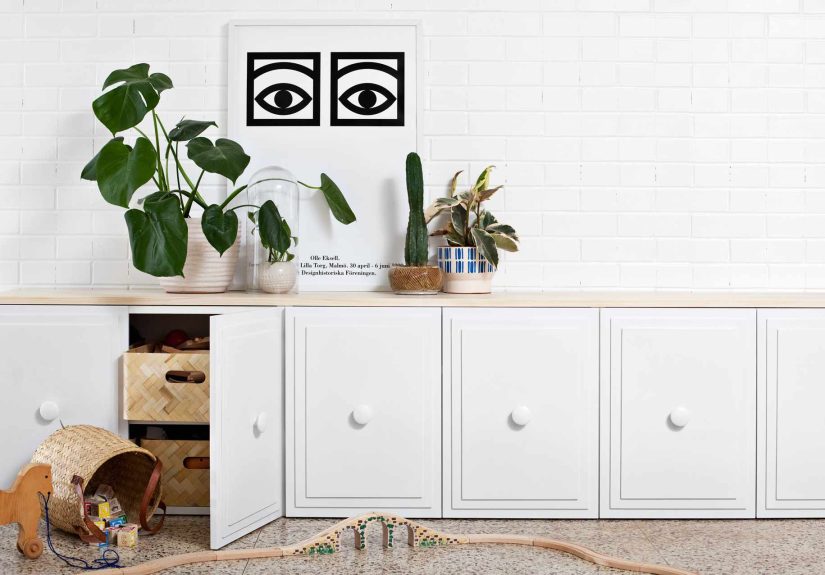
A low console cabinet can swallow board games and toy bins while still looking like adult decor. If it has adjustable shelves, it can evolve as toys change.
8. TV stand with sliding doors
Sliding doors let you hide toys fast without needing clearance to swing doors open. It’s a solid option when the sofa is too close for standard cabinet doors.
9. “Fauxdenza” floating credenza
A wall-mounted cabinet (or DIY fauxdenza) keeps the floor clearer and hides toys or electronics. Pair it with baskets inside for easy sorting.
10. Built-in cabinets under or beside the fireplace
If you have built-ins, designate one side as the “toy zone” behind doors. You’ll keep the focal point pretty while still having kid-friendly storage.
11. Behind-the-sofa console table with baskets underneath
A slim console behind the sofa creates a secret parking spot for baskets. This is especially handy in open-plan homes where the living room is always on display.
12. Two matching lidded baskets as “decor”
Lidded baskets are the fastest way to make the room look tidy. Choose a material that matches your style (woven, rope, fabric) and label the underside of the lid.
13. A basket tower (vertical storage that looks intentional)
A multi-tier basket stand can corral toys while taking up a tiny footprint. It reads like decor, but it works like a clutter vacuum.
14. A rattan cabinet that “breathes” (but hides)
Rattan or cane-front cabinets hide toys while keeping a light, airy look. They’re great if you hate the heavy vibe of bulky, closed storage.
15. Window seat with drawers
Window seats are storage gold: you gain a cozy reading nook and hidden space beneath. Drawers beat lift-tops when you want kids to access one category at a time.
16. Banquette seating with hinged seats
A banquette (even in a corner) can hide toys inside the bench. Use soft bins inside so items don’t slide into unreachable corners.
17. Under-sofa rolling bins
Low-profile rolling bins turn dead space into storage. Use them for toys that naturally belong in the living room (Magnatiles, trains, blocks).
18. A sofa or sectional with hidden storage
Some sectionals lift up or include storage in the chaise. It’s a great home for big items like play blankets, foam mats, and oversized stuffed animals.
19. Add drawers beneath a couch (DIY or furniture upgrade)
Built-in drawers under a bench-style sofa or custom base can hide toys completely. It’s a bigger project, but it’s “where did the clutter go?” magic.
20. A convertible sofa that stores bedding (and toys)
If you already have a sleeper sofa, treat the storage area like a toy vault for special items that only come out sometimes (big sets, seasonal toys).
21. “Toy closet” hidden by a curtain panel
No closet? Fake one. Put shelves or stacked bins in a corner and hang a curtain on a tension rod. It looks soft and intentional, not like a storage unit exploded.
22. Cabinet doors added to cube storage
Cube storage is useful, but it can look busy. Add door inserts so the lower half becomes hidden toy storage while the top stays styled with books or plants.
23. Modular bin system that grows with your kids
Modular frames with removable bins make it easy to re-sort as toys change. When kids are older, the same unit can store art supplies, games, or hobby gear.
24. A “toy drawer” inside an entry console
If your living room connects to the entry, put a shallow toy drawer in your console. This catches the small stuff kids carry everywhere (like pocket dinosaurs).
25. A hidden bin inside a media cabinet
Put a single large bin behind a cabinet door labeled “QUICK CLEAN.” It’s your emergency button when the doorbell rings and you’re holding a banana and a meeting.
26. Wall-mounted cabinets above kid height
Upper cabinets can store messy or grown-up-managed items (paint, slime supplies, tiny pieces). Keep daily-play toys down low; store the chaotic stuff up high.
27. Floating shelves with matching boxes
Floating shelves look modern, and boxes keep the visual noise down. Choose boxes with lids so toys don’t “decorate” the shelf the moment you blink.
28. A peg rail with hanging bins (vertical, flexible, cute)
A rail with hooks can hold small buckets or baskets for dress-up gear, dolls, or toy animals. It’s a tidy wall moment that still feels kid-friendly.
29. Over-the-door organizer inside a nearby closet
Hide a pocket organizer on the inside of a closet door for tiny toys, mini cars, or craft supplies. It’s invisible when the door shuts and wildly satisfying.
30. A “stuffed animal bean bag” cover
Stuffed animals take over fast. A zippered bean bag cover turns them into seating, so the plush mountain becomes an actual functional chair.
31. Rope baskets with handles (then hide them in plain sight)
Soft rope baskets are easy for kids to carry and less likely to scratch floors. If you don’t want them visible, slide them into a cabinet or under a console.
32. A toy hamper that doesn’t scream “toy hamper”
Choose a lidded hamper that matches your decor and call it “blanket storage” in your head. It’s perfect for random plushies, dress-up capes, and foam swords.
33. Repurpose vintage suitcases for toys
Stack suitcases as decor, then hide toys inside. It’s charming and functional and the built-in “lid” keeps everything instantly concealed.
34. Hollow decor with secret compartments
Decorative boxes (and even some “book” storage pieces) can hide tiny toys and game cards. Use this for the stuff that multiplies when you’re not looking.
35. A play mat that turns into a bag
Some play mats cinch into a carry bag: pull the cord, everything scoops up, done. It’s ideal for blocks, trains, or anything with 47 pieces and zero respect for order.
36. Toy rotation bins stored out of sight
Keep only half the toys accessible and store the rest in labeled, hidden containers. Rotate every few months so the room stays lighter and toys feel “new” again.
How to keep it tidy (without becoming the family’s full-time janitor)
The best hidden toy storage system is the one your household will actually use. Two habits make the biggest difference:
- The nightly 8-minute reset: set a timer, toss toys into their “homes,” and stop when the timer ends.
- One-in, one-out: when a new toy arrives, an older toy rotates out or gets donated.
Experience: What works in real living rooms (the kind with crumbs)
Here’s the honest part: most families don’t fail at organization because they lack bins. They fail because the system asks for too much effort at the exact moment everyone is tired.
In many households, the living room is the “everything room” toys, snacks, mail, laundry, mystery socks so toy storage has to be both forgiving and fast.
A common pattern is the “beautiful bin honeymoon.” You buy gorgeous baskets, you label them, you feel like the main character in a home makeover show… and then Tuesday happens.
The baskets fill with the wrong things, the labels become lies, and suddenly you’re sorting tiny plastic food while asking yourself how you got here.
The fix is not stricter rules. The fix is fewer decisions.
The most successful setups tend to include one emergency option (a lidded “quick clean” bin inside a cabinet) plus a simple category system for the toys that live in the room.
For example: one bin for building toys, one for pretend play, one for “quiet stuff” like puzzles or books. That’s it. When storage gets more granular than the way your kids play,
you’ll end up doing the sorting yourself and that’s how organizers turn into resentful wizards guarding the sacred label maker.
Another real-life lesson: kids are more likely to put toys away when the storage is physically easy. Heavy lids, stiff clasps, or bins that require “adult grip strength” are a no.
Soft rope baskets, pull-out drawers, and low shelves win because they’re frictionless. And when your child can clean up without asking for help, you get two miracles at once:
a tidy room and a tiny boost of independence.
Stuffed animals deserve their own paragraph because they behave like a fluffy tide. If plushies are the main clutter villain in your house, the bean-bag-cover trick is a lifesaver:
it stores a surprising amount and converts chaos into furniture. You can also create a “stuffie limit” by choosing one container (a hamper, a basket, or the bean bag) and making it
the official boundary. When it’s full, something gets donated or moved to a bedroom. Kids may protest for about three minutes which is exactly the length of time it takes to distract
them with snacks.
Finally: toy rotation is the secret weapon for households that feel like toys multiply overnight. When you store half the toys out of sight for a while, the living room stays calmer,
cleanup is faster, and kids often play longer with what’s available. The surprise upside is that rotation also reveals what your kids truly love. If something sits untouched through
two rotation cycles, it’s probably not a treasured heirloom it’s clutter wearing nostalgia.
So yes, you can have a living room that looks like adults live there… even if tiny humans are actively turning it into a dinosaur zoo five minutes a day.
Hidden toy storage isn’t about perfection. It’s about making “tidy enough” achievable and keeping your feet safe from the LEGO gods.
Conclusion
The best hidden toy storage ideas blend into your decor, work with your layout, and match your family’s habits. Start with one closed-storage piece (ottoman, bench, or cabinet),
add a fast “quick clean” bin, and build from there. A tidy living room doesn’t require a new personality just a smarter place for toys to disappear.