Table of Contents >> Show >> Hide
- Why measles keeps showing up in adult conversations
- Most adults do NOT need “routine” revaccination
- Then who does need to be revaccinated?
- The “definitely look into it” adult groups
- 1) Adults vaccinated with the inactivated (“killed”) measles vaccine in the 1960s
- 2) Adults with no acceptable evidence of immunity
- 3) International travelers
- 4) College and post-high-school students
- 5) Healthcare personnel (especially in outbreak settings)
- 6) Close contacts of immunocompromised people
- 7) People living with HIV (specific criteria apply)
- 8) Adults in an outbreak area (local health guidance may advise a second dose)
- A practical “Do I need another measles shot?” checklist
- How to find your measles vaccination records (without turning into a detective noir narrator)
- Should you get a “titer” blood test first?
- What “revaccination” usually looks like in real life
- Safety basics: who should NOT get MMR right now?
- Myths that keep adults stuck (and what to do instead)
- Bottom line: yes, some adults should be revaccinatedand it’s usually straightforward
- Experiences That Make This Topic Real (and Not Just Another Checklist)
Quick reality check: If you got the full two-dose MMR series as a kid, you’re probably protected for life. But “probably” is not the same as “definitely,” and a few very specific adult situations really do call for another measles-containing vaccine dose (usually MMR). Think of it less like a “booster craze” and more like updating a safety feature you didn’t realize your model year shipped without.
Measles isn’t a nostalgic childhood storylineit’s a virus that can spread fast, especially when it finds pockets of people who aren’t immune. And in the U.S., the “who’s immune?” question gets surprisingly complicated once you factor in birth years, old vaccine formulations, missing records, certain jobs, travel plans, and outbreaks.
Important note: This article is for education, not personal medical advice. If you’re pregnant, immunocompromised, or have a complex medical history, talk with a clinician before getting any live vaccine, including MMR.
Why measles keeps showing up in adult conversations
Measles is one of the most contagious infections around. In practical terms: if measles is circulating in a community, it doesn’t need a fancy invitationit just needs a gap in immunity and a few shared airspaces (schools, airports, clinics, campuses, crowded events). That’s why public health messaging often sounds intense. It’s not because measles is trendy. It’s because measles is efficient.
And yes, adults show up in measles case counts. Adults can get infected, spread it, anddepending on health statusget complications that are far from fun. The goal isn’t to scare you into panic-Googling; it’s to help you know whether you’re in one of the groups that should actually do something.
Most adults do NOT need “routine” revaccination
Let’s start with the calming part: there is no general recommendation that every adult should go get an extra measles shot “just because time passed.” If you have acceptable evidence of immunity (more on that in a second), you’re generally considered protected without additional doses.
So if you’ve heard “Everyone needs a measles booster now,” you can file that under: Nice try, misinformation. Most adults either had measles naturally (especially older birth cohorts) or received effective vaccination.
Then who does need to be revaccinated?
Here’s the part that makes headlines true sometimes. Certain adults should get MMR because:
- They are not immune (or can’t prove immunity).
- They’re in a high-risk setting where measles spreads quickly or where vulnerable people could be harmed.
- They may have received an older, less effective measles vaccine formulation decades ago.
- They’re in an outbreak scenario where local health guidance recommends extra steps.
The “definitely look into it” adult groups
If any of these sound like you, it’s worth taking action (checking records, calling a clinic, or getting vaccinated if you can’t document immunity):
1) Adults vaccinated with the inactivated (“killed”) measles vaccine in the 1960s
This is the most classic “Yes, you might need revaccination” scenario. A small percentage of adults may have received an inactivated measles vaccine between 1963 and 1967 (or a measles vaccine of unknown type during that era). Public health guidance recommends revaccinating these individuals with 1 or 2 doses of measles-containing vaccine, depending on risk factors.
If you’re thinking, “How would I even know what vaccine I got in 1966?”you’ve identified the main challenge. Many people don’t know. If your records are unclear and you fall into that time window, ask a clinician what makes sense for your situation.
2) Adults with no acceptable evidence of immunity
“Evidence of immunity” sounds like a courtroom drama, but it’s pretty straightforward. You’re usually considered immune if you have at least one of the following:
- Written documentation of receiving a live measles-containing vaccine (typically MMR),
- Laboratory evidence of immunity (a positive measles IgG result),
- Laboratory confirmation of past measles infection, or
- Being born before 1957 (presumed exposure in the pre-vaccine erathough exceptions can apply in certain workplaces).
If you can’t document any of those, vaccination is often the simplest solution. In many cases, it’s considered safe to receive MMR even if you were vaccinated before (because extra doses are not generally harmful for people who can receive live vaccines).
3) International travelers
If you’re traveling internationally, measles risk goes upnot because every country is risky, but because measles is still common in many parts of the world, and airports are basically giant “everyone share air” machines.
For adults who will travel internationally and don’t have presumptive evidence of immunity, the typical recommendation is to complete a two-dose MMR series (doses separated by at least 28 days).
4) College and post-high-school students
Campuses are excellent at two things: producing group projects and sharing respiratory viruses. Students at post-high school educational institutions who lack presumptive evidence of immunity are generally advised to have two doses of MMR, spaced at least 28 days apart.
Many colleges require proof for enrollment because outbreaks on campus can move quickly (and the “group chat epidemiology updates” are never as helpful as actual immunity).
5) Healthcare personnel (especially in outbreak settings)
Healthcare facilities have higher stakes: vulnerable patients, frequent close contact, and lots of opportunities for exposure. Healthcare personnel without evidence of immunity are typically recommended to have two doses of MMR.
Also, while birth before 1957 is usually considered acceptable evidence of immunity, some healthcare systems may recommend vaccination for older healthcare workers without lab evidenceespecially during outbreak situations.
And here’s a key myth-buster: in measles outbreaks, there is generally no recommendation for a routine “third dose” of MMR for measles prevention. Outbreak guidance usually focuses on making sure people who need two doses actually have them.
6) Close contacts of immunocompromised people
If you live with or are a close contact of someone with a significantly weakened immune system, your immunity matters a loteven if you’re personally healthy. Close contacts who lack evidence of immunity are often advised to have two doses of MMR, because preventing infection in the household can protect someone who may not respond well to vaccines or may not be able to receive them.
7) People living with HIV (specific criteria apply)
Some people living with HIV can receive MMR safely and are recommended to do so if they don’t have evidence of immunity and do not have severe immunosuppression. The details depend on immune markers and clinical history, so this is one of those “talk to your HIV care team” categories rather than DIY decision-making.
8) Adults in an outbreak area (local health guidance may advise a second dose)
Outbreaks change the playbook. Local and state health departments may recommend additional vaccination steps for specific age groups or communities. That might include recommending a second MMR dose for certain adults who previously had only one dose, or accelerating schedules for children.
Translation: If there’s an outbreak where you live, it’s not automatically “everyone get extra shots.” It’s “follow targeted guidance based on who is actually at risk.”
A practical “Do I need another measles shot?” checklist
If you want a quick self-audit, try this:
Step 1: What’s your birth year?
- Born before 1957: generally presumed immune, but high-risk workplaces (especially healthcare) may request more proof.
- Born 1957–1967: you may have gotten a single dose, or (rarely) the inactivated vaccine in 1963–1967. Records matter more here.
- Born after 1967: most people received effective live vaccine; many received two doses depending on the era and school requirements.
Step 2: Can you document immunity?
- Do you have vaccine records showing MMR/measles vaccine doses?
- Do you have a lab result showing immunity?
- Do you have documentation of past measles (lab-confirmed)?
Step 3: Are you in a high-risk category right now?
- International travel plans
- Healthcare work (especially in outbreak areas)
- College/post-secondary student status
- Close contact with immunocompromised family/friends
- Local outbreak guidance in your community
If you can’t document immunity and you’re in a high-risk category, odds are good you’ll be advised to get vaccinated (often a two-dose series if you’re high risk). If you’re not high risk, you may only need one documented dosedepending on your situation and clinician guidance.
How to find your measles vaccination records (without turning into a detective noir narrator)
Tracking down vaccine records can feel like a scavenger hunt designed by a committee of lost filing cabinets. Try these places:
- Your primary care clinic (current or previous)
- Your pediatrician (if they’re still around and have old records)
- Your school or university (they may have immunization documentation)
- Past employers (especially healthcare systems that required proof)
- State or local immunization registries (availability varies by state and by how long records were captured digitally)
If you can’t find records, you generally have two options: get vaccinated (if appropriate) or ask about a blood test (measles IgG). Blood tests can be useful, but they’re not always necessaryand in some settings, vaccination is simpler than testing.
Should you get a “titer” blood test first?
A measles IgG titer can show whether you have antibodies consistent with immunity. It can be helpful when:
- Your employer requires documentation and records are missing,
- You have a medical reason to avoid unnecessary vaccines,
- You’re in a nuanced category and your clinician wants more clarity.
But it’s not always the fastest or cheapest path, and it doesn’t replace certain documentation requirements in every setting. Also, routine pre-vaccination screening is not generally recommended if vaccination is otherwise indicated and safe.
One more nuance: post-vaccination titers aren’t typically recommended to “prove” your vaccine worked. In most cases, documented vaccination is considered sufficient evidence, even if a later blood test is negative or equivocal.
What “revaccination” usually looks like in real life
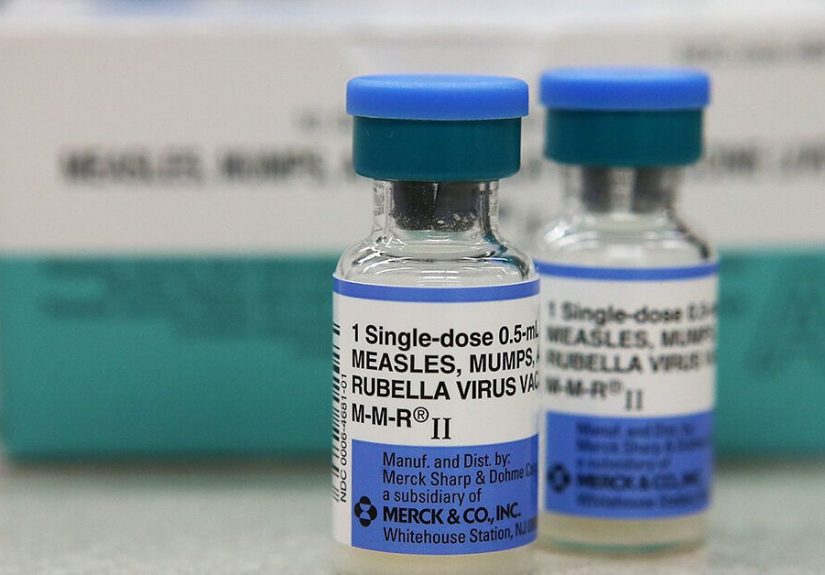
For adults, measles protection almost always comes via MMR (measles-mumps-rubella). Depending on your situation:
- Most adults who need vaccination but are not high-risk: often get 1 dose.
- High-risk adults (travel, healthcare, college, close contact with immunocompromised people): typically need 2 doses, at least 28 days apart.
- Adults vaccinated with killed/unknown vaccine in 1963–1967: may be advised to get 1 or 2 doses depending on risk.
If you’re unsure which bucket you’re in, that’s normalthis is where a quick conversation with a clinician or local health department can save you hours of online spiral-reading.
Safety basics: who should NOT get MMR right now?
MMR is a live attenuated vaccine, which is safe for most peoplebut not all. People who should generally avoid MMR (or delay it) include:
- Pregnant people (MMR is typically given before pregnancy or postpartum; avoid pregnancy for a short period after vaccination per clinical guidance)
- People with severe immunodeficiency (from certain conditions or treatments)
- Anyone with a history of severe allergic reaction to a vaccine component or prior dose
- Some people who recently received antibody-containing blood products (timing matters)
Common side effects are usually mild: a sore arm, low-grade fever, or temporary aches. Serious reactions are rare, but your clinician should screen for contraindications and precautions.
Myths that keep adults stuck (and what to do instead)
Myth: “If I had shots as a kid, I’m definitely fine.”
Reality: If you had two documented MMR doses, you’re very likely protected. But if you had one dose, no records, or you’re in a high-risk category, you might need another dose.
Myth: “Adults need a measles booster every 10 years.”
Reality: That’s not a standard measles recommendation. Measles vaccination isn’t scheduled like routine tetanus boosters.
Myth: “If there’s an outbreak anywhere, everyone should get a third MMR.”
Reality: Outbreak guidance is targeted. The usual goal is to get people up to the recommended 1–2 doses based on risk, not to add extra doses for everyone.
Myth: “It’s dangerous to get an extra MMR dose.”
Reality: For people who can safely receive MMR, an extra dose is generally not harmful. That’s why clinicians may recommend vaccination when records are uncertain rather than forcing you into record archaeology.
Bottom line: yes, some adults should be revaccinatedand it’s usually straightforward
If you’re an adult with documented two-dose MMR vaccination, you can usually breathe easy. If you’re missing records, fall into the 1963–1967 inactivated-vaccine era, work in healthcare, attend college, travel internationally, live with someone immunocompromised, or are in an outbreak area with updated local guidancethen yes, revaccination may be recommended.
The good news is that sorting this out is often easier than people expect: find records if you can, and if you can’t, talk with a clinician about the simplest pathoften vaccination. The goal isn’t to collect shots like badges. It’s to close the immunity gaps measles is always looking for.
Experiences That Make This Topic Real (and Not Just Another Checklist)
Public health recommendations can feel abstract until they show up in your actual calendarusually right next to “book flights,” “renew passport,” and “why did I agree to a 7 a.m. appointment?” Here are a few experiences (composite stories based on common real-world situations) that show how adult measles revaccination decisions tend to play out.
The “I’m traveling next month and suddenly I’m a vaccine historian” moment
One of the most common adult triggers is international travel. You’re excited about the tripthen you read a headline about a measles outbreak somewhere (maybe not even your destination), and you realize you have no idea what “up to date” means for a vaccine you last thought about in elementary school. You call your childhood clinic and discover it closed in 2009. Your parents swear you got “all the shots,” which is sweet, but not exactly the written documentation a travel clinic wants.
In this situation, many people end up choosing the simplest option: get vaccinated (if they can safely receive MMR) rather than spending weeks chasing records. It feels oddly anticlimacticone clinic visit, a sore arm, and suddenly the travel planning returns to more important debates, like whether to pack a second pair of shoes.
The healthcare worker onboarding scramble
If you’ve ever started a job in a hospital, you know the vibe: paperwork, badges, training modules, and someone politely asking for proof of immunity like it’s a VIP wristband. Healthcare systems often need documentation because they’re responsible for protecting patients who may be too young, too sick, or too immunocompromised to handle infections well.
For some adultsespecially those born before 1957 or those with incomplete recordsthis becomes a “choose your adventure” moment: find documentation, do lab testing, or just get vaccinated if appropriate. The funny part is that the actual medical step may be easy, while the administrative step is the true final boss. (If you want a modern miracle, it’s not a vaccineit’s a clinic that still has your immunization record from 1996.)
The new parent “protect the baby bubble” mindset
New parents often become accidental public health ambassadors. When there’s a baby in the familyespecially one too young for certain vaccinationsadults around them start rethinking immunity. It’s not paranoia; it’s math. Babies and young children can face higher risks from measles complications, and they rely on the adults around them to reduce exposure.
That’s when you see the classic family group text: “Do we all have our MMR?” Suddenly, Aunt Linda is searching old school records, Grandpa is asking what year the vaccine changed, and everyone is learning that “born before 1957” is a public health phrase, not a fashion trend. Often, the outcome is straightforward: anyone without evidence of immunity gets vaccinated (if medically eligible), and everyone feels calmer bringing the baby to gatherings.
The “my community has an outbreak” wake-up call
Outbreaks turn theoretical guidance into a practical to-do list. You might get a notice from a school, workplace, or local health department. You may hear that certain adults should get a second dose if they only had one, or that specific groups should check immunity. This is where targeted recommendations matter: not everyone needs to do the same thing, but the people who do need action should move quickly.
People often describe a weird emotional mix here: “I don’t want to overreact,” paired with “I don’t want to ignore something preventable.” The best experiences in outbreak settings tend to involve clear local guidance and easy access to vaccinationpop-up clinics, clear FAQs, and clinicians who can quickly answer “Do I need one dose or two?” without making you feel like you should’ve been born with a filing cabinet of medical records.
The relief of a simple plan
There’s a consistent theme across these experiences: the relief that comes from a simple, clinician-approved plan. Whether that plan is “You’re goodno additional vaccination needed,” or “Let’s do one dose today,” or “You need two doses four weeks apart,” the clarity matters. Measles is complicated in the population, but your personal next step usually shouldn’t be.
And that’s the real reason this topic keeps popping up: not because adults love shots, but because adults love certaintyespecially when travel, work requirements, family health, or outbreaks are involved. The best outcome is not “maximum vaccination.” It’s “appropriate vaccination,” based on real guidance, real risk, and your real life.