Table of Contents >> Show >> Hide
- Pre-Emergent Weed Killer 101
- How Pre-Emergent Weed Killers Actually Work
- Timing Is Everything With Pre-Emergent Weed Killers
- Common Types of Pre-Emergent Weed Killers
- Where You Should (and Shouldn’t) Use Pre-Emergent Weed Killers
- Step-by-Step: How to Apply a Pre-Emergent Weed Killer
- Safety and Environmental Considerations
- FAQs About Pre-Emergent Weed Killers
- Real-World Experiences With Pre-Emergent Weed Killers
- The Bottom Line: Is a Pre-Emergent Weed Killer Worth It?
If you’ve ever walked out to admire your lush, green lawn and instead found a jungle of crabgrass, dandelions, and mystery sprouts, you’ve already met the enemy: weeds. By the time they’re staring you in the face, you’re in full-on damage control. That’s where a pre-emergent weed killer comes inthink of it as a bouncer at the soil’s surface, stopping troublemakers before they crash the party.
But what exactly is a pre-emergent weed killer, how does it work, and how do you use it without accidentally sabotaging your lawn or garden? Let’s break it down in plain English, with practical tips you can actually use this season.
Pre-Emergent Weed Killer 101
A pre-emergent weed killer (often called a pre-emergent herbicide or weed preventer) is a type of lawn and garden product that stops weeds before they become visible plants. Instead of killing weeds you can already see, pre-emergents target weed seeds as they’re just starting to grow below the soil surface.
In simple terms: a pre-emergent doesn’t magically stop seeds from germinating; it interferes with the growth of the tiny root or shoot as the seed tries to sprout. That disruption keeps the seedling from developing into a full plant above ground.
Because of that, pre-emergents are considered preventive weed control. They’re especially popular for dealing with annual weeds like crabgrass that come back from seed every year, but they’re also used against many annual broadleaf weeds in lawns and landscape beds.
Pre-Emergent vs. Post-Emergent: What’s the Difference?
- Pre-emergent herbicides: Applied to the soil before weeds appear. They form a barrier that stops new weeds from becoming established.
- Post-emergent herbicides: Sprayed or applied directly to weeds that are already growing. They work through the leaves and stems.
If you can already see a weed, it’s too late for a pre-emergent to do much. At that point, you’d need a post-emergent, hand-pulling, or a combo of methods.
How Pre-Emergent Weed Killers Actually Work
Most pre-emergent products work by creating a thin chemical barrier in the top layer of soil. When weed seeds germinate and the tiny root or shoot hits that treated zone, the herbicide interferes with cell division or root development. The seedling either never breaks the surface or dies soon after trying.
Key points about how they work:
- The barrier sits in the top 1–2 inches of soil, where most weed seeds sprout.
- Pre-emergents do not kill established plants, so your existing lawn or shrubs are usually safe when the right product is used correctly.
- They are considered residual soil herbicides, meaning they hang around in the soil for weeks or months, slowly breaking down over time.
Because they rely on that barrier, most products must be watered in after application so the granules or spray can move into the soil. Skip that step and you’ve essentially just sprinkled expensive dust on your yard.
Timing Is Everything With Pre-Emergent Weed Killers
Here’s the catch: pre-emergent weed killers only work if they’re in place before weed seeds start germinating. That means timing is less about the calendar date and more about soil temperature and season.
Spring Timing for Summer Weeds (Like Crabgrass)
For lawns, the most common target is crabgrass, a warm-season annual grass that loves bare spots and hot weather. Many university turf programs recommend applying pre-emergents in early spring when the soil temperature in the top layer reaches around 50–55°F and is on its way up, but before it hits the main germination range of about 60–70°F.
Some practical cues homeowners use:
- In many regions, that means late February through April, depending on climate.
- A common rule of thumb: apply around the time forsythia shrubs finish blooming or just before your local spring flush of blooms.
- If you wait until crabgrass is already visible, you’ve missed the ideal pre-emergent window for that generation of weeds.
Most products offer about 8–12 weeks of control, so for long summers or heavy weed pressure, a second application later in the season is sometimes recommended according to the label.
Fall Timing for Winter Weeds
Pre-emergent weed killers aren’t just for spring. Many lawn pros also apply them in late summer or early fall to control winter annuals like chickweed and annual bluegrass. In warmer climates, fall applications are a big part of keeping lawns clean year-round.
The pattern is the same: you’re aiming to get that barrier in place just before soil temperatures cool into the range where winter weeds start to germinate.
Important Note If You’re Seeding Your Lawn
Pre-emergent products don’t know the difference between weed seeds and grass seeds. To them, a seed is a seed.
That means:
- Do not use most pre-emergents on areas where you plan to overseed or establish new grass in the near future (check the label for exact waiting periods).
- Pre-emergents can prevent your expensive grass seed from sprouting, especially if applied just before or right after seeding.
- If you’re doing dormant seeding (spreading seed in winter so it sprouts in early spring), you’ll generally wait to use pre-emergent until the new grass is up and well established.
Long story short: if you’re planning to seed, your pre-emergent strategy needs to be carefully timed or temporarily skipped.
Common Types of Pre-Emergent Weed Killers
In stores, you’ll see pre-emergents sold as granules, liquids, or combined “weed and feed” products. The label may highlight the brand name, but the real clue is the active ingredient.
Typical Active Ingredients
- Prodiamine (often sold under names like Barricade®): popular for long-lasting crabgrass prevention in established turf.
- Dithiopyr (Dimension® and similar): controls many grassy weeds and can also kill very young crabgrass seedlings shortly after they emerge.
- Pendimethalin (Pendulum® and others): another common turf pre-emergent for annual grasses.
- Oryzalin, benefin, bensulide: used in lawns and landscape beds to prevent a mix of grassy and broadleaf weeds.
Branded Weed Preventers for Garden Beds
In flower and vegetable beds, homeowners often reach for branded weed preventers like those sold under the Preen® name. These products are typically labeled for use around established plantsflowers, shrubs, and certain vegetablesyet they still should not be used where you plan to sow seeds soon, because they can block seed germination.
Always read the label to confirm:
- Which plants are safe to use the product around.
- Whether it’s allowed around edible crops and at what growth stage.
- How long you must wait between application and planting seeds or new transplants.
Organic and “Natural” Options
Corn gluten meal (CGM) is often marketed as an organic pre-emergent weed control. It can inhibit seed germination and also acts as a nitrogen-rich fertilizer. However, results can be variable, it usually requires repeated applications, and it still blocks all seed germination in the treated zonegrass seed included.
Some gardeners combine lighter-duty natural products with heavy mulching and hand-weeding instead of relying solely on synthetic pre-emergents.
Where You Should (and Shouldn’t) Use Pre-Emergent Weed Killers
Best Uses
- Established lawns: For preventing crabgrass, goosegrass, and many other annual weeds in turf.
- Landscape beds: Around established shrubs, trees, and perennials to cut down on annual weeds between mulch refreshes.
- Gravel areas, paths, and non-plant zones: To keep annual weeds from popping up in decorative stone or along driveways (again, follow label directions carefully).
Places to Be Careful or Avoid
- Newly seeded lawns: Many products require you to wait weeks or months after seeding before applying.
- Areas where you plan to plant seeds soon: Vegetable gardens, wildflower patches, or reseeding projects.
- Areas with desirable self-seeding plants: If you rely on reseeding annuals or perennials, a pre-emergent might block them too.
- Perennial weed problems: Pre-emergents are far less effective on established perennial weeds that spread by roots or rhizomes (like nutsedge, quackgrass, or dandelions with deep taproots).
Pre-emergents shine as part of a broader weed-management plan focused on preventing annual weeds. They are not a magic eraser for every weed in your yard.
Step-by-Step: How to Apply a Pre-Emergent Weed Killer
Using a pre-emergent isn’t complicated, but there are a few steps you don’t want to skip if you actually want results.
-
Identify your weed problems.
Figure out what kind of weeds you’re targeting (crabgrass, annual bluegrass, etc.) and whether they’re summer or winter annuals. This helps you pick the right product and timing.
-
Choose the right product for your lawn or garden.
Check the label for your grass type (Bermuda, fescue, St. Augustine, etc.) and the specific weeds listed. Some products are safe on cool-season grasses but not certain warm-season ones, and vice versa.
-
Measure your area.
Pre-emergent rates are based on square footage. Measure the length and width of your lawn or bed so you don’t under- or over-apply.
-
Prepare the site.
Mow the lawn if needed and remove leaves, sticks, and heavy thatch that might block the product from reaching the soil. In beds, lightly rake away thick debris.
-
Apply evenly.
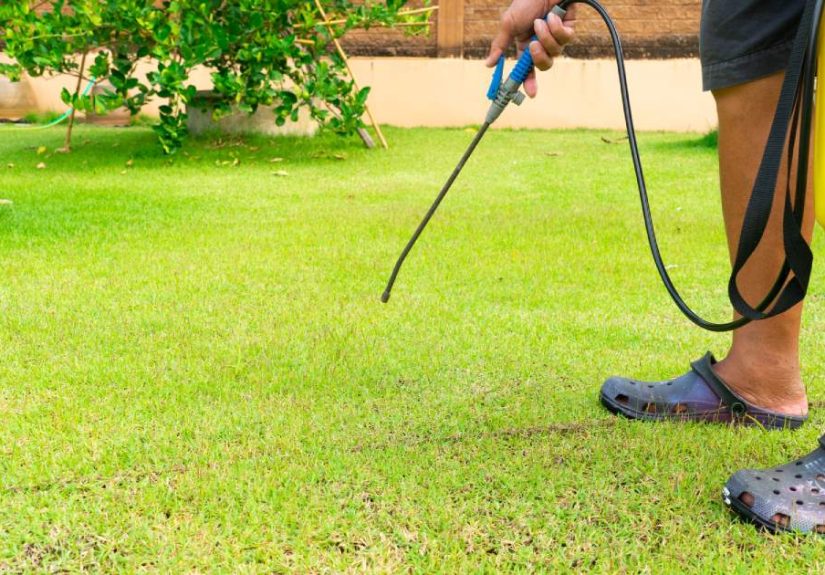
Use a broadcast spreader for granules or a sprayer for liquids. Walk at a steady pace and overlap slightly to avoid missed strips, but don’t double-apply over the same track.
-
Water it in.
This is crucial. Most products need a light to moderate watering (often about 0.25 to 0.5 inch of water) soon after application to activate the herbicide and move it into the topsoil layer.
-
Avoid disturbing the soil.
Heavy raking, deep aeration, or vigorous cultivation after application can break the barrier and create weed “escape routes.” If you need to aerate, some pros do it before applying pre-emergent.
-
Follow up during the season.
Monitor your lawn or beds. A few weeds may still appear, especially near edges or in heavily disturbed spots. Spot-treat or pull those, and follow label instructions if a second application is recommended later in the season.
Safety and Environmental Considerations
Like any herbicide, pre-emergent weed killers need to be handled with care.
- Read and follow the label. It’s not just advice; it’s the law. The label will specify safe use rates, protective gear, and where the product can and can’t be applied.
- Protect kids and pets. Many products are safe once the treated area is dry and watered in, but always follow the label’s re-entry guidance.
- Avoid runoff. Don’t apply before heavy rain, on steep slopes without protection, or close to waterways, storm drains, and bare soil that could erode.
- Use them as part of an integrated strategy. A dense, healthy lawn, proper mowing height, good irrigation, and mulching in beds will do more to prevent weeds long-term than chemicals alone.
FAQs About Pre-Emergent Weed Killers
Will a pre-emergent kill my existing grass or plants?
When used as directed, pre-emergent herbicides are designed to leave established plants alone and focus on seedlings. Problems usually arise when the wrong product is used on a sensitive grass type, or when application rates are exceeded.
How long does a pre-emergent last?
Most consumer pre-emergents provide around 2–3 months of control, depending on the product, soil type, weather, and application rate. Some professional formulations can last longer, but more persistence isn’t always better if you plan to seed or plant later.
Can I use pre-emergent if I want to overseed?
Usually not right away. Most labels tell you how long to wait between a pre-emergent application and seeding. If overseeding is a priority this season, you may need to skip or modify your pre-emergent plan.
What if weeds are already up?
At that point, switch to post-emergent control or mechanical methods like hand-pulling, spot spraying, or mowing. Some products with dithiopyr offer a bit of early post-emergent action on tiny crabgrass seedlings, but once weeds are well established, you’re out of pre-emergent territory.
Real-World Experiences With Pre-Emergent Weed Killers
On paper, pre-emergents sound simple: put down product, water it in, enjoy a perfect lawn. In real yards with busy homeowners, curious pets, and unpredictable weather? The story is a little more interesting.
1. The “Oops, I Waited Too Long” Lawns
One of the most common experiences people share is missing the window by a couple of weeks. Maybe you planned to apply in March, but life got in the way, and suddenly it’s late April and the first crabgrass seedlings are already visible along the driveway. In these cases, folks often notice that pre-emergent still seems to help a bit, but patches of crabgrass still sneak through in the hottest, barest areas.
This teaches a crucial lesson: your calendar isn’t in chargeyour soil temperature is. Homeowners who switch to checking local soil-temp maps or using a cheap soil thermometer tend to get far better results the following year.
2. The “Why Won’t My Grass Seed Grow?” Problem
Another very real experience: someone eagerly overseeds their patchy lawn in spring, then, worried about weeds, spreads a pre-emergent a few days later. Weeks go by, and the new grass never really takes off. The lawn looks thin, and they’re left scratching their head.
Later, they learn that pre-emergent herbicides don’t distinguish between “good” and “bad” seeds. Their grass seed got blocked the same way weed seeds did. After that, they become label readers and plan overseeding and pre-emergent on completely different schedulesusually seeding in fall and using pre-emergent in spring, or vice versa.
3. Gardeners Who Love Pre-Emergents… and Gardeners Who Don’t
In flower beds and shrub borders, experiences are mixedand that’s normal. Some gardeners absolutely love weed preventers around established roses, shrubs, or groundcovers. They’ll tell you they cut their weeding time in half by combining pre-emergent products with a layer of mulch.
Others try them once, notice that volunteers and self-sown flowers stop popping up where they used to, or worry about using herbicides near edibles, and decide the tradeoff isn’t worth it. Those gardeners often focus instead on organic mulches, careful hand-weeding, and planting densely to shade the soil.
The takeaway? In ornamental beds, pre-emergents are a tool, not a requirement. They work best for people who value low-maintenance, neat beds more than surprise seedlings and “garden serendipity.”
4. The Pro Landscaper Trick: Edges and Trouble Spots
Landscape crews who manage many lawns quickly learn that weeds don’t appear evenly. Driveway edges, south-facing slopes, thin areas near sidewalks, and high-traffic corners tend to be crabgrass magnets. Many pros use pre-emergent across the whole lawn but pay extra attention to those hot spots, making sure coverage is thorough and watering-in is done correctly there.
Homeowners who copy that strategyfocusing on their own “problem zones” in addition to the general lawnoften report a night-and-day difference the following summer.
5. The Long Game: Combining Culture and Chemistry
Finally, a lot of experienced homeowners and lawn geeks will tell you that pre-emergent is at its best when it’s part of a long-term plan. They still use it, but they also:
- Raise mowing height to shade soil and discourage weed germination.
- Fertilize appropriately so grass thickens over time and naturally outcompetes weeds.
- Patch bare spots quickly so crabgrass and other annuals don’t have open soil to exploit.
Over a couple of seasons, they often find they can rely less on heavy chemical use because the lawn itself becomes their main weed-prevention systemand the pre-emergent weed killer is just a smart, well-timed backup.
The Bottom Line: Is a Pre-Emergent Weed Killer Worth It?
If you’re battling annual weeds like crabgrass every single year, a pre-emergent weed killer can be a game-changer. Used at the right time, at the right rate, and on the right areas, it quietly prevents a huge portion of weed problems before they even start.
It’s not a one-size-fits-all solution, and it won’t fix poor mowing habits, compacted soil, or bare patches all by itself. But as part of a smart lawn and garden routine, pre-emergent weed control can save you hours of weeding and help your grass and plants stay front and centerexactly where they belong.