Table of Contents >> Show >> Hide
- Hard money loans, explained in plain English
- How a hard money loan works (step-by-step)
- Typical hard money loan terms and costs
- Why people use hard money loans
- Who should consider a hard money loan (and who shouldn’t)
- Pros and cons (the honest version)
- Risks you should take seriously
- How to choose a reputable hard money lender
- Alternatives to hard money loans
- FAQ: quick answers people actually want
- Conclusion: the smart way to think about hard money
- Real-World Experiences: What It Feels Like to Use Hard Money (and What People Learn)
Imagine walking into a bank and saying, “Hi, I’d like to borrow money to buy a slightly scary house with questionable carpet and a faint smell of 1978.”
The bank politely hands you a brochure titled “No.”
That’s where a hard money loan often enters the chat. Hard money loans are a form of asset-based financingusually backed by
real estatedesigned to move fast when traditional lending moves… well, traditionally. They’re popular with real estate investors who need speed, flexibility,
or a lender who cares more about the property than your entire life story.
In this guide, you’ll learn what a hard money loan is, how it works, typical terms and costs, who it’s for, what can go wrong, and how to shop for one
without accidentally signing up for an expensive lesson in regret.
Hard money loans, explained in plain English
A hard money loan is typically a short-term loan secured by a “hard” assetmost often a house, condo, or other investment
property. Unlike conventional mortgages that focus heavily on your income, credit history, and debt-to-income ratio, hard money lenders usually emphasize
the value of the property (and the plan to repay the loan) as the main reason to say yes.
Most hard money loans are funded by private lenders (individual investors or private lending companies), not big banks. Because the lender is
taking on more riskand because the loan is meant to be temporarythe pricing is usually higher than a traditional mortgage.
How a hard money loan works (step-by-step)
- You find a deal (often an investment property). Many borrowers use hard money for fix-and-flip projects, renovations, or time-sensitive purchases.
- The lender evaluates the property. This can include an appraisal, a broker price opinion (BPO), photos, contractor bids, and market comps.
-
The lender offers terms based on collateral value. Instead of asking, “How much money do you make?” they’re more likely to ask,
“What’s this property worth now, and what will it be worth after repairs?” - You close quickly. Hard money loans are known for speedsometimes days or a couple of weeksdepending on the lender and the deal.
- You repay with an exit strategy. Common exits include selling the property, refinancing into a long-term loan, or paying off the loan with other funds.
Key terms you’ll hear (and what they actually mean)
- LTV (Loan-to-Value): The loan amount compared to the property’s current value. Lower LTV generally means less risk for the lender.
- ARV (After-Repair Value): The estimated value after renovations. Many hard money lenders base approvals on ARV for rehab projects.
- Points: Upfront fees, usually calculated as a percentage of the loan (1 point = 1% of the loan amount). Often charged as an origination fee.
- Origination fee: A lender fee for making the loan (often measured in points). Different lenders label fees differently, so read the term sheet carefully.
- Interest-only payments: Monthly payments that cover interest, not principal (common in hard money).
- Balloon payment: A large final payment at the end of the term (also common).
- Draw schedule: For rehab loans, the lender may release renovation funds in stages (“draws”) after work is completed and verified.
- Prepayment penalty: A fee for paying off the loan early (not always, but it happensask before you sign).
Typical hard money loan terms and costs
Hard money loans vary by lender, property type, and market. But most share the same personality traits: short, pricey, and
laser-focused on collateral.
Common ranges (realistic, not fantasy-land)
- Loan term: Often 6–12 months, but sometimes as short as a few months or as long as a couple of years (some lenders go longer).
- Loan size: Based on value, equity, and the lender’s guidelinesoften capped by LTV or ARV limits.
- LTV / ARV limits: Frequently around 60%–75% (varies widely by deal and lender).
- Interest rate: Commonly higher than conventional mortgages; hard money can land in the high single digits to the teens.
- Points and fees: Often 1–4 points upfront, plus closing costs and third-party fees (appraisal/BPO, title, escrow, etc.).
For context, traditional mortgage pricing is usually lower, but it comes with slower underwriting and stricter rules. In mid-January 2026, average 30-year fixed
mortgage rates were around the low-6% rangenumbers that hard money loans typically don’t try to compete with. Hard money is less about “cheap” and more about
“possible right now.”
A quick numbers example (so it feels real)
Let’s say you’re buying a fixer-upper with plans to renovate and sell:
- Purchase price: $200,000
- Rehab budget: $50,000
- Estimated ARV: $320,000
A lender offers up to 70% of ARV. That’s 0.70 × $320,000 = $224,000 as a maximum loan amount. But lenders also may limit how
much they’ll fund for purchase vs. rehab, and they may require you to bring cash to closing.
Suppose your loan is $220,000 at 12% interest with 3 points:
- Points (upfront): 3% × $220,000 = $6,600
- Monthly interest-only payment: ($220,000 × 0.12) ÷ 12 = $2,200/month
If your project takes 8 months, you might pay roughly $2,200 × 8 = $17,600 in interest, plus the upfront points, plus closing costs.
That’s why experienced borrowers obsess over timelines. Every extra month is like leaving the faucet runningexcept the faucet is filled with money.
Why people use hard money loans
Hard money loans exist because real estate deals don’t always wait for a 47-page underwriting checklist. Common reasons borrowers choose hard money include:
1) Speed (the “close fast” advantage)
When a seller wants a quick closingor a property is going to the highest bidder on a tight timelinehard money can help you move quickly and compete with cash buyers.
2) Property condition (the “this house is too weird for a bank” problem)
Traditional lenders often don’t like properties that need major repairs. If a home is uninhabitable, missing key systems, or needs heavy renovation, a hard money lender
may still consider it because they’re lending against the end goal (and the collateral).
3) Flexible underwriting (the “my taxes are complicated” reality)
Self-employed borrowers and investors with complex financials may prefer hard money because the lender’s focus is the asset and the exit planthough most reputable lenders
still want proof you can execute.
4) Bridge financing (the “I need a temporary solution” use case)
Hard money is sometimes used as a bridge loantemporary financing until you sell another property, stabilize the investment, or refinance into a longer-term option.
Who should consider a hard money loan (and who shouldn’t)
Hard money can make sense for:
- Fix-and-flip investors with a clear rehab plan and realistic timeline
- BRRRR-style investors (Buy, Rehab, Rent, Refinance, Repeat) who can refinance quickly after renovations and leasing
- Developers or investors who need short-term capital for acquisition or renovation
- Buyers facing a time crunch (auction deadlines, competitive offers, distressed sales)
Hard money is usually a poor fit for:
- Long-term owner-occupants who need stable, affordable payments over many years
- Borrowers without an exit strategy (hope is not a strategy; it’s a mood)
- Projects with thin profit margins where higher costs wipe out the upside
- First-time investors who haven’t budgeted for surprises (and real estate loves surprises)
Pros and cons (the honest version)
Pros
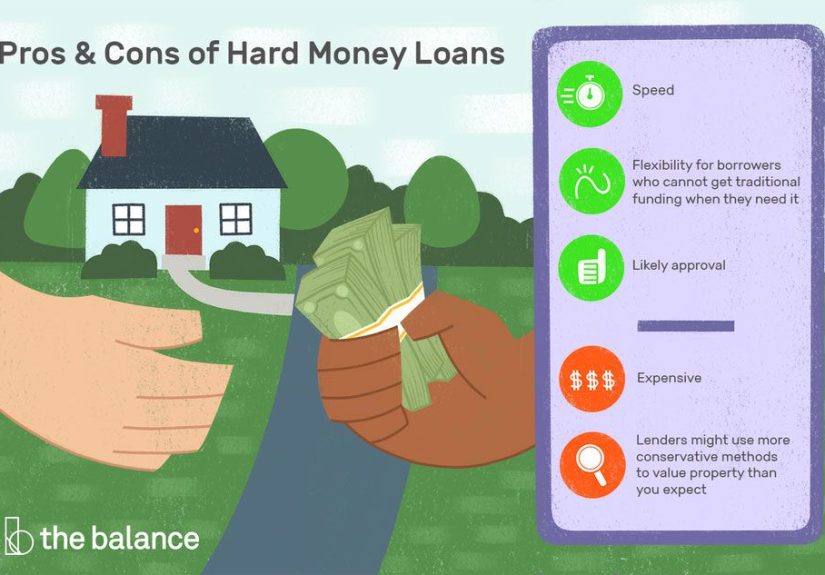
- Fast funding compared to traditional mortgages
- Collateral-based approval (property value matters a lot)
- Useful for distressed properties that banks won’t finance
- Short-term flexibility for flips, renovations, and bridge needs
Cons
- Higher interest rates than conventional financing
- Upfront points and fees can be substantial
- Short repayment window means less room for delays
- Risk of losing the property if you default (collateral is not a decorative concept)
Risks you should take seriously
Hard money can be a powerful tool, but it’s also a tool that can remove fingers if you use it carelessly. Key risks include:
Balloon payments and refinance risk
Many hard money loans end with a balloon payment. If your plan is to refinance, remember: refinancing depends on market rates, your credit profile, lender rules,
property condition, and whether the property is ready (and rented, if needed). If you can’t refinance, you may be forced to sell quicklypossibly at a bad time.
Timeline creep (a.k.a. “the rehab took longer than we thought”)
Construction delays, permit issues, contractor scheduling, supply problems, and surprise repairs can stretch timelinesand every extra month adds carrying costs
(interest, insurance, utilities, taxes).
Cost overruns
If your rehab budget balloons, you might need extra capital. Some lenders won’t increase the loan midstream, and new financing can be expensive or slow.
Bad actors and confusing fee structures
“Private lending” is a broad universe. Most reputable lenders operate transparently, but some don’t. Watch for vague terms, pressure to sign immediately,
or fees that appear after you’ve mentally moved into the property (emotionally, not legally).
Also note: consumer-purpose mortgages in the U.S. can have important disclosure and fee rules, and state licensing requirements may apply to lenders.
Hard money for investment property is often structured differently than consumer home loansanother reason to read documents carefully.
How to choose a reputable hard money lender
A good hard money lender can feel like a helpful business partner. A bad one can feel like a subscription service you can’t cancel. Here’s how to vet lenders:
Ask for a clear term sheet
- Interest rate, points, and all fees (origination, underwriting, processing, doc prepeverything)
- Loan term, payment type (interest-only?), and balloon payoff details
- Prepayment penalty (if any) and extension fees
- Maximum LTV/ARV and borrower cash requirements
- Rehab draw process (inspection timing, required receipts, holdbacks)
Confirm how closing works
Legitimate transactions typically involve standard safeguards like title work and escrow/settlement services. If someone suggests skipping normal protections
“to move faster,” slow down.
Check track record and reputation
Look for longevity, reviews across multiple platforms, references from local investors, and a consistent process. If every answer sounds like a motivational poster,
ask for specifics.
Alternatives to hard money loans
Depending on your goals, you might consider options that can be cheaper or less risky:
- Traditional mortgages (best for long-term homeownership, but slower and stricter)
- Bank or credit union bridge loans (may be available for certain borrowers and properties)
- Renovation loans (for eligible owner-occupants; rules can be detailed)
- HELOCs or home equity loans (if you have equity in another property)
- DSCR loans for rentals (underwriting based more on property cash flow than personal income)
- Seller financing (when the seller agrees to act as the lender)
- Partnerships (bring in capital in exchange for shared profitsget everything in writing)
FAQ: quick answers people actually want
Is hard money the same as “private money”?
People use the terms interchangeably, but they can mean different things in practice. “Hard money” often refers to loans from professional private lenders with
set guidelines, while “private money” may refer to an individual investor lending personal funds. Both can be asset-based and secured by real estate.
Do hard money loans require good credit?
Credit can matter, but it’s often not the main factor. Many lenders care more about the deal, the collateral, and your exit strategy. Still, better credit and stronger
experience can help you qualify for better terms.
How fast can you get a hard money loan?
Some deals close in days; others take a couple of weeks. Speed depends on how quickly the lender can evaluate the property, complete title/escrow steps, and finalize paperwork.
Can I use a hard money loan for a primary residence?
Hard money is most commonly used for investment properties. For a primary residence, traditional mortgages generally offer lower rates and longer terms, and consumer-protection
rules may apply. If you’re considering a nontraditional loan for your home, review the terms carefully and consider professional guidance.
What happens if I can’t pay it back on time?
Because the loan is secured by real estate, default can lead to foreclosure. Many lenders offer extensions for a fee if your project is progressing, but you can’t assume
you’ll get one. Build contingency plans (time and money) before you borrow.
Conclusion: the smart way to think about hard money
A hard money loan is best understood as short-term real estate financing built for speed and opportunitynot comfort and long-term affordability.
Used wisely, it can help investors close fast, renovate properties, and create value. Used recklessly, it can turn a “great deal” into a very expensive educational program.
If you’re considering hard money, focus on three things: the numbers (including all fees), the timeline (with buffers),
and the exit strategy (sell or refinance, with a Plan B). The goal isn’t just to get the loanit’s to get out of the loan.
Real-World Experiences: What It Feels Like to Use Hard Money (and What People Learn)
Hard money loans have a reputation for being “expensive,” but the lived experience is more nuanced. People who use hard money successfully tend to talk less about the rate
and more about the speed, certainty, and the way it changes how you approach a deal. Here are a few common real-world experiences investors sharesanitized, generalized,
and minus the dramatic soundtrack.
Experience #1: The lightning-close adrenaline rush
Many first-time hard money borrowers describe the initial process as oddly refreshing: fewer hoops, fewer “we’ll get back to you,” and a clear yes/no centered on the property.
If you’ve ever lost a deal because financing couldn’t keep up, the ability to close quickly feels like upgrading from a bicycle to a motorcycle.
The emotional downside? You can become addicted to speed. Some investors start treating hard money like a default option instead of a tactical tool, and that can make
their deals more expensive than they need to be.
Experience #2: The “oh wow, points are real money” moment
Borrowers often understand interest conceptuallymonthly payments, annual rates, the whole thing. Points can be more surprising, especially when they’re deducted from
proceeds at closing. Investors frequently report a “wait… I’m paying how much upfront?” moment once the settlement statement shows origination points alongside other
closing costs. The lesson many learn: hard money pricing is not just the rate. It’s the combination of rate, points, term length, and timeline performance.
Experience #3: Rehab draws can feel like a second job
If your loan includes rehab funding, the draw process can be a learning curve. Investors who thrive with draws treat documentation as part of the project:
they keep receipts, take progress photos, schedule inspections proactively, and build time buffers for draw turnaround. Investors who struggle often assumed renovation
money worked like a single lump sumonly to discover that draw schedules require planning.
A common “level-up” moment is when borrowers start aligning contractors, inspection timing, and material deliveries with the draw process. It’s not glamorous,
but it can prevent cash crunches that delay projects and increase holding costs.
Experience #4: The exit strategy becomes your main character
People who have used hard money successfully usually talk about the end of the loan from day one. They’ll describe how they chose a property with multiple exits:
sell to a retail buyer, refinance into a rental loan, or even sell to another investor if the market shifts. That “multiple exits” mindset is a big part of why
hard money works for experienced investors.
On the flip side, borrowers who had a stressful hard money experience often mention one root issue: the exit plan wasn’t ready when the clock ran out. Maybe the rehab
took longer than planned. Maybe rates moved and refinancing became harder. Maybe the market cooled and the buyer pool thinned. In those cases, the short term that once
felt like a benefit can turn into pressure.
Experience #5: The best hard money users talk about buffers, not bravery
The most consistent theme across borrower stories is not “I took a huge risk and it worked.” It’s “I planned for what could go wrong.” Successful borrowers commonly:
- Budget a contingency reserve for repairs (because walls love secrets)
- Add time buffers for permits, inspections, and contractor delays
- Model worst-case scenarios (sale price drops, longer hold, higher costs)
- Negotiate terms they can live with (extensions, fees, draw rules)
- Choose deals with enough margin to absorb surprises
In other words: hard money can be a sharp tool, but most “great experiences” come from boring preparation. The humor is that the exciting part (closing fast)
only stays exciting if the unexciting part (planning) is handled first.