Table of Contents >> Show >> Hide
- Quick definitions: “nodule,” “spot,” and “mass”
- Why lung nodules happen (and why cancer is only one possibility)
- So… what are the chances it’s cancer? The factors that move the needle
- How doctors turn all that into an actual “chance”
- What follow-up usually looks like (and what each step is trying to answer)
- Two example scenarios (to make the “chance” feel less abstract)
- Questions to ask at your next appointment (yes, you’re allowed to be that prepared)
- When to seek medical attention sooner
- How to lower your risk while you wait (because “do nothing” feels impossible)
- Conclusion: odds, context, and a little sanity
- Experiences: what it can feel like to live with a “spot on the lung” (and how people cope)
A “spot on the lung” is one of those phrases that can turn a normal Tuesday into a full-time internet research job.
(Suddenly you’re reading radiology forums like you’re cramming for finals.) But here’s the reassuring truth:
most lung nodules are not cancer. The tricky part is that a scan can’t always tell you that in one glanceso doctors use size,
appearance, and your personal risk factors to estimate the odds and choose the safest next step.
This guide breaks down what those odds usually depend on, what “low risk” vs “high risk” means in real life,
and what follow-up tests are trying to prove (or rule out). It’s educationalnot a diagnosisso if you’ve got a report in hand,
your clinician is still the MVP.
Quick definitions: “nodule,” “spot,” and “mass”
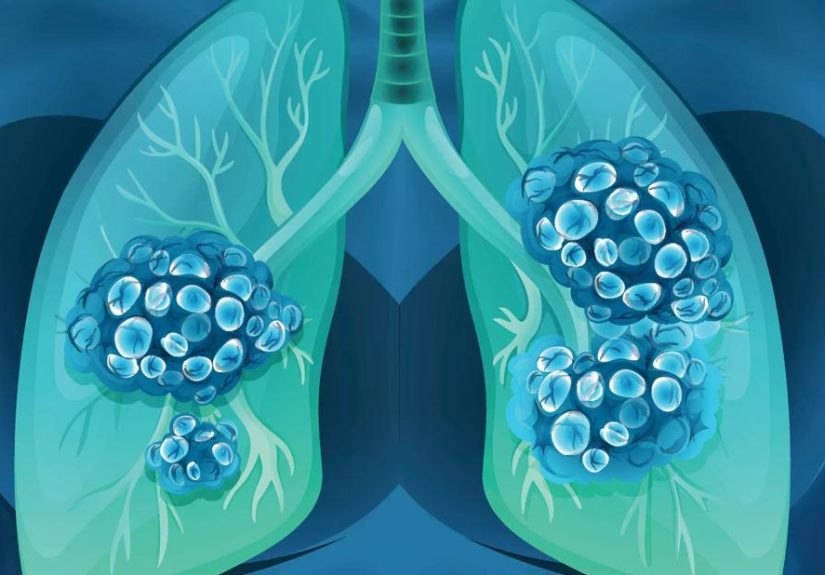
Doctors use “lung nodule” (or “pulmonary nodule”) to describe a small, round-ish area that looks denser than normal lung tissue on a chest CT or X-ray.
Many nodules are found incidentallymeaning the scan was done for something else (like a stubborn cough, chest pain, or pre-op imaging).
- Nodule: typically a small spot; many are tiny.
- Mass: generally implies a larger finding, which raises concern and usually triggers more urgent evaluation.
- Ground-glass vs solid: “ground-glass” looks hazy; “solid” looks dense. A mix is called “part-solid.” These labels matter a lot.
Why lung nodules happen (and why cancer is only one possibility)
Lungs are basically the body’s air filter. Over time they collect “evidence” of what you’ve breathed, fought off, or been exposed to.
A nodule can be caused by:
Common non-cancer causes
- Old infections and scarring: prior pneumonia, healed fungal infections, or other past lung irritation can leave small scars.
- Granulomas: tiny areas of inflammation that can calcify over time.
- Inflammatory or autoimmune conditions: conditions like sarcoidosis or rheumatoid disease can create nodules.
- Benign tumors: for example, hamartomas (often have fat within them on CT).
Cancer is on the listbut it’s not the default explanation. The job of follow-up is to separate “common and harmless” from “needs attention.”
So… what are the chances it’s cancer? The factors that move the needle
Think of cancer risk as a score made from two buckets:
(1) what the nodule looks like and (2) who it’s in.
A tiny, smooth nodule in a younger nonsmoker behaves very differently than a larger, irregular nodule in an older heavy smoker.
1) Size: the biggest predictor most people can understand
In general, the smaller the nodule, the lower the cancer risk. Many guidelines use size thresholds to decide whether follow-up imaging is needed.
One widely cited benchmark: solid nodules under 6 mm have a very low average risk of malignancy, even in higher-risk people.
As nodules get larger (especially above about 8 mm), the chance of cancer rises and the workup tends to get more proactive.
2) Growth over time: the plot twist your radiologist is watching for
Cancer tends to growoften at a measurable rate. That’s why prior scans are gold.
If a solid nodule looks unchanged over a long enough window, it strongly suggests a benign cause.
(Important nuance: some slow-growing cancers exist, and “subsolid” nodules can be tracked longer than solid ones.)
3) Shape and edges: smooth vs spiky matters
CT images can show features that raise or lower suspicion. Findings that may increase concern include:
- Spiculated (spiky) margins rather than smooth, round edges
- Upper-lobe location (not diagnostic, just part of the risk picture)
- Part-solid nodules with a solid component (often watched more closely)
- New or growing nodules compared with older imaging
On the flip side, certain patterns can be reassuringlike classic “benign” calcification patterns or visible fat within the nodule.
Radiologists call these “features of benignity,” and they can dramatically reduce the odds that a spot is cancer.
4) Your personal risk factors: the part the scan can’t see
Your background changes the math. Clinicians commonly weigh:
- Age: risk generally increases with age.
- Smoking history: current or former smoking raises baseline risk.
- Radon exposure: a significant U.S. lung cancer risk, especially when combined with smoking.
- Secondhand smoke exposure
- Prior cancer history (some cancers can spread to the lung)
- Chronic lung disease (like emphysema/COPD)
- Workplace exposures (certain dusts and chemicals)
- Family history (context-dependent, but part of the conversation)
How doctors turn all that into an actual “chance”
If you read your report and it feels like a foreign language, you’re not alone. Clinicians often estimate a “pretest probability” of malignancybasically:
before we do more tests, how likely is cancer?
A common framework:
- Low probability: under about 5%
- Intermediate probability: about 5% to 65%
- High probability: over about 65%
That range might sound huge (because it is). The goal isn’t perfectionit’s choosing the right next step:
watchful waiting vs more imaging vs biopsy.
Risk calculators (and why they’re helpful, not holy)
You may hear about nodule risk calculators such as the “Mayo” or “Brock” models. They typically combine variables like
age, smoking history, nodule size, location, and CT appearance to estimate malignancy probability.
They can help standardize decision-making, but they’re still estimatesyour clinician’s judgment and your full medical story matter.
What follow-up usually looks like (and what each step is trying to answer)
The plan depends on the risk band. Here’s the big-picture logic (exact timing varies by guideline and individual factors):
If the risk looks low
- Often: no immediate action or a repeat low-dose CT later to confirm stability.
- Goal: prove the nodule doesn’t grow (or grows in a benign pattern).
If the risk looks intermediate
- Often: a shorter-interval CT, and sometimes a PET-CT (especially when the nodule is large enough to evaluate well).
- Sometimes: a biopsy if imaging can’t clarify the risk.
- Goal: get stronger evidence without jumping straight to surgery.
If the risk looks high
- Often: referral to a pulmonologist, thoracic surgeon, or a lung nodule clinic.
- Next steps may include: biopsy or surgical removal depending on location, health status, and imaging features.
- Goal: diagnose quickly and, if cancer is present, move to staging and treatment planning.
Two example scenarios (to make the “chance” feel less abstract)
Example A: The tiny incidental nodule
A 42-year-old nonsmoker has a CT for kidney stones. The radiology report mentions a 4 mm solid nodule.
No symptoms, no prior cancer, and no suspicious CT features.
Typical takeaway: The odds of cancer are usually very low. Many clinicians either don’t follow it at all or recommend one follow-up scan,
depending on overall risk factors and guideline preferences.
Example B: The “let’s not ignore this” nodule
A 71-year-old former heavy smoker has a CT showing a 12 mm nodule with irregular margins in an upper lobe.
Typical takeaway: The risk is meaningfully higher than in Example A. A clinician may recommend PET-CT and/or biopsy sooner,
especially if prior scans show the nodule is new or growing.
Questions to ask at your next appointment (yes, you’re allowed to be that prepared)
- What is the size of the nodule (in mm), and is it solid, ground-glass, or part-solid?
- Does it have any features suggesting benignity (like certain calcifications or fat)?
- Is it new, or was it present on an older scan?
- Based on my risk factors, do you consider this low, intermediate, or high probability?
- What is the follow-up plan, and what would change the plan?
- Should I see a pulmonologist or a specialized nodule clinic?
When to seek medical attention sooner
Lung nodules themselves often cause no symptoms. But contact a clinician promptly if you have concerning symptoms such as coughing up blood,
worsening shortness of breath, unexplained weight loss, persistent chest pain, or fevers that don’t improveespecially if you’re also being monitored for a nodule.
How to lower your risk while you wait (because “do nothing” feels impossible)
- If you smoke: quitting is the single biggest risk-reducer for future lung cancer risk.
- Test your home for radon: it’s odorless and common enough to be worth checking.
- Bring prior imaging: a stable nodule over time can be hugely reassuring.
- Follow the plan: surveillance works when it’s done on schedule.
Conclusion: odds, context, and a little sanity
If you remember one thing, make it this: a lung nodule is a finding, not a verdict.
Most nodules are benign. The chance of cancer depends heavily on size, growth, CT features, and personal risk factors.
Follow-up CTs, PET scans, and biopsies aren’t meant to “drag things out”they’re designed to match the intensity of testing to the level of risk,
catching serious problems early while sparing low-risk people from unnecessary procedures.
Your best next move is practical: ask for the size and type, compare with older images, and get a clear follow-up timeline.
And yesstep away from the late-night doom scrolling. Your lungs (and your sleep) will thank you.
Experiences: what it can feel like to live with a “spot on the lung” (and how people cope)
Even when the statistical odds are reassuring, the emotional experience can be… not. People often describe the moment they read
“pulmonary nodule” on a report as a mental record scratchlike everything else on the page disappears. It’s common to bounce between
“It’s probably nothing” and “I should start naming my houseplants after my loved ones.” The uncertainty is the hard part, not just the word “nodule.”
One of the most common experiences is the waiting loop. A clinician might recommend a repeat CT in a few months,
and that gap can feel enormous. Some people say they become hyper-aware of every sensation: a throat tickle becomes “a cough,” a normal
deep breath feels “different,” and suddenly you’re monitoring yourself like a smartwatch with feelings. If you’ve ever tried to relax by
“not thinking about something,” you already know how that goes.
Another shared experience is learning a new language overnightmillimeters, “ground-glass,” “spiculated,” “calcified,” “PET avid.”
Many people cope by turning confusion into a plan: they write down questions, ask for the exact size in mm, and request a clear explanation of
what category of risk the clinician believes it falls into. That simple actturning vague fear into specific informationcan lower anxiety fast.
People also talk about the relief of finding prior imaging. A nodule that looks “new” on today’s CT can become far less scary
if an older scan shows it was there years ago and hasn’t changed. Patients often describe this as the moment their brain finally unclenches.
If you have ever kept a junk drawer “just in case,” congratulations: this is the medical version of that, and it can actually pay off.
Families experience it too. Some people don’t tell anyone until they have a plan, because they don’t want to alarm loved ones.
Others tell everyone immediately because they need support. There isn’t a correct approachjust what fits your relationships.
A practical middle path many people like is: share the facts you know (size, follow-up plan, doctor’s risk estimate) and name what you need
(a ride to an appointment, a distraction, or someone to sit with you while you wait for results).
Finally, many people use the “nodule period” as a nudge toward healthier changesnot from panic, but from empowerment.
Quitting smoking, scheduling a radon test, or finally booking that overdue primary care visit can feel like taking the steering wheel back.
Even if the nodule turns out to be benign (as most do), people often say the experience reshaped their relationship with uncertainty:
they learned they could handle a scary headline, ask better questions, and move step-by-step instead of sprinting straight to worst-case scenarios.
If you’re in that waiting window right now, you’re not overreactingyou’re having a very human reaction.
Anchor yourself to the plan, collect the information that matters, and let “follow-up” mean what it’s supposed to mean:
careful, evidence-based monitoringnot a countdown to bad news.