Table of Contents >> Show >> Hide
- AI Does Not Trigger One Emotion. It Triggers a Full Group Chat
- The First Feeling: Curiosity With a Side of Delight
- The Second Feeling: Relief, Especially at Work
- The Third Feeling: Anxiety About Control
- The Fourth Feeling: Distrust, Because “Smart” Is Not the Same as “Trustworthy”
- The Fifth Feeling: Strange Comfort, and the Risk of Emotional Dependence
- The Sixth Feeling: Creative Insecurity
- The Seventh Feeling: Hope, But Only When Humans Stay in the Loop
- Why AI Feels Different to Different People
- What Good AI Should Make Us Feel
- Real-World Experiences: What AI Really Feels Like in Daily Life
- Conclusion: The Emotional Truth About AI
Artificial intelligence is often discussed like it is a giant calculator with better branding. It writes emails, summarizes meetings, answers questions, makes pictures, and occasionally behaves like the world’s most confident intern. But the real story is not just what AI does. It is what AI does to us. And emotionally, the answer is messy, fascinating, and very human.
AI does not make us feel one thing. It makes us feel many things at once. Curiosity. Relief. Suspicion. Excitement. Anxiety. Awe. Fatigue. Hope. Even loneliness, oddly enough, and sometimes the temporary easing of it. That emotional cocktail is why conversations about AI can swing from “This is amazing” to “This is terrifying” in under thirty seconds.
If you want the honest headline, here it is: AI is not just a technology story. It is an emotional story. It changes how we think about work, creativity, trust, relationships, intelligence, and even what it means to be useful. No wonder people are having feelings. Big ones.
AI Does Not Trigger One Emotion. It Triggers a Full Group Chat
The reason AI feels so emotionally loaded is simple: it touches parts of life we normally reserve for people. We ask it to write, advise, explain, comfort, brainstorm, recommend, and respond in a tone that sounds strangely human. That means our reactions are not limited to ordinary “new gadget” excitement. AI pokes at identity, status, competence, privacy, and control. In other words, it barges into the sensitive rooms of the human brain without even knocking.
When a machine helps us finish a difficult task in ten minutes instead of two hours, we feel relief. When that same machine performs something we thought was uniquely human, like writing a poem or mimicking empathy, we may feel admiration mixed with unease. And when it starts making decisions in spaces that matter deeply, such as health, education, relationships, or employment, the emotional stakes rise fast.
That is why the public conversation around AI often sounds contradictory. People want help, but not replacement. They want convenience, but not surveillance. They want personalization, but not manipulation. They want smart tools, but not tools that quietly become the boss.
The First Feeling: Curiosity With a Side of Delight
Let us start with the fun one. AI can feel magical. The first time a model gives a surprisingly good answer, cleans up a clunky paragraph, or turns a vague idea into a usable draft, many people feel genuine delight. It is the digital version of watching someone pull a rabbit out of a hat, except the rabbit also formats your spreadsheet.
This feeling matters more than it seems. Curiosity is what opens the door. People try AI because it feels new, fast, and oddly capable. It promises less friction and more momentum. For students, it can feel like a study buddy. For workers, it can feel like backup. For creators, it can feel like a brainstorming partner that never says, “Sorry, I’m slammed this week.”
That delight is not shallow. It reflects a real emotional need: people want tools that reduce overwhelm. In a world already packed with notifications, admin work, and endless tabs breeding like rabbits, AI can feel like welcome assistance. Sometimes the emotional reaction is not “Wow, the future!” It is simply, “Oh thank goodness.”
The Second Feeling: Relief, Especially at Work
A lot of people do not want AI because they are obsessed with robots. They want AI because they are tired. Tired of repetitive tasks. Tired of digging through files. Tired of rewriting the same email five times so it sounds “professional but warm.” Tired of work that eats time without adding meaning.
That is where AI often creates one of its strongest positive emotions: relief. When used well, it can take the edge off repetitive labor and make room for more thoughtful work. It can reduce blank-page panic, speed up routine communication, and help people get unstuck. For many workers, the emotional appeal of AI is not brilliance. It is breathing room.
But even relief has conditions. People tend to welcome automation most when it supports them rather than sidelines them. They want help with the robotic parts of work, not the deeply human ones. In plain English, most people are fine with AI helping schedule a meeting. They get much less enthusiastic when AI starts auditioning to be the meeting.
The Third Feeling: Anxiety About Control
Here comes the other shoe, wearing steel-toe boots.
AI also makes people anxious because it creates a nagging sense that important systems may be changing faster than ordinary people can track. That anxiety is not always dramatic. It often shows up as low-level background static: Who is using AI on me? How was this decision made? Is this answer reliable? Is my data safe? Am I already behind? Is my job becoming a before picture?
This is not irrational fear. It is a human response to opacity. People are more comfortable with tools they can understand, question, and override. When AI becomes invisible infrastructure, running under the hood of hiring systems, customer service, search results, education platforms, or health apps, the emotional reaction often shifts from curiosity to caution.
Control matters because it is psychological oxygen. People can tolerate change better when they feel informed and included. They get far more uneasy when they feel processed by a system they did not choose and cannot challenge. That is why transparency is not just a technical requirement. It is an emotional stabilizer.
The Fourth Feeling: Distrust, Because “Smart” Is Not the Same as “Trustworthy”
AI can sound polished while being wrong. It can be fast without being wise. It can be helpful one minute and confidently ridiculous the next. That gap between fluency and reliability creates a specific emotional response: distrust.
People do not simply ask whether AI can perform. They ask whether it deserves confidence. Can it explain itself? Does it handle bias well? Who benefits from its mistakes? Is it nudging me, profiling me, or quietly learning from me? Those questions are not minor technical footnotes. They go straight to how safe people feel around a system.
Distrust grows when AI is framed as an authority without accountability. It also grows when companies oversell it. Tell people a tool is revolutionary, and they may try it once. Let it fail in a high-stakes moment, and they will remember forever. Humans are funny that way. We forgive a toaster for burning bread. We do not easily forgive a “smart” system for acting dumb in a serious situation.
That is why trust in AI is not earned by sounding human. It is earned by being dependable, explainable, bounded, and honest about limits. In emotional terms, people want AI to be useful without being slippery.
The Fifth Feeling: Strange Comfort, and the Risk of Emotional Dependence
This is where the topic gets particularly interesting. AI is increasingly used not just for productivity, but for companionship, reflection, and emotional support. People talk to chatbots when they are stressed, lonely, bored, overwhelmed, or just awake at 2:13 a.m. wondering why the human condition came with so many tabs open.
And yes, these interactions can feel comforting. Part of the appeal is availability. AI does not sleep, sigh, interrupt, or check its watch. It responds quickly, remembers recent context, and can mirror warmth in a way that makes people feel heard. That feeling matters. Many people are not chasing some sci-fi fantasy. They are chasing a moment of attention.
But comfort is not the same thing as care. A system can simulate responsiveness without possessing understanding in the human sense. That difference may sound philosophical until emotional attachment enters the chat. Then it becomes practical. If someone turns to AI for support, validation, or companionship, the short-term emotional benefit may be real, while the long-term effects remain far more complicated.
That is the danger zone: when emotional assistance shades into emotional dependency, or when systems are designed to maximize engagement rather than well-being. A tool that feels warm can still be built around incentives that are cold. If AI is designed to keep users attached, the emotional line between support and manipulation can blur quickly.
The Sixth Feeling: Creative Insecurity
Ask artists, students, writers, designers, and knowledge workers how AI feels, and you will often hear a very specific emotional theme: insecurity. Not because AI is always better, but because it is close enough to trigger comparison.
That comparison can mess with people’s confidence. If a model produces ten logos in a minute or drafts a decent essay before your coffee cools, it can make human effort feel slower, shakier, and less impressive. People begin to wonder whether originality still counts, whether audiences care who made the thing, and whether craft is being replaced by convenience.
At the same time, many creators also experience the opposite: liberation. AI can lower the barrier to entry, unlock experimentation, and help people move from idea to first draft much faster. That is why creative emotion around AI is so mixed. It can make people feel empowered and undermined in the same afternoon.
The healthiest view may be this: AI changes creativity, but it does not erase the human ingredients that matter most. Taste. Judgment. Context. Humor. Restraint. Emotional truth. A model can generate options. It cannot live your life for you, and that still matters more than the hype machine likes to admit.
The Seventh Feeling: Hope, But Only When Humans Stay in the Loop
For all the worry, there is also real hope in the AI conversation. People can imagine systems that help with medical discovery, accessibility, education, scientific research, translation, and everyday problem-solving. Used responsibly, AI can reduce friction and expand what people can do.
Hope shows up strongest when AI is framed as augmentation rather than substitution. People feel better when the story is “this helps humans do better work” instead of “this removes humans from the process.” That distinction sounds subtle, but emotionally it is huge. One version says, “You matter more with this.” The other says, “You matter less because of this.”
And humans are surprisingly good at detecting which story they are being sold.
Why AI Feels Different to Different People
Not everyone experiences AI the same way. A software engineer, a teacher, a freelance designer, a college student, and a retiree may all use similar tools while feeling very different things. That variation depends on context.
If AI saves time in a job full of repetitive work, it may feel empowering. If it enters a profession already under pressure, it may feel threatening. If someone is lonely, AI may feel companionable. If someone values privacy above all else, the same system may feel invasive. If a person trusts institutions, AI may feel like progress. If they do not, it may feel like another layer of distance between people and power.
That is why the emotional impact of AI cannot be reduced to “pro” or “anti.” People are not inconsistent. They are responding to different risks, incentives, and vulnerabilities. The same tool can create relief in one setting and resentment in another.
What Good AI Should Make Us Feel
Here is a better question than “How smart can AI get?” Ask instead: “What should well-designed AI make people feel?”
The answer is not awe. Not dependency. Not intimidation. Not constant urgency. Good AI should make people feel clearer, calmer, more capable, and more in control. It should help users feel informed rather than manipulated, supported rather than replaced, and respected rather than mined for data like emotional ore.
That means good AI design is not just about accuracy benchmarks and speed. It is also about emotional ergonomics. Does the tool preserve agency? Does it signal uncertainty honestly? Does it invite review? Does it avoid pretending to be more sentient, authoritative, or caring than it really is? Does it leave room for human judgment where human judgment belongs?
If the emotional experience of using AI is confusion, pressure, overreliance, or false intimacy, the design is not as successful as the product team may think. A truly human-centered AI system should be powerful without being psychologically grabby.
Real-World Experiences: What AI Really Feels Like in Daily Life
To make this more concrete, think about the everyday experiences people now have with AI.
A college student opens a chatbot to help outline a paper. At first, it feels like relief. The blank page is no longer blank, and the task looks possible again. But then another feeling sneaks in: insecurity. If the machine can generate a clean outline in seconds, what exactly is the student supposed to be proud of? The answer, ideally, is the thinking, editing, and argument. But emotionally, that answer may arrive later than the panic.
A customer service worker uses AI to draft polite replies all day. The tool is genuinely useful. It speeds up routine writing and reduces mental fatigue. Yet by the end of the week, the worker starts to feel a strange detachment. If every message is optimized by a machine, where does personal voice go? Efficiency improves, but identity gets a little blurry around the edges.
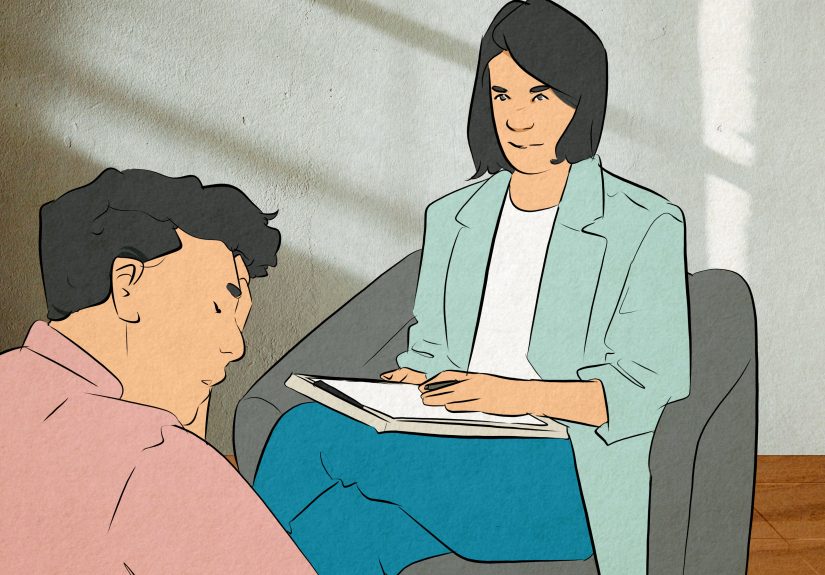
A lonely person talks to an AI companion at night. The conversation feels warm, attentive, and easy. There is no fear of judgment. No awkward silence. No need to explain too much. In that moment, the emotional comfort may be real. The risk appears later, when the person begins to rely on a system that can simulate care without reciprocating it in the human sense. The interaction may soothe, but it may not strengthen the real-world relationships that long-term well-being still depends on.
An artist experiments with image generation and feels both thrilled and irritated. Thrilled because new styles and compositions appear instantly. Irritated because the machine can produce visual ideas at industrial speed while the artist is still wrestling with mood, meaning, and taste. The technology becomes a mirror that reflects both possibility and pressure.
A manager uses AI to summarize meetings and prepare first drafts of updates. That feels practical and efficient. But when leadership starts talking about “AI transformation” without explaining goals, boundaries, or accountability, another emotional shift occurs. Employees stop feeling helped and start feeling watched. The same technology that once felt like support begins to feel like silent supervision.
Even ordinary users experience this tension in small ways. You ask AI for a recipe and feel amused. You ask it to explain a legal form and feel cautious. You ask it for comfort after a rough day and feel unexpectedly understood. Then you remember that “understood” may not be the right word at all. That wobble between usefulness and unease is now part of modern digital life.
These experiences point to the same truth: AI often feels best when it acts like a tool and worst when it starts to imitate a relationship, a judgment, or a replacement for human meaning. People do not just want outputs from AI. They want emotional boundaries. They want help without surrender, speed without confusion, and convenience without losing the parts of life that still need a human face, a human pause, or a human conscience.
Conclusion: The Emotional Truth About AI
So what does AI really make us feel? Not one clean emotion, but a full spectrum. It makes us feel curious because it is powerful. Relieved because it can reduce friction. Anxious because it can outrun oversight. Distrustful because fluent systems can still fail. Comforted because responsive tools can feel attentive. Insecure because AI challenges our sense of uniqueness. Hopeful because it may help solve real problems when used wisely.
That emotional complexity is not a bug in the public conversation. It is the most honest part of it. AI is forcing people to renegotiate their relationship with work, creativity, trust, and connection. Naturally, that comes with mixed feelings. In fact, mixed feelings may be the correct response.
The goal, then, is not to become blindly enthusiastic or theatrically terrified. It is to become emotionally literate about AI. We need tools that support human judgment, protect human dignity, and respect emotional vulnerability. We need systems that make people feel more capable, not more disposable. And we need to remember that just because a machine can mimic certain human signals does not mean it should inherit human authority.
AI may be getting smarter. The bigger question is whether we will be wise enough to decide how it should fit into human life. Because the future of AI is not only about computation. It is also about what kind of emotional world we are building around it.