Table of Contents >> Show >> Hide
- Lesson 1: Comfort Is a Legitimate Design Goal
- Lesson 2: Water Beats Paper, Full Stop
- Lesson 3: Eco-Guilt Doesn’t Have to Live in Your Bathroom
- Lesson 4: Accessibility Is Not a Luxury Feature
- Lesson 5: UX Design Matters, Even on the Throne
- Lesson 6: After Japanese Toilets, You Can’t Go Back
- Thinking of Bringing a Japanese Toilet Experience Home?
- Bonus: Extra Lessons from Three Years on the High-Tech Throne
The first time I met a Japanese toilet, I thought I’d accidentally sat down on a spaceship.
The seat was warm, there were more buttons than my TV remote, and something called
“oscillating rear wash” was blinking at me like a dare. Three years later, I can confidently
say this: once you live with a Japanese toilet, a regular Western toilet feels like a rock
with plumbing.
Those three years taught me far more than how to find the flush button without accidentally
activating a surprise water cannon. They changed how I think about hygiene, design,
accessibility, and even sustainability. Japanese toilets aren’t just quirky gadgets;
they’re a quiet little masterclass in how everyday technology can make life cleaner,
kinder, and much more comfortable.
Lesson 1: Comfort Is a Legitimate Design Goal
Japanese toilets start from a simple but radical idea: the bathroom should feel good.
Not “fine,” not “tolerable,” but genuinely comfortable.
Heated seats change your winter personality
If you’ve ever sat on a cold toilet in January, you already understand why heated seats
matter. High-tech toilets and bidet seats from brands like TOTO, Coway, and Bio Bidet
nearly all offer adjustable seat temperatures, warm water washing, soft-close lids, and
sometimes even gentle air drying and nightlights.
After three years with a heated seat, I stopped flinching every time I sat down in winter.
I also realized something else: when your bathroom is warm, quiet, and thoughtfully lit,
you’re less rushed and more relaxed. That’s not just comfort that’s stress management.
Customization becomes the default expectation
Japanese-style bidet seats let you adjust water temperature, pressure, spray position,
and sometimes even oscillation and pulsation. US reviews of modern bidet seats talk a lot
about this “tailored cleanse” feeling your own settings, your own preferences, every time.
After a while, you start wondering why other fixtures aren’t this considerate. If my toilet
can remember my preferred water temperature, why is my office chair still trying to destroy
my lower back?
Lesson 2: Water Beats Paper, Full Stop
Let’s be honest: if you spilled something unpleasant on your arm, you wouldn’t just smear it
around with dry paper and call it “clean.” Yet that’s exactly how most of us treat our
bathrooms back home.
Japanese toilets use warm water to do the actual cleaning, with toilet paper playing a much
smaller supporting role. Health-focused bidet guides point out that water cleaning is more
thorough and gentler on the skin, which can help reduce irritation, infections, and flare-ups
of conditions like hemorrhoids.
After three years of that routine, regular toilet paper alone feels… primitive. You notice
how much friction you were just accepting as “normal.” You also notice that you’re far less
worried about feeling clean when you leave the bathroom water handles the heavy lifting.
Hygiene becomes non-negotiable, not optional
Data-driven comparisons of bidets versus toilet paper consistently show that bidets remove
residue more effectively, reduce irritation, and can even help with constipation or bowel
issues when seats include specialized “enema” functions.
Do most people “need” those advanced functions? Maybe not. But living with a Japanese-style
toilet for years rewires your baseline. You don’t just want to be “not dirty.” You want to
be genuinely clean shower-level clean after every bathroom visit.
Lesson 3: Eco-Guilt Doesn’t Have to Live in Your Bathroom
Before Japanese toilets, I mostly thought about toilet paper in terms of “Do we have enough
for the week?” Afterward, I started thinking in terms of trees, water, and waste.
Here’s the rough math: making a single roll of toilet paper can require around 37 gallons of
water, and an average household can go through more than a hundred rolls per year. Bidet
manufacturers and environmental groups point out that switching to a bidet can cut toilet
paper use by 70–80% or more, while each wash uses only a fraction of a gallon of water.
After three years, I couldn’t un-see that math. The stack of toilet paper in my closet was no
longer just a shopping list item; it was a resource footprint.
Sustainability feels effortless when the tech helps
Japanese toilets also quietly build conservation into their design. Dual “big” and “small”
flush options are standard, letting you choose how much water you use each time. Many smart
toilets and seats include energy-saving modes, tankless heaters that warm water on demand,
and eco settings that reduce power use when the toilet isn’t in use.
You’re not constantly thinking, “I must be sustainable right now.” You just press the small
flush when it makes sense, and the hardware quietly handles the rest.
Lesson 4: Accessibility Is Not a Luxury Feature
It’s easy to think of Japanese toilets as “fancy gadgets for tech-obsessed people,” but many
of their best features are game changers for anyone with mobility issues, chronic conditions,
or postpartum needs.
Health-focused articles note that warm-water cleansing can be much more comfortable for
people with hemorrhoids, inflammatory bowel disease, or sensitive skin. For older adults or
anyone dealing with pain, bending and wiping can be difficult; a toilet that does most of
the cleaning with water reduces strain and preserves dignity.
After a few years of watching how effortless the cleaning process could be, you start seeing
Western bathrooms through a different lens: these spaces are not designed with all bodies in
mind. Japanese-style toilets, almost by default, come much closer.
Hands-free features help more people than you think
In both Japan and the growing US bidet market, high-end seats now include automatic lids,
motion sensors, deodorizing filters, and remote controls that can be mounted on the wall
instead of the seat.
These might sound like luxuries, but for someone with limited hand strength or balance issues,
“I don’t have to twist around to reach a control knob” is not a small detail. It’s the
difference between independence and needing help.
Lesson 5: UX Design Matters, Even on the Throne
Japanese toilets have reputations for confusing control panels, and to be fair, some of them
absolutely earn it. But once you learn the basics, you start to appreciate how much thought
went into the user experience.
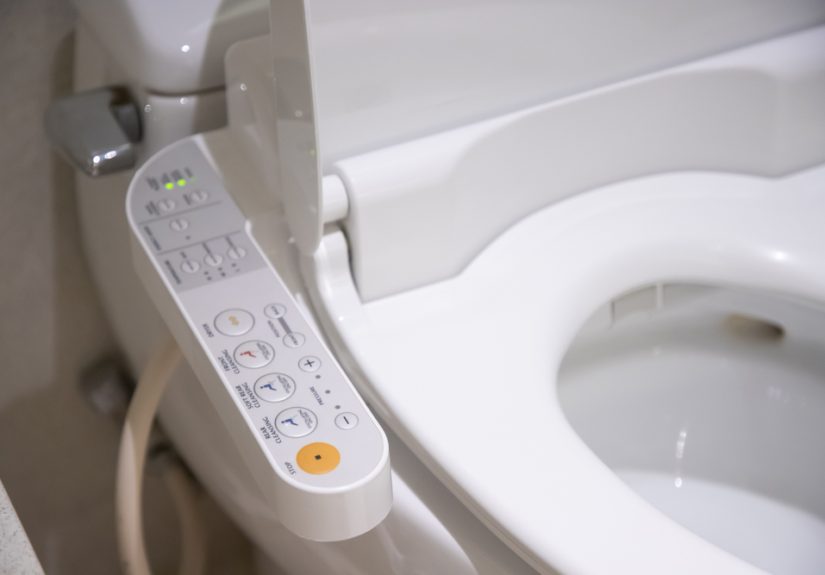
Guides for tourists in Japan break down the icons: rear wash, front wash, stop, big flush,
small flush, and sometimes a “privacy sound” button that plays water noises to cover bathroom
sounds.
After three years, I’d memorized the controls so well that sitting on a normal toilet felt
like opening an app and finding no buttons at all. Where’s the back button? Where’s the
brightness slider? Why is there no “undo” for accidentally using way too much toilet paper?
Good design turns awkward into normal
There’s something surprisingly human about a toilet that offers a soft-close lid so you don’t
slam it, a nightlight so you’re not blinded at 3 a.m., and clearly labeled controls so guests
can figure things out without a tutorial. US product testers now routinely evaluate these
kinds of features when ranking the best bidet seats and smart toilets and that reflects how
much user expectations have shifted.
Once you get used to this level of thoughtfulness, other “dumb” fixtures feel strangely
hostile like they were designed for nobody in particular.
Lesson 6: After Japanese Toilets, You Can’t Go Back
Stepping off a long flight and meeting a chilly, paper-only toilet is humbling. For a while,
every trip away from my Japanese-style setup felt like going from high-speed fiber internet
back to dial-up.
Interestingly, the US is starting to catch up. Home and product review sites now treat bidet
seats and smart toilets as serious upgrades, not quirky novelties. Brands like TOTO, Kohler,
Coway, and Tushy are investing heavily in features that echo what Japanese toilets have done
for decades: instant warm water, heated seats, automatic lids, thoughtful lighting, and
better hygiene overall.
Once you’ve lived with that combination of comfort, cleanliness, and sustainability, you
don’t really “upgrade” to a Japanese toilet. You upgrade to a new baseline and quietly refuse
to go back.
Thinking of Bringing a Japanese Toilet Experience Home?
If three years on a Japanese toilet taught me anything, it’s that you don’t have to move to
Tokyo to enjoy most of these benefits. You can recreate a lot of the experience with a good
bidet seat or smart toilet installed on your existing fixture.
- Start with a bidet seat, not a full smart toilet. It’s cheaper, easier to install, and fits most standard bowls.
- Prioritize heated water and a heated seat. Those two features deliver the biggest “wow” factor day to day.
- Check for eco modes and dual-flush compatibility. You’ll maximize both comfort and sustainability.
- Make sure you have a nearby outlet. Almost all electric bidet seats need power, and extension cords in bathrooms are not the vibe.
- Choose a model with clear controls. A good remote or side panel with icons is worth its weight in gold, especially for guests.
Will your life be ruined if you never own a Japanese-style toilet? No. Will your life be
noticeably more comfortable, cleaner, and a bit kinder to the planet if you do? Very likely,
yes.
Bonus: Extra Lessons from Three Years on the High-Tech Throne
To pad out the “toilet resume,” here are a few very real, very human experiences that only
surfaced after living with Japanese toilets for several years.
You become a bathroom evangelist (whether you want to or not)
At some point, you will absolutely corner a friend and say, “You just have to try it, I’ll
show you how the buttons work.” You’ll find yourself giving a quick tutorial: “This one is
rear wash, this is front wash, this stops everything. Don’t press the one with the musical
note unless you want fake flushing sounds.”
What surprised me after a few years was how quickly skeptics converted. People who swore
they would “never use that thing” came out of the bathroom looking mildly stunned and said
things like, “Okay… I get it now.”
Travel days become a series of tiny disappointments
Once your body gets used to warm seats and gentle washing, every trip through a non-upgraded
airport or hotel becomes a reminder of how spoiled you are at home. There’s the cold-seat
flinch, the “Wait, where’s the wash button?” moment, and the sad realization that you’re back
to using half a roll of toilet paper just to feel semi-clean.
After three years of Japanese toilets, you start packing wet wipes “just in case” not
because they’re better than a bidet (they’re not), but because you’ve become painfully aware
of how big the hygiene gap can feel once you’ve experienced the alternative.
You notice how design communicates respect
Japanese bathrooms, especially in newer buildings, often feel like they’re designed from the
assumption that you matter. You see details like a small shelf for your phone, a hook placed
at a sensible height, a tiny sink mounted on top of the toilet tank to reuse flush water for
handwashing. The toilet isn’t an afterthought it’s part of a system meant to make your life
smoother.
After three years, that sense of respect really sinks in. You start spotting where your own
environment cuts corners: doors that barely close, stalls with gaps that feel like stage
windows, harsh lighting that makes the mirror your enemy. Once you’ve lived with thoughtful
design, you feel the lack of it everywhere.
Your idea of “luxury” quietly shifts
Before Japanese toilets, “luxury bathroom” made me think of marble counters and huge tubs.
After three years, my definition changed: give me a standard-sized space with a smart toilet,
warm seat, good ventilation, and gentle lighting over an enormous but badly designed bathroom
any day.
Real luxury, it turns out, isn’t about how dramatic a room looks on Instagram. It’s about
how easy and comfortable it is to use when you’re half-awake at 2 a.m. and just want to get
in, get clean, and get back to bed without freezing, fumbling, or wasting a small forest of
toilet paper.
The smallest room teaches surprisingly big lessons
Three years of Japanese toilets taught me that incremental comfort upgrades can completely
change how you move through your day. A warmer seat, a gentler clean, a quieter flush, a
smaller stack of toilet paper in the closet none of these things are dramatic on their own.
Together, they create a small, daily experience that feels respectful, kind, and smart.
And if the smallest room in the house can feel that considered, it makes you wonder: where
else in life have we accepted “good enough” when we could have quietly, comfortably,
delightfully better?