Table of Contents >> Show >> Hide
- What makes a character truly menacing?
- Top 10 Menacing Film Characters
- 1. Anton Chigurh No Country for Old Men (2007)
- 2. Hannibal Lecter The Silence of the Lambs (1991)
- 3. Darth Vader Star Wars saga
- 4. The Joker (Heath Ledger) The Dark Knight (2008)
- 5. Norman Bates Psycho (1960)
- 6. Michael Myers Halloween (1978)
- 7. Pennywise It (1990 miniseries / 2017 film)
- 8. Freddy Krueger A Nightmare on Elm Street (1984)
- 9. Leatherface The Texas Chain Saw Massacre (1974)
- 10. Frank Booth Blue Velvet (1986)
- Why these ten?
- How menace shapes film storytelling
- Conclusion
- Personal Experiences & Reflections (Extra)
Introduction
Some movie characters don’t just play the villain they haunt your dreams, rewrite your idea of danger, and show up in casual conversations for decades. This list compiles ten of the most menacing film characters ever committed to celluloid (and pixels), blending psychological threat, physical menace, cultural impact, and performances that turned antagonists into legends. Expect cold precision, simmering menace, nightmares that start with a whisper, and a few iconic masks. Many of these choices appear repeatedly on critics’ and fans’ “most terrifying” and “best villains” lists which is why they belong on a Listverse-style countdown of screen menace.
What makes a character truly menacing?
Menace isn’t just about blood and screams. A menacing character can be unnervingly calm, disturbingly charismatic, or mechanically relentless. They can be human, superhuman, or an idea made flesh. Menace often works on two levels: what the character does, and how they tilt the film’s moral or emotional gravity. Critics and genre-watchers regularly point to performances and direction that turn antagonists into cultural benchmarks which explains why certain names keep reappearing in retrospective rankings across entertainment outlets.
Top 10 Menacing Film Characters
1. Anton Chigurh No Country for Old Men (2007)
Anton Chigurh is menace distilled into a haircut and a bolt pistol. Javier Bardem’s portrayal is famously blank-eyed and ritualistic: he treats killing like currency and fate like a coin flip. Chigurh’s unpredictability the moral roulette of his coin toss makes every scene with him feel like the rules of the world have been quietly rewritten. The terror he inspires isn’t just the violence; it’s the sense that rationality and fairness mean nothing to him.
2. Hannibal Lecter The Silence of the Lambs (1991)
Hannibal Lecter is erudition turned cannibalism, a velvet-gloved intelligence with a predator’s instincts. Anthony Hopkins’ calm, Michelangelo-like relish for manipulation makes Lecter one of cinema’s coldest masterminds. His menace isn’t always physical it’s intellectual domination. A single look from Lecter can rearrange a character’s priorities, and that lingering psychological aftershock is what keeps him terrifying.
3. Darth Vader Star Wars saga
Heavy breathing, a black helmet, and a tragic backstory make Darth Vader a unique synthesis of mythic menace and sympathetic ruin. He dominates frames both physically and iconically: when Vader enters, a room’s temperature seems to drop. That combination of unstoppable presence, emotional weight, and cultural ubiquity cements him as one of the most menacing figures in mainstream film history.
4. The Joker (Heath Ledger) The Dark Knight (2008)
Heath Ledger’s Joker is anarchic menace: chaotic, performative, and viciously clever. Ledger’s take is terrifying because it suggests anyone could become his twisted mirror a threat not only for what he does, but for the contagious nature of his ideology. The Joker destabilizes institutions and the viewer’s moral bearings alike, turning ordinary citizens into a potential battlefield of morality.
5. Norman Bates Psycho (1960)
Norman Bates redefined cinematic creepiness by hiding lethal instability under a shy, awkward exterior. Hitchcock used careful framing and lighting to coax menace from small gestures: a tilt of the head, a nervous smile. Norman’s menace is personal and domestic he turns the comforting image of family and the private house into a source of terror, proving that horror can live next door.
6. Michael Myers Halloween (1978)
Michael Myers is the embodiment of the unstoppable force: slow, silent, masked, and relentless. Carpenter’s direction frames Myers as an elemental evil less a character than an inevitability. The mask strips him of humanity, making his actions read as pure predation. The absence of motive amplifies the fear; you worry less about why he’s coming and more that he will arrive nonetheless.
7. Pennywise It (1990 miniseries / 2017 film)
A clown is supposed to be safe. Pennywise weaponizes that breach of trust. Whether in Tim Curry’s theatrical miniseries turn or Bill Skarsgård’s insectile reboot, Pennywise uses childhood fears as tools shifting form, voice, and tone to pick apart innocence. The effectiveness of Pennywise lies in the way he preys on specific vulnerabilities: nightmares personalized for every child.
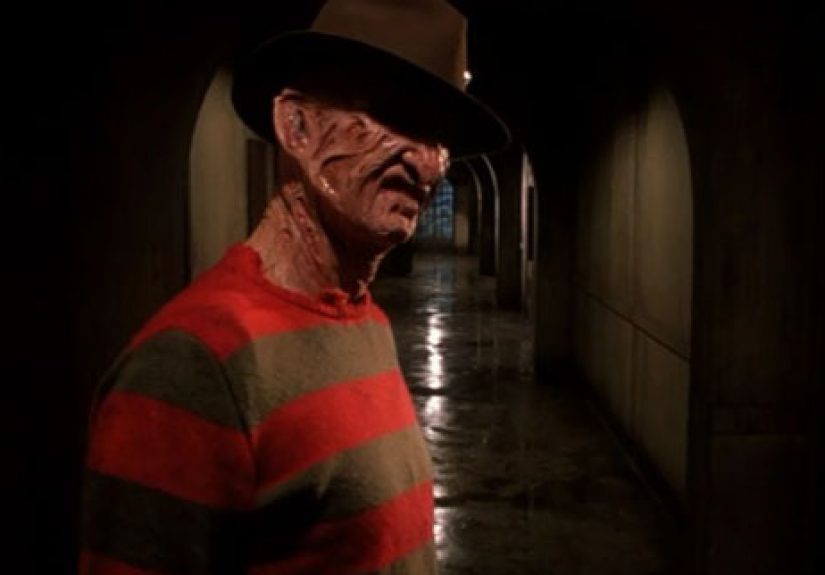
8. Freddy Krueger A Nightmare on Elm Street (1984)
Freddy Krueger is horror with a sardonic grin menacing because he invades sleep itself. Wes Craven’s concept of a killer who attacks in dreams turns vulnerability into the battleground. Freddy’s clever, cruel monologues and inventive dreamkill set pieces make him both theatrical and terrifying: you can’t switch him off by closing your eyes.
9. Leatherface The Texas Chain Saw Massacre (1974)
Leatherface channels raw, primal terror: lumbering, masked, and brutal. The film’s cinéma vérité style and unglamorous violence amplify his menace. He’s a force of grotesque ritual more than a complex personality a perfect embodiment of visceral, animalistic horror that strips away civilized veneers.
10. Frank Booth Blue Velvet (1986)
David Lynch’s Frank Booth is erratic, eroticized menace explosive, unpredictable, and profoundly unsettling. Dennis Hopper’s performance uses proximity and invasion to create horror; Booth’s volatility turns ordinary scenes into tinderboxes. He’s a reminder that menace can be intimate and that the most terrifying characters often unsettle through behavior rather than backstory.
Why these ten?
This selection aims to capture different flavors of menace: the clinical (Chigurh), the intellectual (Lecter), the mythic (Vader), the ideological (The Joker), and the elemental (Myers, Leatherface). Critics, fan polls, and retrospective rankings consistently highlight these figures when discussing the most frightening or influential screen antagonists which is why they repeatedly top lists compiled by film outlets and genre critics. These characters represent enduring archetypes that filmmakers and audiences keep returning to when they talk about cinematic threat and tension.
How menace shapes film storytelling
Menacing characters force stories into sharper focus. They define stakes, expose protagonists’ vulnerabilities, and often catalyze the film’s moral questions. A great villain doesn’t merely obstruct the hero; the villain reframes the entire narrative prism, forcing viewers to examine what they would do under pressure. Directors and writers lean on menace to deliver suspense, to create memorable confrontations, and to leave audiences thinking long after the credits roll.
Conclusion
Menacing film characters come in many forms, but they all share the power to unsettle and to linger. Whether through quiet gaps between words, a chilling laugh, or a slow, inexorable approach in the dark, these ten characters have earned their status by reshaping the movies they occupy and by remaining touchstones for fear in popular culture.
sapo: This Listverse-style roundup ranks ten of cinema’s most menacing characters, exploring what makes them terrifying: from Anton Chigurh’s cold determinism and Hannibal Lecter’s cultured cruelty to Darth Vader’s shadowy mythos and Pennywise’s predatory clowning. Each entry breaks down the performance, iconic scenes, and why these antagonists still reverberate through pop culture the perfect primer for anyone who wants to know which villains redefined on-screen menace.
Personal Experiences & Reflections (Extra)
I remember the first time I felt a character wasn’t simply “bad” but menacing in a way that clung to daylight hours it was watching Psycho as a teenager. Hitchcock’s approach made me wary of houses built on hills, and Norman Bates taught me that menace can masquerade as politeness. That paranoia turned ordinary settings into potential nightmares: the motel, the shower, the mundane flash of a silhouette each became a place to hold my breath.
Then there was the evening I introduced a friend to No Country for Old Men. We watched in silence, and when Anton Chigurh first appeared, the room seemed to contract. It wasn’t just the brutality; it was the sense that a character could make morality feel arbitrary. My friend texted later that night: “I keep hearing coins in my head.” That’s the thing with menacing characters they generate private aftershocks.
Movie nights with horror fans are where you see menace become a shared language. We argue over who’s scarier: Freddy with his sadistic jokes that puncture any safety we take in sleep, or Pennywise with forms that feed on childhood anxieties. Someone defends Leatherface for raw, visceral terror; someone else champions Hannibal for intellectual domination. Each debate highlights that “menace” is elastic for one person it’s a slow, unstoppable presence; for another it’s the invasive perversion of the everyday.
My own writing and film-watching habits changed after reading critical pieces that connected menace to cultural anxieties. A villain often mirrors the audience’s fears: social disorder, the collapse of institutions, or the erosion of family trust. Darth Vader, for example, taps into fears of corrupted power and lost identity, while the Joker channels anxieties about chaos undermining social contracts. When you pair a character like that with a director who understands visual language, the result is archetypal menace that echoes beyond the theater.
On a lighter note, watching movies with younger viewers has its own strange joy. Introduce a teen to Halloween and they’ll scoff at the pace; introduce them to Michael Myers decades after the mask was made and watch their eyes widen when the silence stretches. Menace ages differently than special effects: modern CGI can dazzle, but a slow, deliberate stalking sequence often outlasts a digital spectacle in sheer dread.
One memorable experience was attending a retrospective screening where the audience applauded the villain. It felt odd at first applauding a character who represents the worst of humanity but then you realize the applause is for craftsmanship: an actor’s commitment, a writer’s ruthless clarity, a director’s ability to shape fear. Menacing characters are often the films’ greatest acting showcases, and applause is recognition of that artistry.
Finally, menace is useful when it pushes creators to innovate. Directors who want to frighten us must rethink camera angles, sound design, and pacing. Watching how different filmmakers approach the same raw idea a killer who won’t stop, a manipulator who toys with minds, or a supernatural predator teaches you about the mechanics of tension. As a viewer and a writer, those lessons are invaluable: menace isn’t an effect you bolt on. It’s something you cultivate with patience, restraint, and often a single, unforgettable image.
Whether you prefer the cold efficiency of Anton Chigurh, the theatrical cruelty of Freddy Krueger, or the mythic sweep of Darth Vader, menacing film characters do more than frighten: they give stories teeth. They also give viewers something to talk about long after the lights come up and that, in the end, might be the most menacing thing of all: the stories that never stop following you home.