Table of Contents >> Show >> Hide
- So, what is the $16K Amazon tiny house, exactly?
- Why floor-to-ceiling windows are the tiny-house cheat code
- What $16K buys (and what it absolutely does not)
- The “real” cost to finish it: a practical budget reality check
- Permits, zoning, and the tiny-house code puzzle
- How to make all that glass comfortable (not a climate-control hostage situation)
- Layout ideas: turning 225 sq. ft. into a real-life space
- Who this Amazon tiny house is best for (and who should run away politely)
- Other Amazon tiny homes with big windows (if you’re comparison-shopping)
- Conclusion: the tiny house that feels bigger than it is
- What It’s Like to Live Behind All That Glass: Real-World Experiences
There are two kinds of tiny-house people: the “I can live with one spoon and a single sock” minimalists, and the “I want a tiny house that feels like a boutique hotel lobby” dreamers. If you’re in camp #2, Amazon has been quietly feeding your algorithm a very specific fantasy: a resort-style tiny house kit hovering around the $16,000 mark, wrapped in glass, drenched in sunlight, and basically begging for a linen curtain moment.
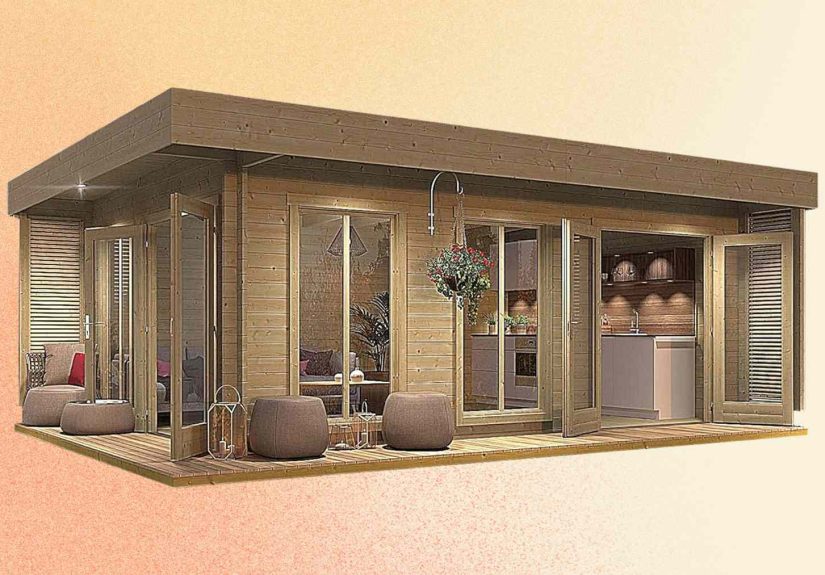
The headline-grabber is the Allwood Bonaire Resort-Style Cabin Kita DIY tiny house kit that’s become internet-famous for its floor-to-ceiling windows and airy, modern “I definitely do yoga” vibe. But before you start naming the porch swing and picking out a tiny espresso machine, let’s unpack what you’re really getting, what you’ll still need to buy, and how to make all that glass work for you instead of turning your dream cabin into a glamorous greenhouse.
So, what is the $16K Amazon tiny house, exactly?
In plain English: it’s a prefab-style cabin kit shipped as a build-it-yourself package. It’s not a fully finished home rolling up on a trailer like a pizza deliverymore like a very sophisticated adult LEGO set made of wood, windows, and optimism. The Bonaire’s appeal is simple: it looks expensive, feels open, and brings “vacation rental energy” to a backyard, lake lot, or rural property.
Key specs at a glance
- Price: Commonly listed around $15.5K (pricing can fluctuate)
- Interior space: 225 sq. ft. (open-plan, studio-style)
- Material: Slow-grown Nordic spruce
- Footprint: Roughly 21’7″ wide x 15’8″ deep
- Ceiling height: About 8′ at the front, 7’8″ at the back
- Glass: Three tall windows + two full-length glass door sets
- Outdoor living: A wraparound covered porch that acts like extra “visual square footage”
Translation: it’s not huge, but it’s designed to feel biggerthanks to the windows, the doors, and the indoor-outdoor layout that basically says, “What if your living room had a crush on the outdoors?”
Why floor-to-ceiling windows are the tiny-house cheat code
Tiny homes live and die by perception. Two hundred square feet can feel like a cozy studio… or like you accidentally moved into your walk-in closet. Floor-to-ceiling windows change the math by changing the experience:
- Daylight expands space: Natural light reduces visual clutter and makes corners feel less cramped.
- Long sightlines: When you can see outsidetrees, sky, even your neighbor’s dramatic inflatable snowmanthe interior feels deeper.
- Indoor-outdoor living: With big glass doors, the porch becomes an extension of the room. You’re not just buying square footage; you’re buying flow.
This is why the Bonaire keeps getting described like a “resort cabin” and not a “shed with dreams.” Glass is doing a lot of heavy lifting here. Emotionally. Architecturally. Possibly spiritually.
What $16K buys (and what it absolutely does not)
Let’s be clear: when people say “$16K tiny house on Amazon,” it’s easy to imagine a fully functioning mini-home with a bathroom, kitchen, and the kind of perfect throw pillows that never exist in real life. In reality, the kit generally covers the structurethe shell and the core components needed to assemble it.
Typically included in a cabin kit like this
- Precut wall boards and framing components
- Floor boards/joists
- Roof rafters/roof boards (but not necessarily your finished roofing system)
- Windows and door units (the stars of the show)
- Hardware (screws, nails, locks/handles)
- Assembly plans (your new favorite bedtime reading)
Commonly not included
- Foundation or site prep: slab, piers, blocks, leveling, grading
- Finished roofing materials: shingles/metal roofing, underlayment, flashing
- Insulation: and the air-sealing work that makes a small space comfortable
- Electrical: wiring, breaker panel, outlets, lights, and licensed labor where required
- Plumbing: supply/drain lines, fixtures, water heater, septic or sewer connections
- Interior build-out: flooring finishes, wall finishes, kitchenette, bathroom build
- Permits and inspections: the paperwork carnival
Think of the purchase price as the cost of the “beautiful bones.” The restcomfort, utilities, legality, and not freezing in Februarycomes later.
The “real” cost to finish it: a practical budget reality check
If you’re planning to use this as a backyard guest house, home office, creative studio, or even a small ADU, the finished cost matters more than the viral price tag. The range depends on your location, how DIY you go, and whether you want “simple” or “Pinterest-credible.”
A realistic way to think about it is by categories:
1) Site + foundation
Even a tiny structure needs a serious base. Costs vary wildly based on soil, slope, access for trucks, and local requirements. A basic foundation approach might be simple; a code-compliant foundation with drainage and proper anchoring can be a bigger bite.
2) Weatherproofing + roofing
Tiny homes can be unforgiving: a small leak feels like a personal betrayal. Budget for a proper roofing system, flashing, and exterior sealing/staining/paint. Wood is gorgeous, but it likes maintenance the way cats like attention: on its terms and on a schedule.
3) Comfort systems
Insulation, ventilation, heating/coolingespecially with lots of glassturn a pretty cabin into a usable space. Many owners add wall/roof insulation, seal gaps, and consider a mini-split or efficient space-conditioning solution if it’s more than a seasonal hangout.
4) Kitchen + bath (if you want it livable)
A “fully functional tiny house” usually means you’re adding at least a compact kitchenette and a bathroom. That can be as minimal as a sink and small counter… or as involved as a full shower, vanity, and code-compliant plumbing tie-ins.
Bottom line: the kit can be the affordable entry point, but the finished total is often a “depends on your ambitions” number. Set expectations early and you’ll stay happy later.
Permits, zoning, and the tiny-house code puzzle
The most expensive tiny-house mistake is buying first and asking the local building department later. Rules vary city to city, county to county, and sometimes neighbor to neighbor (because life is funny like that).
Tiny house on a foundation vs. tiny house on wheels
The Bonaire is typically approached as a tiny house on a foundation (or at least a permanent-ish structure), which puts it in the world of building codes, permits, inspections, and zoning rules about setbacks and accessory structures.
In many jurisdictions, tiny houses used as dwellings fall under residential code frameworks that recognize small footprintsoften referenced as Appendix Q in the International Residential Code family of standards for tiny homes (commonly under 400 sq. ft., with certain allowances tailored for compact living). If a tiny house is meant to be movable and treated like an RV-style unit, different standards and certifications may apply.
Using it as an ADU (backyard cottage) or guest suite
If your plan is “I’ll build this and rent it out” or “My in-laws will live here,” treat it like an Accessory Dwelling Unit conversation from day one. ADU rules can cover minimum sizes, parking requirements, utility hookups, and whether the unit needs a full kitchen and a bathroom.
Financing can also be part of the ADU story. Some mainstream mortgage frameworks treat ADUs as an improvement/feature that can be financed through certain standard lending paths (especially when tied to a primary single-family property), though the exact options depend on your lender and project scope.
How to make all that glass comfortable (not a climate-control hostage situation)
Floor-to-ceiling windows are stunning. They’re also honest. They will faithfully report every sunrise, every heatwave, and every moment your neighbor decides to mow the lawn at 7:02 a.m.
Energy efficiency: learn the labels before you learn regret
When you have a lot of glazing, window performance matters. Look for window ratings that help you understand:
- U-factor: how well the window resists heat flow (lower is better for insulation)
- Solar Heat Gain Coefficient (SHGC): how much solar heat gets through (lower can help in hot climates)
- Air leakage: how “drafty” the unit may be
- Visible transmittance: how much light comes through (higher is brighter, but can increase glare)
Design moves that keep the “glass wall” vibe without the downsides
- Orientation matters: south/west-facing glass can bring glare and heat; plan shading accordingly.
- Use window coverings strategically: top-down/bottom-up shades are tiny-house magic.
- Add exterior shade: awnings, pergolas, or plantings can cut heat gain.
- Ventilation is non-negotiable: especially in a small volume where humidity builds fast.
Done right, the windows become your best feature year-round. Done wrong, you’ll be shopping for blackout curtains like your comfort depends on itbecause it does.
Layout ideas: turning 225 sq. ft. into a real-life space
The Bonaire’s interior is often described as a blank canvasand that’s the point. You’re not locked into a tiny-house floor plan that forces your couch to moonlight as a staircase.
Three smart layout approaches
- The studio suite: Bed/daybed along one wall, compact kitchenette on the long side, small bistro table near the glass doors.
- The ADU-lite: Bathroom tucked into a back corner, kitchenette along the side wall, living zone facing the windows.
- The work retreat: Desk facing the windows, storage wall for supplies, and a lounge chair that says “this is where my best ideas happen.”
Pro tip: in a tiny house with huge windows, keep tall storage and visual clutter away from the glass wall. Let the outdoors be your “art,” and your interior instantly looks more expensive.
Who this Amazon tiny house is best for (and who should run away politely)
It’s a great fit if you want…
- A backyard office that doesn’t feel like a converted tool shed
- A guest house with privacy and a “wow” factor
- A studio for art, yoga, music, or hobbies that deserve daylight
- A potential short-term rental on a scenic property (with permits handled properly)
It’s not a great fit if you want…
- A turnkey home that arrives finished and ready to inhabit immediately
- A no-permits, no-planning project (local rules will eventually notice you)
- A “set it and forget it” structure with zero maintenance (wood + weather = ongoing relationship)
Other Amazon tiny homes with big windows (if you’re comparison-shopping)
If the Bonaire is the “modern resort rectangle,” the Amazon tiny-home universe also includes A-frames with dramatic window walls, capsule-style prefab units with an entire glass face, and a variety of cabin kits that range from rustic to ultra-modern. Many emphasize natural light because it’s the easiest way to make small spaces feel livableand photogenic.
Just remember: in the Amazon tiny house category, listings can mix DIY kits, prefab modules, and fold-out structures. Always double-check what’s included, what’s required locally, and whether “installation” means “we place it” or “we vanish like a magician once the truck leaves.”
Conclusion: the tiny house that feels bigger than it is
The internet loves a headline like “$16K Amazon tiny house,” but the real story is why this particular kit keeps catching eyes: floor-to-ceiling windows plus a wraparound porch create a bright, open, vacation-like space that feels bigger than 225 square feet has any right to feel.
If you treat it like a smart projectplan the site, budget for finishing, respect local codes, and design for comfortyou can end up with a backyard sanctuary, guest cottage, or creative studio that looks like it belongs on a travel magazine spread. If you treat it like a one-click “house, please,” you’ll end up with a very beautiful pile of wood and a new hobby: Googling permits at midnight.
What It’s Like to Live Behind All That Glass: Real-World Experiences
Floor-to-ceiling windows in a tiny house feel like a cheat codeuntil you live with them for more than a long weekend. Then you realize the glass isn’t just a design feature. It’s a roommate. A very honest roommate who never sleeps, loves sunlight, and occasionally tattles on your clutter.
First, the good part: mornings can be ridiculously cinematic. When your “living room” is basically a lantern, you wake up earlier without trying. Light pours in, your coffee tastes 12% better (science-ish), and you start believing you’re the kind of person who reads hardcover books instead of doomscrolling. If the cabin faces trees or water, the view becomes your biggest luxury itembigger than any appliance upgrade.
But here’s the part nobody puts in the listing photos: privacy is a strategy. Even in a rural spot, “lots of windows” can mean “wildlife can watch you eat cereal.” If you’re in a neighborhood, you’ll want a plan before you learn your neighbor’s dog has opinions about your pajamas. Experiences from glass-heavy tiny spaces tend to land on the same solutions: light-filtering shades for daytime, real privacy shades for night, and curtains that soften the space so it doesn’t feel like you’re living in a showroom.
Next: temperature swings are real. On a mild day, the windows are perfect. On a hot day, direct sun can turn a small interior into a tiny sauna with excellent vibes but questionable comfort. In cold weather, you may notice cool surfaces near the glass, especially if the windows aren’t optimized for your climate. People who thrive in glassy cabins usually do a few consistent things: they manage sun exposure (shading and orientation), use proper window coverings, and prioritize ventilation so the space doesn’t get stuffy or damp.
Then there’s the tiny-house classic: where do you put stuff? In a window-forward layout, you can’t line every wall with tall shelving without blocking the very feature you paid for. The lived-in solution is low storage: benches with hidden compartments, a slim wardrobe against a solid wall, and a commitment to keeping countertops clear. The windows make mess feel louder. The good news is that the same windows also make minimal styling look incredible. A small table, a chair, a plant, and boomyour space looks like a catalog shoot.
Cleaning is… a recurring character. Big glass means fingerprints, dust, and the occasional “what is that smear and why does it have my name on it?” If you’re near trees, pollen is basically seasonal glitter. If you’re near a road, you’ll get film buildup. Most people settle into a simple rhythm: quick wipe-downs more often instead of heroic deep cleans once a month. (Heroic deep cleans are where you start muttering at the window like it personally betrayed you.)
Finally, the surprise perk: mood. Bright, daylit spaces can feel energizing and calming at the same time. For a home office, that’s a productivity boost. For a guest house, it feels welcoming. For a studio, it’s inspiration on tap. The trick is balancepair the drama of glass with the softness of textiles, add warm lighting for nighttime, and give yourself at least one “cozy corner” that doesn’t feel exposed.
In the end, living with floor-to-ceiling windows in a tiny house is a bit like owning a convertible. It’s thrilling, it’s beautiful, and it makes you feel like the main character. You just need to remember: weather exists, privacy matters, and you’ll probably become the kind of person who has strong opinions about blinds.