Table of Contents >> Show >> Hide
- Quick Picks
- How We Evaluated “Tested & Reviewed” Claims
- The Best Benchtop Planers, Tested & Reviewed
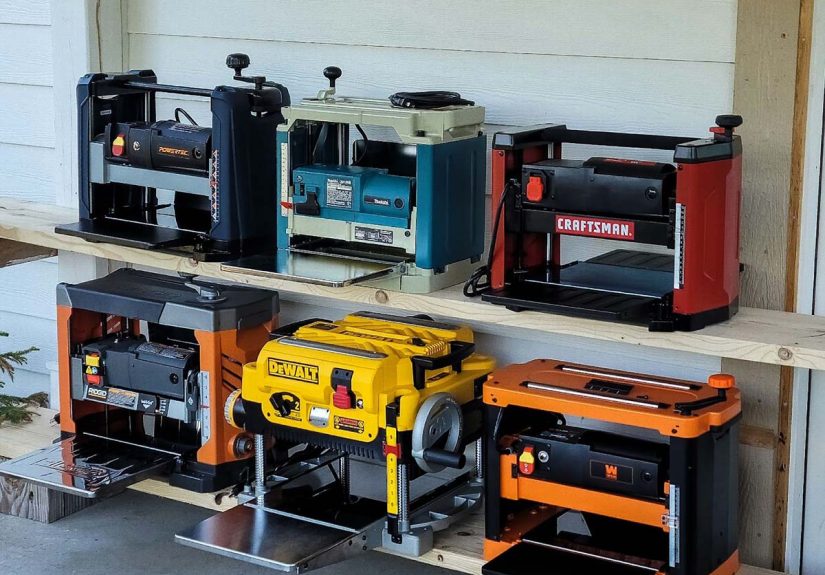
- Best Overall: DeWalt DW735X (13" Two-Speed, 3-Knife)
- Best Portable Choice: Makita 2012NB (12" Portable Planer)
- Best Value with Smart Features: RIDGID R4331 (13" Three-Blade)
- Best Budget Spiral-Style Option: WEN PL1326 (13" Spiral Cutterhead with 26 Rotatable Blades)
- Best Budget 3-Knife Classic: WEN 6552T (13" Three-Blade with Fan-Assisted Dust Port)
- Best Entry-Level Major Brand Option: CRAFTSMAN CMEW320 (15 Amp, Two-Knife)
- Best “Small Pro Shop” Upgrade: Grizzly G0999 (15" Benchtop, 2 HP, Spiral Carbide Inserts)
- Premium Aspirational Pick: Oliver Helical/Spiral Models (for “I’m done messing around” shops)
- Buying Guide: How to Choose the Best Benchtop Planer
- Common Myths About Benchtop Planers (and What Tests Suggest)
- FAQ
- Real-World Experiences (Extra Notes from the Shop Floor)
A benchtop thickness planer is the woodworking equivalent of a good haircut: it makes everything look more expensive,
even if you’re working with bargain lumber and big dreams. The right “lunchbox planer” can turn rough boards into
consistent, smooth stock for cabinets, furniture, trim, and weekend projects that start as “quick” and end as “why is it Tuesday?”
This roundup is built from real-world test findings published by established tool and woodworking outlets, plus
manufacturer specifications and documented features from major brands. Where testers disagree, we call it outbecause
nothing says “authentic woodworking” like two experts having opposite opinions after wrestling the same plank. [1][2][3]
Safety note: Benchtop planers are powerful machines. Always follow the manufacturer’s safety guidance.
If you’re under 18, use only with trained adult supervision in a properly equipped shop.
Quick Picks
- Best overall (most people): DeWalt DW735X [1][2][3]
- Best portable + consistent results: Makita 2012NB [4][2]
- Best value with smart features: RIDGID R4331 [5][2]
- Best budget “spiral-style” option: WEN PL1326 [6]
- Best budget 3-knife classic: WEN 6552T [7][8]
- Best for small pro shops needing width: Grizzly G0999 (15") [10][11][12][13]
How We Evaluated “Tested & Reviewed” Claims
Because we’re synthesizing published testing (not running a lab in your browser), we focused on what reputable
reviewers actually measure and experience: surface quality, power under load, consistency, chip collection,
ease of ownership, and overall value. Shop tests often include planing hardwood at full width, evaluating chip
collection performance, and comparing accuracy and usability features across multiple machines. [2][15]
What matters most for DIYers and pros
- Surface quality: Knife count, cutterhead design, and feed speed influence how much cleanup work you’ll do later.
- Power and “does it bog down?”: Especially important if you regularly work with hardwoods. [2]
- Chip management: Planers create a shocking volume of chips (it’s like the machine ate your board and sneezed confetti). [2][1]
- Snipe control: Many tests and reviews mention itsome machines manage it better than others. [2][4]
- Cost to own: Knife/inserts, durability, and warranty support matter over time.
The Best Benchtop Planers, Tested & Reviewed
Best Overall: DeWalt DW735X (13" Two-Speed, 3-Knife)
If benchtop planers had a “most likely to be recommended” yearbook award, the DW735X would have a trophy shelf.
Reviewers repeatedly praise its blend of power, finish quality, and features that make day-to-day work feel less
fussy. In published shop testing, it has been singled out as a top performer across categories, and the feature
set explains why. [2][3]
- Why it wins: Two-speed feed options (96 or 179 cuts per inch), a 3-knife cutterhead, and design features aimed at reducing snipe. [1]
- Chip control: DeWalt highlights fan-assisted chip ejection, and independent testing has noted how effective blower-style systems can be. [1][2]
- Who it’s for: DIYers who want “buy once, cry once,” and pros who need a dependable portable planer on tight footprints.
Watch-outs: It’s not featherweight. If you’ll move it frequently, plan for a stable stand or a dedicated station.
Also, like any planer, long-term satisfaction depends on keeping cutting edges in good shape.
Best Portable Choice: Makita 2012NB (12" Portable Planer)
The Makita 2012NB is often described as the “grab-and-go” planer that still takes pride in its work. Makita
calls out an automated head clamp system designed to help reduce snipe, plus a strong 15-amp motor and a compact
footprint for portability. [4]
- Specs highlight: 12" capacity, 15 amps, and a listed no-load speed of 8,500 RPM. [4]
- What testers note: Some shop tests mention that chip collection hardware may be optional rather than included, which matters if you’re trying to keep your shop from looking like a hamster enclosure. [2]
- Who it’s for: Makers who prioritize portability and consistently clean results on a slightly narrower capacity.
Watch-outs: If your workflow depends on strong built-in chip control, verify the included dust solution (and budget for accessories if needed). [2]
Best Value with Smart Features: RIDGID R4331 (13" Three-Blade)
The RIDGID R4331 earns attention for pairing jobsite-friendly portability with features that help repeatability
a big deal when you want multiple boards to match without endless fiddling. RIDGID lists a 15-amp motor, 9,000 RPM
no-load speed, 96 CPI, and a 23.5 FPM feed rate, plus built-in gauges and depth stops aimed at consistency. [5]
- Consistency helpers: “Depth gauge” and preset depth stops are the kind of “small” features that feel huge after your tenth board. [5]
- Third-party perspective: In shop testing, RIDGID’s stops and depth-of-cut gauge were specifically praised among competitors. [2]
- Who it’s for: DIYers upgrading from entry-level tools and pros who want repeatability without premium pricing.
Watch-outs: Capacity is standard 13" class, so wide slabs still require alternative flattening strategies (or a bigger machine).
Best Budget Spiral-Style Option: WEN PL1326 (13" Spiral Cutterhead with 26 Rotatable Blades)
If you want the “spiral-style” experience without taking out a second mortgage, WEN’s PL1326 is widely discussed
for offering a cutterhead with multiple small, rotatable blades. WEN lists 26 staggered/rotatable HSS blades,
a 15-amp motor, and a 10,000 RPM cutterhead speed, with a 26 FPM feed rate. [6]
- Why it’s compelling: More cutting edges can translate into smoother-looking results and less drama when a blade edge gets tired (since rotation/replacement is modular). [6]
- Capacity: Up to 13" wide and 6" thickstandard lunchbox territory. [6]
- Who it’s for: Budget-minded DIYers who care about surface quality and prefer a “many edges” approach over traditional straight knives.
Watch-outs: It’s still a budget machineexpect to spend time dialing in your setup and prioritizing stability.
Best Budget 3-Knife Classic: WEN 6552T (13" Three-Blade with Fan-Assisted Dust Port)
Not everyone wants spiral-style cutters. Some people want the straightforward “classic lunchbox planer” feel,
with lots of cuts per minute and a reasonable price. WEN’s 6552T leans into that: WEN advertises over 25,500 cuts
per minute at a 26 FPM feed rate and highlights a fan-assisted dust port concept for moving chips away. [7]
- Why it’s a good budget pick: Three blades can help spread wear and support a smoother finish than two-knife designs, in general.
- Who it’s for: DIYers who want capable results for home projects and hobby work without jumping to premium pricing.
- Also noted in mainstream tool roundups: Family Handyman has highlighted WEN among notable benchtop planer picks in 2025. [8]
Watch-outs: Budget planers can be louder and may benefit from a dedicated station to reduce vibration.
Best Entry-Level Major Brand Option: CRAFTSMAN CMEW320 (15 Amp, Two-Knife)
CRAFTSMAN’s CMEW320 targets users who want a recognizable brand, a straightforward feature set, and a path into
thickness planing without pro-level costs. CRAFTSMAN lists a 15-amp motor and an 8,000 RPM cutterhead speed
delivering 16,000 cuts per minute, plus a two-knife “quick-change” cutterhead concept. [9]
- Why it works: Simple controls and mainstream support can be appealing for first-time planer owners.
- Who it’s for: DIYers doing occasional projectstrim, small furniture parts, and boards that need consistent thickness.
Watch-outs: Two-knife systems can mean more frequent blade attention compared with three-knife designs, depending on workload.
Best “Small Pro Shop” Upgrade: Grizzly G0999 (15" Benchtop, 2 HP, Spiral Carbide Inserts)
The Grizzly G0999 shows up in late-2025 coverage as a legit “bridge machine”bigger capacity and more muscle than
typical lunchbox planers, while still running on 120V. Reviewers emphasize that it narrows the gap between compact
benchtop tools and floor-standing machines, especially with a spiral cutterhead using indexable carbide inserts. [11][12][13]
- Big headline: 15" planing capacity with a 2 HP induction motor. [10]
- Cutterhead: Spiral cutterhead with indexable carbide inserts (32 listed in the spec sheet). [10]
- Stability: Listed weight around 133 lbs helps damp vibration and noise compared with lighter machines. [10][11]
- Two feed rates: Spec sheet lists 12 and 22 FPM feed rates (two-speed gearbox concept). [10]
Who it’s for: Pros and serious hobbyists who routinely mill hardwood, want carbide insert convenience,
and need more width without committing to a full-size stationary planer.
Watch-outs: It’s “benchtop” in name, but not in the “toss it on a shelf” sense. Plan for a sturdy stand
or mobile base, and make sure your shop power is appropriate for a 2 HP class tool. [10]
Premium Aspirational Pick: Oliver Helical/Spiral Models (for “I’m done messing around” shops)
In comparative shop testing, some premium machines stand out for chip evacuation and overall refinementparticularly
models with built-in blower assistance and insert-style cutterheads. Wood Magazine has specifically called out how
built-in blower systems can evacuate chips so effectively that dust collection demands may feel reduced in practice. [2]
Popular Mechanics also includes premium-tier options in its benchtop planer recommendations. [3]
Who it’s for: Small pro shops or very serious enthusiasts who want a smoother ownership experience and
are willing to pay for it.
Buying Guide: How to Choose the Best Benchtop Planer
1) Straight knives vs. spiral/helical-style cutterheads
Traditional planers use long straight knives (often 2 or 3). They can produce excellent results, but blade changes
are “all at once,” and a nick can show up as a repeating line until the knife is rotated or replaced.
Spiral/helical-style cutterheads use multiple smaller cutters; with indexable carbide inserts, you can rotate or
replace just the affected cutters rather than swapping a full knife set. Premium benchtop machines increasingly
lean this way. [10][11]
2) Feed rate and “two-speed” gearboxes
Two-speed planers (like the DW735X class) let users trade speed for finish quality using different cuts-per-inch
settings. DeWalt lists 96 and 179 CPI options on the DW735X, which is a big reason it’s frequently recommended
as an all-arounder. [1][2]
3) Chip collection is not optional (in real life)
Shop tests often emphasize chip collection because planers generate a lot of waste very quickly. In Wood Magazine’s
benchtop planer testing, blower-style designs were highlighted for strong chip evacuation. On the flip side, some
planers may require optional hoods or add-ons to connect to dust collection. If you plan to run a planer often,
prioritize a machine with a practical chip-management setup. [2][1][4]
4) Accuracy helpers: depth stops, scales, and gauges
A planer can be powerful and still be annoying if it’s hard to repeat a thickness accurately. Depth stops and
readable scales help you return to common thickness targets more reliably. In comparative testing, RIDGID’s approach
to stops and depth-of-cut gauges was singled out as particularly helpful. [2][5]
5) Total cost of ownership
Planers don’t just cost money upfrontthey cost money in cutting edges. If you run a lot of hardwood or reclaimed
material, factor in replacement knives or insert cutters over time. This is where “cheap up front” can become
“surprisingly expensive later,” like adopting a free puppy that somehow needs three different foods and a therapist.
Common Myths About Benchtop Planers (and What Tests Suggest)
Myth: “More amps always means more power.”
Many benchtop planers cluster around 15 amps, yet published shop tests still show meaningful performance differences
when pushing deeper cuts on full-width hardwood. Motor design, cutterhead, and feed system all matter. [2]
Myth: “Any planer can handle hardwood the same.”
Shop testing often uses hardwood to separate “fine for weekend trim” from “ready for serious milling.” Some machines
keep pace; others bog down or stall when challenged. Look for reviews that describe performance under load, not just
“it turns on and makes wood thinner.” [2][15]
Myth: “Dust collection is just for neat freaks.”
Chip control affects more than cleanliness. It influences workflow, visibility, and how often you stop to clear
mess. Tests regularly call it out because it’s one of the biggest day-to-day differences between planers. [2][1]
FAQ
Is a 12" planer enough, or should I get a 13"?
If you work with wider boards often, 13" is the common “sweet spot.” If portability is your priority and your projects
rarely demand width, a strong 12" class planer can be a smart choice. [4]
Do I need a spiral/helical cutterhead?
You don’t need it, but many users like the convenience of rotating/replacing smaller cutters and the way insert-style
designs can handle varied grain. If you’re milling a lot of hardwood or want easier long-term upkeep, it’s worth
considering. [10][11]
What’s the “best” planer for a small pro shop?
For many pros, the decision comes down to capacity, reliability, and ownership costs. Wider benchtop machines with
insert cutterheadslike the G0999 classare increasingly reviewed as “bridge” tools between portable and stationary. [11][12][13]
Real-World Experiences (Extra Notes from the Shop Floor)
The moment a benchtop planer arrives, most people think the big decision is “Which model did I buy?” In reality,
the bigger decision shows up after a few weeks: “How does this tool fit into my workflow?” That’s where the best
benchtop planers quietly prove their valuenot just with one impressive board, but with a month of projects that
need consistent thickness, repeatability, and a setup that doesn’t feel like a daily negotiation.
Many DIYers describe their first “aha” moment as psychological as it is practical: the shop becomes more confident.
Suddenly, rough stock isn’t a problemit’s just material. Instead of planning projects around the boards you can buy
pre-milled, you plan projects around the boards you want. That shift is why the DW735X-type machines get so much love:
they tend to feel strong and predictable, with features that make routine milling less finicky. When published testing
repeatedly ranks a machine near the top across categories, it usually reflects this lived experience of “less fighting,
more building.” [2][1]
Portability stories are their own category. The Makita 2012NB gets brought up when someone needs a planer that can
be moved without turning it into a group fitness class. In a small garage, a planer often lives on a rolling cart,
a shelf, or a bench that must also serve as “everything else.” In that environment, a lighter machine can get used
more often simply because it’s easier to deploy. And “used more often” is how tools earn their keep. [4]
Then there’s the “chip reality.” Reviews and shop tests talk about it because it’s unavoidable: planers generate
astonishing volumes of chips. Owners frequently say the difference between a planer they love and a planer they
tolerate is how quickly the workspace turns into a snow globe of shavings. Machines that emphasize chip ejection
and practical dust ports tend to make the whole experience feel smoother, especially in small shops where cleanup
steals time from the fun part. [2][1][7]
Pros often focus on repeatability. If you’re building multiple cabinet doors, a set of shelves, or consistent parts
for client work, you don’t want to “re-discover” the right thickness every time. That’s why built-in depth stops,
readable gauges, and stable adjustment systems get praised in testing. RIDGID’s approach to depth stops and measuring
features, for example, aligns with the kind of details that matter when you’re making many parts that must match. [5][2]
Finally, owners talk about cutterhead style in a surprisingly emotional way. Straight knives workand they can work
extremely wellbut insert-style cutterheads tend to win people over when the workload gets heavier or the material gets
unpredictable. A wider, heavier “bridge” planer with spiral carbide inserts can feel like a different tier of tool:
steadier, more confident, and designed for the long haul. That’s exactly how the G0999 class has been reviewed in late
2025 coverage, often framed as a compact alternative to stepping up into full stationary equipment. [10][11][12][13]
The takeaway from all these experiences is simple: the best benchtop planer isn’t just the one that looks great on a spec
sheet. It’s the one that fits your shop, matches your projects, and removes friction from the process. When you choose
well, the planer stops being the star of the show and becomes the reliable supporting actorquietly making every other
tool in your shop look smarter.