Table of Contents >> Show >> Hide
- Why Bars Are Basically a Virus Theme Park
- What Public Health Guidance Was Trying to Tell Everyone (Over and Over)
- “It’s Just a Night Out” Turns Into a Community Problem Fast
- Why People Mock Social Distancing in the First Place
- How to Push Back Without Becoming the Fun Police
- Safer Ways to Socialize Without Pretending You’re a Hermit
- What Bar Owners and Communities Can Do When They Must Operate
- The Big Lesson: Public Health Is a Group Project
- Real-World Experiences People Shared During “Bars vs. Social Distancing” Moments (About )
There are moments in history when humanity rises to the occasionsharing resources, checking on neighbors, and
generally acting like the clever species we keep insisting we are. And then there are moments when someone looks
at a global public health emergency and thinks, “You know what this needs? A packed bar.”
During the coronavirus outbreak, public health officials kept repeating the same boring, unglamorous message:
keep your distance, avoid crowded indoor spaces, wear a mask when you can’t, and don’t treat a respiratory virus
like it’s an optional RSVP. Yet, as guidance rolled out, a loud minority decided social distancing was either a
conspiracy, a vibe-killer, or a personal challenge they could “win” with bravado and beer.
This article breaks down why mocking social distancing and going to bars during a coronavirus outbreak isn’t just
“edgy,” it’s a great way to turn a fun night into a community-wide mess. We’ll also cover what the science
actually says, why bars are uniquely risky, how outbreaks ripple far beyond the people who chose to roll the dice,
and what safer socializing can look like without surrendering your entire personality to a bottle of hand sanitizer.
Why Bars Are Basically a Virus Theme Park
If you were designing the perfect environment for respiratory viruses to spread, you’d invent something that looks
suspiciously like a bar: people close together, staying for a while, talking loudly, laughing, andthis is the key
detailtaking masks off to eat and drink. Add music (which makes everyone shout), limited ventilation, and a little
alcohol (which makes everyone forget their “I’m being careful” plan), and you’ve got a setting that practically
hands viruses a VIP wristband.
It’s Not Just “Droplets.” It’s the Whole Air Situation.
COVID-19 spread is strongly linked to what people release when they breathe, talk, sing, and yellespecially indoors.
In a bar, the “tiny particles floating around” problem becomes a “tiny particles having the time of their lives” problem.
The longer you stay in a shared indoor space, the more exposure can build, particularly if ventilation and filtration
are weak.
Distance Helps, But It’s Not a Force Field
Physical distancing reduces risk, but it doesn’t magically delete airborne particles in a crowded indoor room.
Six feet is better than two feet, surebut a tightly packed bar doesn’t offer either. And even when people try,
the reality of lines, bathrooms, bartenders, and “just leaning in to hear you” makes consistent distancing nearly impossible.
Alcohol Lowers Inhibitions (Including the “Don’t Do That” Ones)
A lot of risky behavior isn’t about ignoranceit’s about impulse. People who would never skip a seatbelt might
still think, after a couple drinks, that sharing a pitcher and yelling into someone’s face is a reasonable
expression of freedom. Spoiler: it’s not.
What Public Health Guidance Was Trying to Tell Everyone (Over and Over)
“Social distancing” (or physical distancing) wasn’t invented to ruin fun. It was a blunt, practical tool to reduce
how often infected and uninfected people shared the same air at close range. The early pandemic playbook focused on
lowering transmission so hospitals wouldn’t get overwhelmedaka “flattening the curve,” the phrase that launched a
thousand awkward infographics.
The Basic Idea: Fewer Close Contacts, Fewer Chains of Transmission
The logic is simple: respiratory viruses spread through contact networks. If you reduce the number of close contacts
each person has, you shrink the pathways the virus can use. Big gatherings and crowded indoor spaces create fast,
dense networksexactly what you don’t want during an outbreak.
Layered Prevention Beats One “Perfect” Rule
Real-world safety is rarely one magic trick. It’s layers: distance, masks, ventilation, shorter duration, fewer people,
and staying home when sick. Bars undermine several layers at once: they’re indoor, social, prolonged, and involve
unmasked time by default.
“It’s Just a Night Out” Turns Into a Community Problem Fast
One of the most frustrating parts of pandemic behavior is how the consequences don’t stay neatly attached to the
decision-maker. The person who mocked social distancing at a bar doesn’t only risk their own health. They risk the
health of everyone they encounter afterwardroommates, coworkers, classmates, customers, and older relatives.
Outbreaks Don’t Respect Your Intentions
Many people who went out weren’t trying to cause harm. They just wanted normal life. But viruses don’t negotiate.
They don’t care if you’re “over it,” or if your friend swears they “feel totally fine.” People can be contagious
before symptoms show up, and some may never feel sick yet still spread infection.
Bars Can Seed Secondary Outbreaks in Vulnerable Settings
A bar-related exposure isn’t confined to the bar. It can travel into households, workplaces, and higher-risk settings
like long-term care facilities or schools through normal daily life. That’s how one “fun” event can create a chain
reaction of quarantines, closures, and serious illness.
Superspreading: When One Night Becomes Many Cases
COVID-19 transmission is often uneven. A lot of infected people transmit to few or none, while a smaller number of
events generate many cases. Indoor crowded venues with loud talking are classic conditions for large transmission
clusters. Bars check nearly every box on the “please don’t do this during an outbreak” checklist.
Why People Mock Social Distancing in the First Place
If you’ve ever watched someone do the exact opposite of what a sign tells them (“Wet Paint”), you already understand
part of the problem. Pandemic guidance collided with human psychology: denial, fatigue, social pressure, and the desire
to feel in control when everything feels uncertain.
Optimism Bias: “It Won’t Happen to Me”
People tend to believe bad outcomes happen to other people. This bias is powerful, especially when the risk is invisible.
You can’t see viral particles the way you can see smoke. So someone convinces themselves they’re fine because they’re
young, “healthy,” or “only going out with friends.”
Reactance: When Advice Feels Like a Challenge
Some people respond to rules by pushing back harder. The more something sounds like a restriction, the more it can trigger
a stubborn “don’t tell me what to do” reactioneven when the rule is meant to protect them and others.
Social Proof: “Everyone Else Is Doing It”
Crowded bars create the illusion that risk is low. If it were truly dangerous, why would it be full? But that’s the trap:
risky behavior can look “normal” in the moment, especially when businesses are open and your feed is full of people
pretending everything is fine.
How to Push Back Without Becoming the Fun Police
Calling out risky behavior can feel awkward. You don’t want to start a fight or sound preachy. But you also don’t want
to nod along while someone treats public health guidance like a prank call. Here are a few approaches that can help.
Use Humor That Redirects, Not Humiliates
- Option A: “I love you, but I’m not trying to turn ‘happy hour’ into ‘contact tracing.’”
- Option B: “If we’re yelling over music indoors, the virus is basically getting free entertainment.”
- Option C: “I support your nightlife journey. I just don’t want it to include a quarantine sequel.”
Make the Alternative Easy
People resist “no.” They accept “yes, but.” Try: “I’m not doing indoor bars right now, but I’m down for an outdoor patio,
takeout and a park hang, or a small get-together with good airflow.”
Focus on Who They Might Expose, Not Just Themselves
The most persuasive message isn’t always fearit’s care. “I’m trying to protect my parents,” or “I can’t risk bringing
anything to my coworker’s newborn,” reframes the choice as responsibility, not personal weakness.
Safer Ways to Socialize Without Pretending You’re a Hermit
Social distancing doesn’t require social exile. It requires adjusting the how, not eliminating the who.
If your goal is connection, there are ways to get it while lowering risk during active outbreaks.
Choose Outdoors When You Can
Outdoor air disperses particles far more effectively than most indoor spaces. A backyard hang, a walk, a picnic, or a patio
with spacing is generally safer than a crowded indoor room where the same air circulates.
Shorten the Time, Shrink the Group, Improve the Air
- Duration: A quick meet-up is lower risk than hours in close proximity.
- Density: Fewer people means fewer potential transmission pathways.
- Ventilation: Open windows/doors, use fans correctly, and consider air cleaning when indoors.
Keep the “Stay Home When Sick” Rule Sacred
This one shouldn’t be controversial, yet somehow it is. If you’re sickor recently exposedstaying home is not “being dramatic.”
It’s basic respect. Viruses love the phrase “It’s probably allergies.”
What Bar Owners and Communities Can Do When They Must Operate
To be clear: bars and restaurants are part of communities. People’s livelihoods are tied to them. But the economics of staying open
collide with the biology of viral spread. When community transmission is high, risk reduction becomes a serious operational responsibility.
Practical Risk-Reduction Moves
- Move service outdoors when possible (patios, sidewalk seating, open-air setups).
- Limit capacity and enforce spacing so patrons aren’t shoulder-to-shoulder.
- Reduce shouting conditions (lower music volume, manage crowd flow).
- Improve ventilation and filtration using HVAC best practices and portable air cleaners where appropriate.
- Make masking easy for staff and for patrons when not actively eating/drinking.
- Support sick leave policies so staff aren’t pressured to work while ill.
Communication Matters
Clear expectations help. “We’re open, but we’re doing it safely” is a better message than pretending there’s no risk.
Signage, staff training, and consistent enforcement reduce conflict and keep safety from turning into a nightly argument.
The Big Lesson: Public Health Is a Group Project
Social distancing isn’t about being scared forever. It’s about being smart during surges and outbreaksespecially before vaccines,
treatments, and better ventilation strategies are widely in place. The pandemic taught many people a tough truth:
personal choices become public outcomes in a contagious disease scenario.
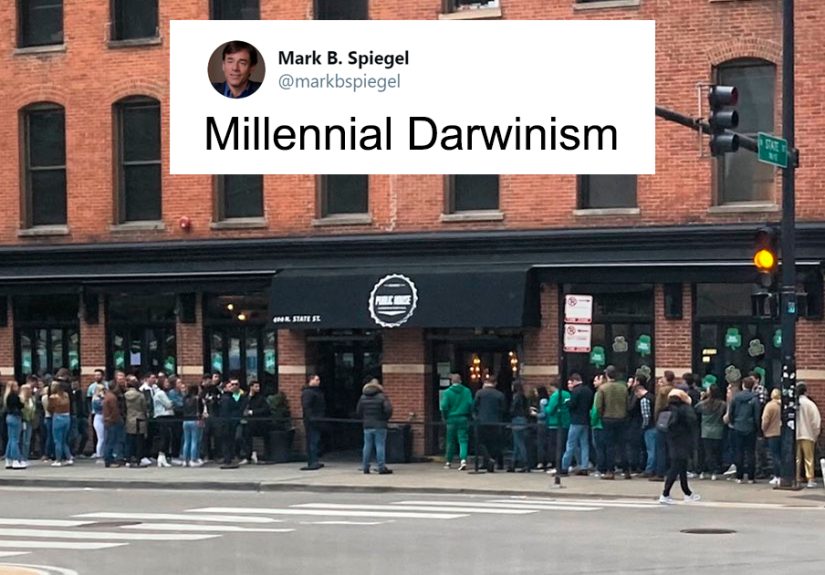
When someone mocks social distancing and goes to a crowded bar during the coronavirus outbreak, they’re not making a bold statement.
They’re making themselves a potential link in a transmission chain that reaches people who didn’t consent to the risk:
the grocery cashier, the coworker with asthma, the older neighbor, the immunocompromised friend, the teacher trying to keep a classroom open.
We can want normal life and still respect reality. And if we absolutely must rebel against something, maybe choose a safer target
like low-rise jeans. The virus doesn’t deserve the attention.
Real-World Experiences People Shared During “Bars vs. Social Distancing” Moments (About )
During the height of the coronavirus outbreak, a lot of people had the same whiplash experience: you’d stay home for days,
cancel plans, and carefully plan grocery runs like you were training for a missionthen open social media and see someone
posting a packed bar selfie like the pandemic was just a rumor with bad branding.
For many, the most common emotion wasn’t even fearit was disbelief. People described watching friends mock social distancing
with jokes about “living their best life,” while others were quietly juggling serious realities: a parent undergoing treatment,
a roommate working in health care, or a child whose school might shut down if cases rose. That contrast made “just let people
live” feel less like a personal philosophy and more like an invitation to create collateral damage.
One shared pattern was the awkward social negotiation. Friends would text: “We’re going outcome!” and you’d have to decide
how to respond without turning into the group’s unofficial compliance officer. Some people leaned on humor“I’m allergic to
quarantine, sorry”while others got direct: “Indoor bars are high risk; I’m not doing that.” A surprising number of people
reported that being calm and specific worked better than arguing about politics or motives. When the focus stayed on practical
risk (“crowded indoor spaces + no masks + loud talking”), it was harder for the conversation to spiral into a debate about identity.
Another common experience: the “responsible alternative” became its own kind of culture. People started swapping ideas for
outdoor meetups, driveway chats, walking hangouts, backyard dinners with spacing, and improvised “virtual happy hours” that were
both comforting and hilariously awkward. There was a learning curve: someone inevitably tried to toast while muted, another
person’s camera aimed at the ceiling fan, and at least one friend who treated the chat like a live podcast. Still, those small
rituals helped people feel connected without turning socializing into a gamble.
Many also described a change in how they evaluated spaces. Before, “good atmosphere” meant cozy, bustling, loud. During an outbreak,
people started noticing airflow, crowd density, how close tables were, and whether staff had real support to enforce safety rules.
A patio stopped being a nice extra and became the main event. Open windows felt like a luxury upgrade. And suddenly, the phrase
“Let’s go somewhere quiet” sounded less like a mood and more like risk management.
Over time, people who stayed cautious often said the hardest part wasn’t the inconvenienceit was the social friction and the feeling
of being gaslit by normal-looking crowds. But many also reported that sticking with safer choices paid off: fewer disruptions,
fewer close calls, and a clearer conscience. In a public health crisis, “being careful” wasn’t about being perfect. It was about
refusing to make other people pay for your night out.