Table of Contents >> Show >> Hide
- Why a Repurposed Garden Bike Is the Perfect Yard Upgrade
- Choosing the Right Bike for Your Garden
- Prepping Your Old Bike (So It Survives the Weather)
- Painting Your Bicycle Planter
- Planning Where Your Garden Bike Will Live
- Adding Baskets and Planters
- Best Plants and Flowers for a Bicycle Planter
- Step-by-Step: DIY Repurposed Garden Bike
- Styling Ideas Inspired by Hometalk & Beyond
- Maintenance Tips So Your Garden Bike Ages Gracefully
- Real-Life Experiences with Repurposed Garden Bikes
Somewhere in a garage, a slightly rusty bicycle is dreaming of a comeback. Not as a way to get you to
work on time, but as the star of your garden. The repurposed garden bike trend has exploded across
DIY sites and social feeds, turning old bicycles into whimsical planters and eye-catching yard art.
If you’ve ever seen a flower-filled vintage bike on Hometalk, Pinterest, or your neighbor’s front lawn
and thought, “I want that,” this guide is for you. We’ll walk through how to turn a tired old bike
into a charming garden feature, from choosing the right bicycle to painting, planting, and styling it
so it looks intentionalnot like you forgot to put your bike away… for three years.
Why a Repurposed Garden Bike Is the Perfect Yard Upgrade
A repurposed garden bike is one of those projects that checks all the boxes: it’s budget-friendly,
sustainable, and irresistibly cute. Instead of sending an old bike to the landfill, you give it a
second life as a planter, sculpture, or focal point in a flower bed. DIY gardeners all over the U.S.
have used bikes to add personality to porches, cottage-style gardens, and even tiny urban patios.
Because bikes are tall and narrow, they fit where traditional planters don’t. You can tuck one against
a fence, near the mailbox, beside your front steps, or at the end of a path. The wheels and frame add
instant structure, while baskets and planters provide space for trailing blooms, herbs, or succulents.
And if you go bold with paint color, your garden bike becomes an easy way to boost curb appeal.
Choosing the Right Bike for Your Garden
Good news: the bike you use does not have to be pretty when you find it. In fact, some of the most
charming projects start with a junker that’s too far gone to ride. Look for:
-
Sturdy metal frame: Classic steel-framed bikes hold up well outdoors and support
baskets or crates once planted. - Interesting details: Curvy frames, vintage handlebars, or wide fenders add character.
-
Working kickstand or easy-to-anchor frame: You want it to stay upright, even in wind
or soft soil.
You can often find suitable bikes at yard sales, thrift stores, community clean-up sales, curbside on
trash day, or through local buy-nothing and marketplace groups. Many DIYers deliberately look for rusty
or outdated bikes because they’re cheap and ideal for decorative use.
Prepping Your Old Bike (So It Survives the Weather)
Before your bike is covered in petunias, it needs a little spa day. Proper prep helps paint stick and
keeps the bike looking good through rain, sun, and temperature swings.
-
Clean off dirt and grease. Use a bucket of warm, soapy water and a scrub brush or
soapy pad (like a Brillo or S.O.S pad) to remove years of grime. Rinse well and let it dry completely. -
Deal with rust. Light rust can be scuffed with sandpaper or steel wool so the surface
feels smoother. You don’t need to get it shinyjust remove loose flakes. -
Remove parts you don’t need. Cut away old brake cables, reflectors, or broken
accessories. If you’re planning to hang the bike or lean it as decor, you can even remove the chain. -
Prime if needed. If there’s a lot of bare metal, a rust-inhibiting primer designed
for outdoor use gives you a better base for paint.
Painting Your Bicycle Planter
Paint is where the magic happens. A sad, rusty frame becomes a cheerful focal point with just a few
passes of spray paint.
-
Choose outdoor spray paint. Look for paint formulated for metal and exterior use, or
a “paint + primer” combo that can go directly over lightly rusted surfaces. -
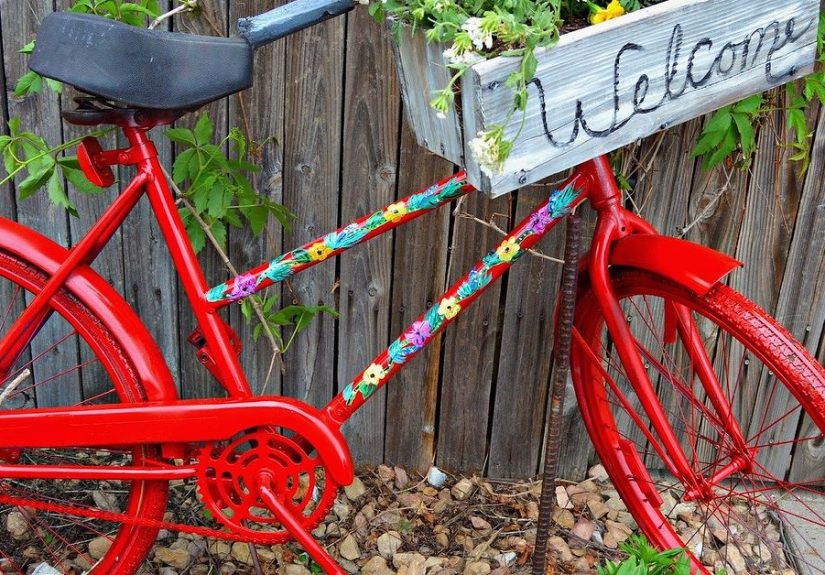
Pick a fun color. Popular choices include turquoise, sunny yellow, crisp white, or
bright red. Neutral tones also work if your plants will be the main stars. -
Spray in light coats. Work in a well-ventilated outdoor area on top of a drop cloth
or cardboard. Several thin coats prevent drips and give a more professional look.
Many DIY garden bloggers recommend painting the bike all one colorincluding the wheels and spokesfor a
sculptural look that stands out against greenery. Others leave wheels rusty for a farmhouse vibe and only
refresh the frame and basket.
Planning Where Your Garden Bike Will Live
Before you attach baskets or plant a single petunia, decide where your bike will stand. Location affects
what plants you choose and how you anchor the bike.
Front Yard Welcome Moment
Place the bike near your front steps, porch, or walkway so guests get a cheerful surprise on arrival. A
vintage “Welcome” sign hanging from the handlebars or tucked in the basket makes it feel intentional and
inviting.
Against a Fence or Wall
Leaning a repurposed garden bike against a fence fills in vertical space and breaks up long runs of wood
or brick. It also gives you a backdrop for trailing plants and makes it easier to secure the bike with
discreet screws or brackets if you live in a windy area.
Porch or Patio Accent
If you have a covered porch, a garden bike becomes decor and conversation piece in one. Some homeowners
even suspend a lightweight vintage bike from sturdy hooks on a porch wall, turning it into hanging garden
art with planted baskets.
Small-Space Solution
In tiny yards or balconies, a slim bike tucks into corners where traditional planters or raised beds just
won’t fit. Use smaller containers and lightweight plants, and focus on vertical interest with trailing
vines and compact flowers.
Adding Baskets and Planters
The frame is the skeleton; the baskets and planters are the muscle and personality. Here are a few ways
DIYers turn an ordinary bike into a bloom-covered display:
-
Classic bike baskets: Attach a traditional front basket or wire carrier using the
built-in mounting points or heavy-duty zip ties. -
Wire or metal baskets: Thrifted wire baskets, old metal bins, or even colanders can
be lined and filled with soil. -
Wooden crates: Rustic crates or produce boxes look great on rear racks or over the
top tube. Secure them with screws, brackets, or strong zip ties. -
Hanging containers: Small buckets, enamel mugs, or mini planters can hang from the
handlebars, seat, or frame.
Many tutorials recommend lining baskets with plastic or coco liners to hold soil while allowing some
drainage. In one popular project, a gardener used two inexpensive baskets, lined them with plastic bags
and moss, and filled them with annuals for a finished look under $10.
Best Plants and Flowers for a Bicycle Planter
Your repurposed garden bike is the stage; the plants are the main cast. Choose varieties that match your
sun conditions, watering habits, and overall style.
Sun-Loving Showstoppers
-
Petunias and calibrachoa: These cascading bloom machines spill beautifully over the
edges of baskets. - Geraniums: Upright and colorful, they add structure and classic cottage charm.
- Marigolds and zinnias: Bright, easy annuals that handle summer heat well.
Shade-Friendly Favorites
- Impatiens and begonias: Great for covered porches or north-facing walls.
- Ferns and hostas (in pots): Tuck smaller varieties into crates or rear baskets.
- Heuchera (coral bells): Adds foliage color without demanding full sun.
Low-Maintenance & Drought-Tolerant Options
If you’re more “forgetful gardener” than “everyday waterer,” choose succulents, sedums, and trailing ivy
in well-draining soil. They look right at home in shabby-chic or rusty bike setups and need less fussing.
Step-by-Step: DIY Repurposed Garden Bike
Ready to build your own? Here’s a simple roadmap inspired by popular DIY tutorials and garden blogs:
-
Gather materials. Old bike, spray paint (outdoor metal), sandpaper or steel wool,
cleaning supplies, baskets or crates, liners, potting soil, plants, zip ties/screws, and a drop cloth. -
Prep and paint the bike. Clean thoroughly, remove loose rust, prime if needed, and
spray-paint in light coats until evenly covered. -
Secure the bike. Decide where it will live and test stability. Use the kickstand,
or gently anchor the tires with rebar stakes or tent stakes driven into the ground and wired to the frame. -
Attach baskets and planters. Use built-in mounts where possible. For crates or unusual
containers, drill small holes and secure with screws or heavy-duty zip ties. -
Line and fill containers. Add liners (plastic with drainage holes, coco liners, or burlap),
then fill with quality potting mix. -
Plant and water. Arrange taller plants toward the back, trailing ones near the edges,
water thoroughly, and let everything settle. -
Style the scene. Add a sign, lantern, small flag, or decorative tools around the
bike to make it look like part of a curated vignette.
Styling Ideas Inspired by Hometalk & Beyond
Cottage-Garden Romance
Paint the bike soft white or pastel blue, fill the front basket with pink geraniums and trailing
lobelia, and surround the wheels with daisies or lavender. Add a hand-painted “Welcome” sign and it
looks like it rolled straight out of a storybook.
Bold and Modern Color Pop
Prefer something more graphic? Choose a bright colorthink teal, chartreuse, or fire-engine redand keep
the planting palette simple: maybe all white flowers or a mix of deep purples. The bike becomes a sculptural
accent against a simple green hedge or minimalist gravel bed.
Rustic Farmhouse Vibes
If your bike already has a good layer of rust, embrace it. Pair it with weathered wooden crates, old
garden tools, and galvanized buckets planted with herbs and wildflowers. One popular yard makeover used a
rusty bike and vintage tools to transform a tired flower bed into a charming, budget-friendly focal
pointno shiny paint necessary.
Seasonal Switch-Ups
A repurposed garden bike doesn’t have to be a summer-only feature. Swap out the plants and decor with
the seasons:
- Spring: Bulbs in pots, pansies, and pastel ribbons.
- Summer: Trailing petunias, herbs, and vibrant annuals.
- Fall: Mini pumpkins in the basket, mums in crates, and a plaid blanket over the seat.
- Winter: Evergreen branches, pinecones, and battery-operated fairy lights.
Maintenance Tips So Your Garden Bike Ages Gracefully
Once your repurposed garden bike is in place, a bit of easy maintenance keeps it looking good:
-
Water wisely. Baskets dry out faster than ground soil, especially in sun and wind.
Check moisture regularly and use a moisture-retaining potting mix. -
Touch up paint. If chips or rust spots appear, lightly sand and spot-paint during the
off-season. -
Protect in harsh climates. In cold or very wet climates, consider moving the bike
under cover for winter or removing the most delicate plants. -
Refresh plantings. Replace tired annuals with new seasonal plants to keep the bike
looking fresh and intentional.
Real-Life Experiences with Repurposed Garden Bikes
DIYers who’ve tried this project almost always say the same thing: they underestimated how much personality
a single bike could bring to their garden. Many people start with “I just want to get this old bike out of
the garage,” and end up designing an entire flower bed around it.
One suburban gardener in the Midwest found an old cruiser bike at a yard sale for a few dollars. The wheels
were warped and the chain was hopeless, but the curvy frame had charm. She scrubbed the bike down, sprayed
it a deep turquoise, and mounted a pair of secondhand wire baskets to the front and back. For plants, she
chose bright pink petunias, white alyssum, and a trailing ivy that spilled dramatically over the edges. By
midsummer, neighbors were stopping on walks just to ask where she bought “that adorable bike planter.”
Another homeowner with a shady front porch wanted a focal point that didn’t require a full overhaul of the
landscaping. Inspired by online tutorials, he hung a lightweight vintage bike horizontally on sturdy hooks,
then attached a long basket to the “top” tube. Lined with coco fiber and planted with shade-friendly
begonias and ferns, the bike looked like it was riding across the porch wall through a trail of greenery. It
became the backdrop for graduation photos, holiday decorations, and countless family pictures.
A gardener in a rural area took the opposite approach and leaned into the bike’s age. Instead of painting
over the rust, she preserved the original patina and designed a rustic vignette around it: weathered fence
posts, vintage hand tools, a galvanized tub filled with herbs, and the bike partially “parked” in a bed of
wildflowers. The project cost very littlemost pieces were already on the propertybut the effect was
dramatic. Visitors often comment that it looks like the bike’s rider just hopped off to wander into the
fields.
People also learn a few practical lessons along the way:
-
Overloading the baskets is easy. It’s tempting to cram in every pretty plant at the
garden center, but too much weight can make the bike unstable. Most experienced DIYers recommend
starting light and adding more once you’re sure the bike is solid. -
Drainage matters. Several gardeners report that their first attempt turned into a
soggy mess because they skipped drainage holes. Adding a few small holes in liners or containers and
using potting mix instead of garden soil makes a huge difference. -
Color choices set the mood. A bright blue or yellow bike reads fun and playful, while
white or black feels more classic. Leaving the rust and just sealing it lightly gives a timeworn,
farmhouse look. -
The bike becomes a conversation magnet. Families often find that guests gravitate
toward the garden bike for photos. It’s an easy icebreakerespecially when you can say, “Oh that? It
used to be our kid’s bike from middle school.”
Many Hometalk-style projects begin with simple curiosity and end with a deeper sense of creativity and
pride. Once you see how transformative a repurposed garden bike can be, you start looking at other “junk”
differently: old ladders, broken chairs, orphaned drawers. A bicycle planter is more than just decor; it’s
a reminder that with a little vision (and a can of spray paint), you can turn almost anything into something
beautiful and meaningful in your outdoor space.