Table of Contents >> Show >> Hide
- What Is Rectal Prolapse in Dogs?
- What Does Rectal Prolapse Look Like?
- Why Rectal Prolapse Happens
- Is Rectal Prolapse in Dogs an Emergency?
- What to Do Right Away
- How Vets Diagnose the Problem
- Rectal Prolapse in Dogs Treatment
- Recovery and Home Care
- Can Rectal Prolapse Be Prevented?
- When to Call the Vet Immediately
- Final Thoughts
- Owner Experiences: What This Situation Often Feels Like in Real Life
- SEO Tags
There are a few things dog owners expect to handle in life: muddy paws, mystery smells, and the occasional “Why are you eating that?” moment. A red, tube-like mass protruding from your dog’s rear end is not usually on the bingo card. But that is exactly how rectal prolapse in dogs often shows upsuddenly, dramatically, and with all the subtlety of a fire alarm.
The good news is that rectal prolapse in dogs can often be treated successfully when owners act fast. The not-so-good news is that this is not a wait-and-see situation. Whether the prolapse looks small and slips back in or stays visibly outside the anus, it needs prompt veterinary attention. In many cases, the prolapse is only part of the story. The bigger issue is the underlying reason your dog is straining so hard in the first place.
This guide explains what rectal prolapse in dogs looks like, what causes it, when it becomes an emergency, what to do before you get to the veterinarian, and what treatment and recovery usually involve. If your dog’s rear end is trying to become the main character, here is what you need to know.
What Is Rectal Prolapse in Dogs?
Rectal prolapse happens when tissue from the rectum protrudes through the anus. In plain English, part of the tissue that should stay inside comes out. Sometimes only the inner lining slips out while the dog is straining, then returns to normal afterward. Other times, the prolapse remains outside and does not go back in on its own.
Veterinarians generally describe two forms:
Partial Rectal Prolapse
Only a small portion of tissue appears, often during a bowel movement, and may retract once the dog stops straining. This can fool owners into thinking the problem is minor. It is not. A partial prolapse can become a complete prolapse surprisingly fast if the straining continues.
Complete Rectal Prolapse
More tissue remains outside the anus even when the dog is not trying to pass stool. It often looks like a bright pink to red cylinder or swollen tube. This version is easier to spot and harder to ignore, which is unfortunate for everyone involvedbut especially the dog.
What Does Rectal Prolapse Look Like?
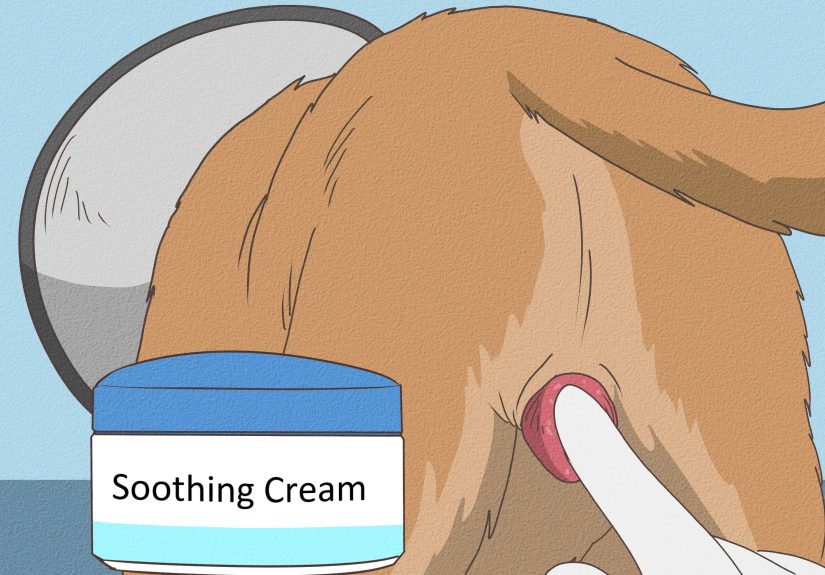
The classic sign is a pink, red, or bright red tubular mass protruding from the anus. Some owners describe it as sausage-shaped. Others say it looks like a swollen donut or a fleshy tube. Whatever food metaphor comes to mind, this is one moment where you should absolutely stop comparing body parts to snacks.
Common symptoms of rectal prolapse in dogs include:
- A red or pink cylindrical mass coming from the anus
- Straining to poop or sometimes straining to urinate
- Pain or obvious discomfort during bowel movements
- Scooting or dragging the rear end
- Licking at the rectal area
- Bleeding, mucus, or irritation around the anus
- Diarrhea or constipation
- Reduced appetite, low energy, or weight loss in some cases
One important note: dogs do not get hemorrhoids the way people do. Owners sometimes assume a protruding red mass is a hemorrhoid, but in dogs, a visible tissue mass around the anus is much more concerning and should be evaluated by a veterinarian promptly.
Why Rectal Prolapse Happens
Rectal prolapse is usually a symptom, not a random event. The most common thread is straining. If a dog strains hard enough and long enough, the tissue can be forced outward.
Common causes include:
Severe Diarrhea
Frequent bowel movements and inflammation can cause repeated straining. Puppies are especially vulnerable because their digestive systems are less resilient, and parasites or infections can hit them harder and faster.
Constipation
Hard, dry stool can turn every potty break into a miserable workout. Chronic constipation can lead to persistent straining, which increases the risk of prolapse.
Intestinal Parasites
Parasites are a major reason rectal prolapse is seen in puppies. Roundworms, whipworms, giardia, coccidia, and other intestinal parasites can cause diarrhea, inflammation, weight loss, and repeated straining.
Foreign Body or Bowel Obstruction
If your dog swallowed something they should not havesock, toy piece, bone fragment, mystery backyard treasurethe bowel may become irritated or obstructed. Straining can follow, and so can prolapse.
Urinary Tract Problems
Dogs do not always read anatomy textbooks. When they strain to urinate because of stones, obstruction, or prostate enlargement, the rectum can still end up paying the price.
Difficult Birth
Female dogs straining during a difficult labor can develop a rectal prolapse. This is one more reason whelping complications need quick veterinary care.
Rectal, Colonic, or Perineal Disease
Masses, tumors, injury, inflammation, or structural weakness in the rear-end region can contribute, especially in older dogs.
Is Rectal Prolapse in Dogs an Emergency?
Yes. Full stop. This is a veterinary emergency, particularly when the tissue stays outside the body.
Rectal tissue is supposed to stay moist and protected inside the body. Once exposed to air, friction, dirt, and licking, it can dry out, swell, become damaged, lose blood supply, and eventually die. Dead tissue is not just painfulit can lead to infection, severe inflammation, and a much more complicated surgery.
So if you are wondering whether you can “keep an eye on it until tomorrow,” the answer is no. This is one of those times when your dog needs a veterinarian, not a vote of optimism.
What to Do Right Away
If you see a possible rectal prolapse in your dog, here is what to do before you get to the clinic:
1. Call Your Veterinarian or an Emergency Vet Immediately
Tell them what you are seeing and that rectal tissue is protruding. That helps the clinic prepare and advise you on how fast to come in. The answer is usually: now.
2. Prevent Licking or Chewing
If you have an e-collar, use it. If not, supervise closely. Dogs are talented at turning “mild irritation” into “why is this suddenly worse?” in record time.
3. Keep the Tissue Moist
If you can do so gently, keep the exposed tissue moist with sterile saline or a clean, water-based lubricant. Do not scrub it. Do not wipe aggressively. The goal is protection, not a spa treatment.
4. Do Not Force It Back In
Trying to push the tissue back on your own can cause more damage, contamination, or tearingespecially if the tissue is swollen, fragile, or not actually rectal tissue.
5. Do Not Use Random Home Remedies
This is not the moment for internet folk medicine, leftover antibiotics, or a “my neighbor once did this with a goat” solution. Home treatment does not replace veterinary care.
6. Transport Your Dog Calmly
Use a clean towel or blanket in the car. Keep your dog as quiet and comfortable as possible. Less movement and straining is better.
How Vets Diagnose the Problem
Some of the diagnosis is visualthe prolapse itself is often obvious. But identifying the cause matters just as much as dealing with the tissue.
Your veterinarian may recommend:
- A full physical exam and rectal exam
- Fecal testing to look for parasites
- X-rays or ultrasound to check for foreign bodies, obstruction, urinary stones, or masses
- Evaluation of the prostate in intact male dogs
- Assessment for dehydration, infection, or other illness
This is why treatment is not just “put it back and hope for the best.” If the underlying problem remains, the prolapse may come right back for an unwelcome encore.
Rectal Prolapse in Dogs Treatment
Treatment depends on whether the tissue is healthy, how long it has been prolapsed, and what caused it.
Manual Reduction
If the tissue is still viable, the veterinarian may place your dog under anesthesia, reduce the swelling with lubricants or osmotic solutions, and gently return the tissue to its normal position.
Purse-String Suture
After reduction, a temporary stitch around the anus is often placed to help prevent immediate recurrence. The opening is left wide enough for stool to pass, but narrow enough to support the tissue while things calm down.
Surgery
If the tissue is dead, badly damaged, or the prolapse keeps returning, surgery may be required. In severe cases, damaged tissue is removed and the healthy sections are reconnected. Dogs with recurrent prolapse may need a colopexy, a procedure that attaches the colon to the abdominal wall to reduce future prolapse risk.
Treating the Underlying Cause
This is the part that really matters long-term. Depending on the cause, treatment may include deworming, diarrhea management, stool softeners, diet changes, treatment for urinary obstruction, surgery for foreign bodies, or reproductive care in a dog having a difficult birth.
Recovery and Home Care
Recovery is often good when treatment happens quickly. Dogs usually go home with a short list that may include pain medication, antibiotics in some cases, an e-collar, temporary diet changes, and very specific instructions about activity and recheck visits.
Owners are usually told to watch for:
- Renewed straining
- Bleeding or discharge
- Swelling around the anus
- Inability to pass stool
- Lethargy, vomiting, or loss of appetite
- Any sign the tissue is protruding again
Soft, easy-to-pass stool is the goal during healing. That may mean a low-residue diet, stool softeners, extra hydration, or a temporary prescription diet. Follow your veterinarian’s plan exactly, even if your dog gives you the look that suggests you have personally ruined their life.
Can Rectal Prolapse Be Prevented?
Not every case is preventable, but many risks can be lowered.
- Keep your dog on routine parasite prevention and regular fecal testing
- Address diarrhea and constipation early instead of hoping they pass on their own
- Keep trash, bones, socks, toys, and other swallowable nonsense out of reach
- Make sure your dog stays hydrated
- Maintain a balanced, high-quality diet
- Get prompt veterinary care for urinary trouble or labor complications
- Discuss prostate issues in intact male dogs with your veterinarian
Puppies deserve special attention because parasites and digestive upset are common in that age group. If a puppy has persistent diarrhea, straining, or a visible red mass after pooping, do not chalk it up to “puppy weirdness.” Puppies are small, dehydration hits fast, and rectal prolapse can worsen quickly.
When to Call the Vet Immediately
Call a veterinarian right away if your dog has:
- Any red or pink tissue protruding from the anus
- Repeated straining with little or no stool
- Blood in the stool or around the rectal area
- Severe diarrhea or constipation
- Vomiting, lethargy, or abdominal pain
- Signs of difficulty urinating
In short, rectal prolapse in dogs is one of those conditions that looks alarming because it is alarming. Trust your eyes. If it looks wrong, it is wrong.
Final Thoughts
Rectal prolapse in dogs is dramatic, uncomfortable, and never a DIY weekend project. The visible problem is the prolapsed tissue, but the hidden problem is usually the reason the dog was straining in the first placediarrhea, constipation, parasites, urinary issues, obstruction, or another medical condition.
The best thing you can do is act quickly. Prompt veterinary care improves the chances that the tissue can be saved, the dog can recover well, and the underlying issue can be treated before it causes another round of rear-end chaos. So yes, it is scary. But it is also treatable, especially when you move fast and let your veterinarian take the lead.
Owner Experiences: What This Situation Often Feels Like in Real Life
For many dog owners, the experience begins with confusion rather than certainty. They notice the dog squatting repeatedly, taking longer than usual outside, or acting uncomfortable after a bowel movement. Then comes the double take: “Wait… that is not supposed to be there.” Most people do not immediately know they are looking at rectal prolapse. They think it might be a hemorrhoid, stuck stool, a swollen anus, or some kind of strange injury. That hesitation is common, and it is exactly why this condition can feel so overwhelming in the first hour.
Owners of puppies often describe the experience as especially stressful because the prolapse may follow a stretch of diarrhea, worms, or digestive upset. One day the puppy is bouncy and chaotic in the normal puppy way, and the next day the rear end looks like an emergency room poster. The speed of that change can be terrifying. Older dog owners, on the other hand, may notice a longer lead-up: constipation, straining, appetite changes, or signs that the dog is trying to poop but not succeeding.
Emotionally, the pattern is surprisingly consistent. First comes panic. Then comes a frantic internet search. Then, thankfully, comes the realization that the dog needs a veterinarian now, not later. Many owners later say the most useful thing they learned was this: even if the prolapse looks small, the problem underneath may not be. The red tissue is the visible warning sign, but the real issue may be parasites, obstruction, urinary trouble, prostate disease, or damaged tissue that cannot safely stay outside the body.
The treatment experience also tends to follow a familiar arc. Owners worry that surgery automatically means a terrible outcome, but many dogs do well once the tissue is reduced and the underlying cause is addressed. The bigger challenge after the vet visit is usually home care. Keeping the dog calm, preventing licking, giving medications on schedule, monitoring bowel movements, and checking that the prolapse does not recur can feel like a full-time assignment. Add a cone to the mix, and your dog may act as if you have personally betrayed the friendship. This is normal. Deeply dramatic, but normal.
What owners often remember most is how much better the dog seems once the discomfort is relieved. Dogs that were restless, straining, scooting, or miserable often become more comfortable fairly quickly after proper treatment. That change reassures people that they did the right thing by acting fast. It also teaches an important lesson: rear-end problems may feel awkward to discuss, but they are still medical emergencies when the signs fit. In the end, the experience usually leaves owners more alert to changes in stool quality, parasite prevention, hydration, and any sign of repeated straining. Nobody wants a sequel.