Table of Contents >> Show >> Hide
- Who Is Henry Holland (and Why Does Everyone Know His Name)?
- The Pivot: From Runway Pace to Clay Pace
- What Makes Henry Holland Studio So Recognizable?
- Quick Takes: The Henry Holland Edition
- Collaboration as a Growth Strategy (and a Creative Habit)
- From Tableware to Lighting to Furniture: Expanding Without Diluting
- A Mini Guide to Nerikomi: What It Is (and Why It Looks So Good)
- How to Bring This Look Home Without Copying It
- The Real Point of “Quick Takes”
- Experience Notes: of Real-World Takeaways Inspired by Henry Holland
There are two kinds of creative reinventions. The first is the “I woke up and chose chaos” versiondramatic, impulsive,
and fueled by three iced coffees and a vague sense of destiny. The second is quieter: you start making something at your kitchen table,
you fall for the process, and suddenly your entire career path politely scoots to the side like, “Okay, wow, didn’t see this coming.”
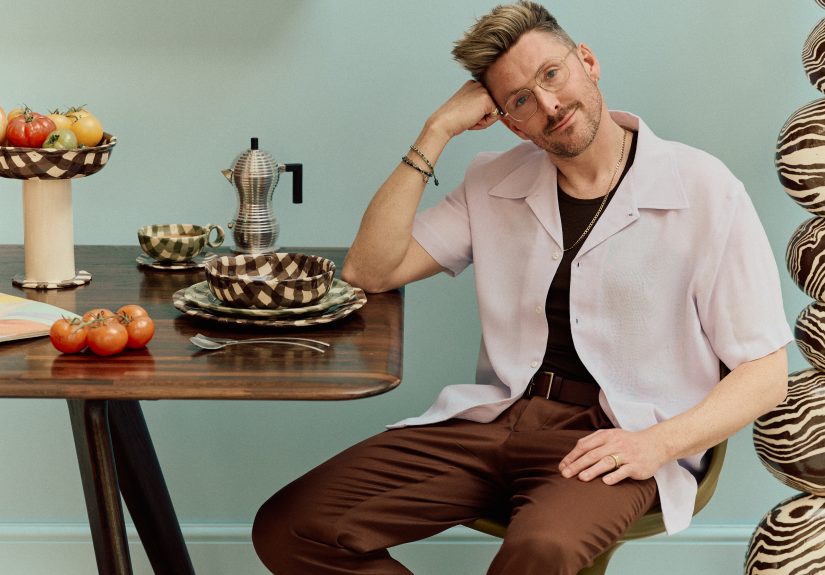
Henry Holland’s story leans delightfully toward the second. If you know him from fashion, you probably remember the bold color,
the punchy prints, the sense of humor, and the “life’s too short to dress beige” energy. And if you know him now, you might be
picturing the same sensibilityjust translated into clay: swirls, checks, and marbled patterns that look like they were designed by a
very stylish kaleidoscope.
This is a quick-take-style look at Henry Hollandwhere he came from, what he makes now, why his work stands out, and what anyone
building a creative life (or craving a little more color in their home) can steal… ethically… with gratitude and good taste.
Who Is Henry Holland (and Why Does Everyone Know His Name)?
Holland first made his mark in fashion as the creator behind House of Holland, a label that built early buzz around cheeky slogan tees
before growing into full collections with a reputation for graphic punch and fearless color. In other words: he didn’t exactly enter the
industry whispering. He arrived with a megaphone, glitter, and a wink.
That same DNAplayful, pattern-driven, allergic to blandnessstill shows up in everything he does. What changed wasn’t his taste.
It was his medium. During the pandemic, he stepped away from fashion and found himself pulled toward ceramics, eventually launching
Henry Holland Studio: a homeware world built around handmade pieces and an unmistakable approach to pattern.
The Pivot: From Runway Pace to Clay Pace
Fashion can be thrilling, but it can also be relentlessseasonal calendars, constant drops, quick turnarounds, and a pressure cooker of “new, new, new.”
Ceramics asks for something else entirely: patience, repetition, and acceptance that your material has a personality of its own.
(Clay is basically a coworker who refuses Slack messages and only communicates through cracking.)
Holland’s studio work is often associated with nerikomi, a Japanese colored-clay technique that creates pattern through the body of the clay itself.
Think of it like building a design into the material rather than painting it on top. The pattern isn’t a costumeit’s the skeleton.
That’s why these pieces have such depth: cut them, sand them, shape them, and the motif keeps going.
And yes, it’s as meditative as it sounds. It’s also the kind of process that rewards curiosity, problem-solving, and a willingness to learn in public
qualities Holland has openly embraced across both fashion and ceramics.
What Makes Henry Holland Studio So Recognizable?
1) Pattern that feels alive
Holland’s clay patterns don’t read as “printed.” They read as “grown.” The look is organicswirls, marbling, checks, and layered color that feels
slightly psychedelic in the best way. Even when a piece is structured, the surface has movement.
2) Color that refuses to behave
There’s a clear belief here: neutrals are not a moral virtue. Holland’s aesthetic is comfortable with bold color, and even more comfortable
with bold color next to other bold color. The goal isn’t “calm.” The goal is “alive.”
3) Function, but make it fun
This isn’t precious, untouchable art that lives behind glass. It’s tableware, vases, planters, lampsobjects meant to be used.
The practical forms make the patterns feel even more rebellious, like your cereal bowl just joined a band.
Quick Takes: The Henry Holland Edition
Instead of a traditional interview transcript, here’s a quick-fire snapshotbite-size, scroll-friendly, and designed for modern attention spans
(which, to be fair, are being held hostage by notifications).
On hosting and gifts
If Holland shows up to dinner, there’s a decent chance he arrives carrying one of his own piecesoften something like a candle or a vase.
It’s equal parts generosity and “Yes, I’m going to casually place my work in your home forever.”
On what lives beside the bed
The vibe is personal-meets-designed: a sentimental photo, one of his studio lamps, and objects collected on travelsplus reading material that
nods to bold culture and bigger-than-life style.
On the aesthetic that imprinted on his brain
He’s drawn to interiors and design moments with attitudethink maximal, graphic, and a little mischievous. If a room feels too polite, it’s not done yet.
On home upgrades that actually change your life
A calm getting-ready space matters. For someone who loves clothes and the memories attached to them, a dressing room isn’t just storage
it’s a daily ritual that makes life feel more intentional.
On color and pattern
His stance is basically: there’s no such thing as “too much,” as long as you pay attention to light, tone, and how colors talk to each other.
(Yes, colors talk. Some gossip. Some apologize. Some start drama on purpose.)
On design pet peeves
If you’re hoping to impress him with a sea of cream walls and laminate flooring… you may want to pivot. Quickly.
On how he’d describe his style
Three words: bold, playful, and textural. If your home can’t be described with at least one fun adjective, what are we even doing.
On collecting
Even makers collectand it’s part of the point. Building a personal “I was here” archive of objects from places you love is a way of turning travel
into something lasting (and much easier to dust than a souvenir T-shirt).
Collaboration as a Growth Strategy (and a Creative Habit)
One thing that keeps popping up around Holland’s studio work: collaboration. Not the corporate “synergy” kind, but the practical, creative kind
teaming up with other makers and brands to expand what the studio can do without losing its handmade soul.
That approach makes sense for a small brand. Ceramics is time-intensive; scaling isn’t just “make more,” it’s “add skilled hands, protect quality, and don’t burn out.”
Collaborations also let a studio translate its signature languagepattern, color, textureinto new categories like textiles, lighting, and furniture.
The takeaway for creatives is simple: you don’t have to do everything alone, and you don’t have to do everything at once. Build a strong visual identity,
then let it travel into adjacent worlds through the right partners.
From Tableware to Lighting to Furniture: Expanding Without Diluting
Lighting
Lighting is a big leap for a ceramics studio because it’s not just formit’s function, wiring, weight, stability, and safety. But it’s also a natural fit:
if your pieces already have sculptural presence, turning them into lamps is basically giving them a stage and a spotlight at the same time.
The result is “practical object” meets “conversation starter.”
Textiles
Prints on fabric and wallpaper are a homecoming for someone with fashion roots. Translating a love of pattern into interiors isn’t a stretchit’s a return,
just with walls instead of bodies. The fun part is watching how a motif behaves when it goes from wearable to livable.
Furniture
Furniture is where things get seriousbecause a chair has to do the unglamorous job of holding a human. Still, the best furniture has personality.
Holland’s furniture work leans into sculptural forms, tactile materials, and a philosophy that celebrates handmade irregularitythe idea that “perfect”
isn’t always the point.
A Mini Guide to Nerikomi: What It Is (and Why It Looks So Good)
Nerikomi is a colored-clay technique that builds pattern by stacking and combining different clay colors, then slicing and shaping that patterned clay
into forms. Unlike surface decoration, the design runs through the material, which creates a depth you can’t fake with a brush.
Why it’s so satisfying
- It’s process-forward: you see the pattern emerge as you cut, fold, and slice.
- It’s imperfect by nature: every piece ends up unique, even if you try to replicate it.
- It plays well with bold design: checks, stripes, swirls, gradientseverything gets more interesting in clay.
If you want to try it (without ruining your weekend)
- Start small: test tiles or small pinch pots before you commit to a “set of dinner plates.”
- Keep clay moisture consistent: uneven dryness is how cracks throw surprise parties.
- Plan for distortion: patterns stretch when you form a curveembrace it instead of fighting it.
- Use colored clay thoughtfully: too many colors can turn into visual noise; contrast is your friend.
How to Bring This Look Home Without Copying It
You can borrow the spirit of Henry Holland Studio without buying a single piece (although your future self might disagree).
Here are a few “translation” moves:
- Color + structure: Pair a wild pattern with a simple silhouette. Let one thing do the shouting.
- Texture as a neutral: If you’re nervous about color, start with tactile objectsceramic, woven, carved, matte-glazedthen add pigment.
- Collect with intention: Choose objects tied to a memory or a place. Your shelves should tell a story, not just fill space.
- Mix patterns by tone: If patterns share a similar palette, they’ll feel cohesive even when they’re loud.
The Real Point of “Quick Takes”
A quick-take interview format is fun because it reveals the through-line: the taste, the habits, the loves, the pet peeves.
With Henry Holland, the through-line is crystal clear: a devotion to color and pattern, a willingness to learn in real time,
and a belief that home should feel like a personalitynot a showroom.
The bigger lesson isn’t “quit your job and become a ceramicist.” It’s this: creative identity is portable. If you build a strong point of view,
you can carry it across mediums. Fabric, clay, furniture, fragranceyour signature can travel, as long as you keep it honest.
Experience Notes: of Real-World Takeaways Inspired by Henry Holland
If you’ve ever tried a new craft after watching someone make it look effortless, you know the emotional arc: confidence → confusion → bargaining →
mild despair → unexpected joy. And that’s exactly why Henry Holland’s ceramics pivot resonates. It’s not just the final objects. It’s the permission
to be a beginner again.
Here’s what many first-time “nerikomi-curious” makers experience (and what you can expect if you try to follow the same kind of process-driven path):
The “This Is So Relaxing” phase (Days 1–2)
You start with colored claymaybe two tones so you don’t overwhelm yourselfand the first stacking and folding feels almost like cooking.
There’s a soothing rhythm: press, align, slice, repeat. Your brain stops chasing notifications and starts paying attention to pressure and texture.
You feel productive without feeling frantic. It’s the opposite of doomscrolling, and it’s suspiciously effective.
The “Why Is My Pattern Doing That?” phase (Days 3–4)
Then reality shows up. The pattern stretches when you curve the form. The edges smear if the clay is too soft. The slab cracks if it’s too dry.
You learn quickly that control is a myth and collaboration with your material is the actual job. This is where Holland’s “embrace the wobble”
mindset becomes practical advice, not just a cute motto. You stop demanding perfection and start aiming for character.
The “I Finally Get It” phase (Days 5–6)
Something clicks when you accept that the pattern will evolve. You start designing for distortion instead of fighting it. A simple striped block becomes
a marbled swirl once it’s shaped. A check turns into a soft grid. Your “mistakes” become the interesting parts. You also start seeing connections:
if you’ve worked in fashion, graphic design, or interiors, your instinct for color and balance suddenly has a new outlet. Pattern is patternclay is just
another canvas.
The “How Do I Keep Going?” phase (Day 7 and beyond)
This is the stage where people either drop the hobby or build a practice. The difference usually isn’t talentit’s systems. You set up a small workspace,
create a repeatable process (even if the outcomes are unique), and decide what “enough” looks like for you. Maybe it’s a few pieces a month.
Maybe it’s workshops. Maybe it’s a side project that keeps your main job from eating your soul. The point is: you can let craft be a pace-reset,
not a productivity contest.
The most valuable “Henry Holland” lesson isn’t about clay at all. It’s about creative continuity. When you choose a medium that slows you down,
you give your taste and your ideas room to mature. And sometimes that’s the real upgrade: not a new sofa, but a new tempo.