Table of Contents >> Show >> Hide
- What Is Pulseless Ventricular Tachycardia?
- What Causes Pulseless V-Tach?
- How It’s Recognized in the Real World
- Immediate Treatment: What To Do First
- In-Hospital and EMS Treatment: The Shockable Rhythm Approach
- Medications Used in Pulseless V-Tach (What, When, Why)
- After the Pulse Returns: What Happens Next?
- Long-Term Treatment and Prevention
- Practical Examples (Because Real Life Doesn’t Come With a Flowchart)
- FAQs
- Real-World Experiences Related to Pulseless V-Tach (What People Commonly Report)
- Conclusion
Pulseless ventricular tachycardia (you’ll hear it shortened to “pVT” or “pulseless V-tach”) is one of those medical phrases that sounds like a tongue-twister
and acts like an emergency. Because it is an emergencyspecifically, a type of sudden cardiac arrest where the heart’s electrical system is firing in a
dangerously fast loop, but the heart isn’t actually pumping blood.
The key word is pulseless. A fast rhythm isn’t automatically cardiac arrest. Some ventricular tachycardia happens with a pulse (the person may be awake,
dizzy, or feel their heart racing). But pulseless V-tach means no effective circulation. Without immediate helpCPR and defibrillationthe brain and organs
don’t get oxygen, and the window to save a life closes fast.
This guide breaks down what pulseless V-tach is, how it’s treated in the moment, what medications clinicians may use, what happens after the crisis, and how
people reduce the risk of it happening againwithout turning your brain into a medical textbook or your anxiety into a full-time job.
What Is Pulseless Ventricular Tachycardia?
Ventricular tachycardia (VT) is a rapid rhythm that starts in the ventricles, the heart’s lower chambers. When VT is fast enoughor chaotic enoughthe ventricles
don’t have time to fill and squeeze effectively. In pulseless VT, that lack of effective squeezing becomes so severe that there’s no detectable pulse and
the person is in cardiac arrest.
Why it’s considered a “shockable” rhythm
In advanced resuscitation, cardiac arrest rhythms are often grouped into two buckets:
- Shockable rhythms: ventricular fibrillation (VF) and pulseless ventricular tachycardia (pVT)
- Non-shockable rhythms: asystole and pulseless electrical activity (PEA)
pVT is “shockable” because an electric shock (defibrillation) can interrupt the abnormal electrical circuit and give the heart a chance to reset into an organized rhythm.
Pulseless VT vs. VT with a pulse
This distinction matters, because treatment changes:
- VT with a pulse: the person may be awake or semi-conscious; clinicians may use synchronized cardioversion, medications, and treatment of underlying causes.
- Pulseless VT: the person is unresponsive with no pulse; the treatment is the cardiac arrest approachCPR plus defibrillation, then advanced life support.
What Causes Pulseless V-Tach?
pVT usually doesn’t appear out of nowhere; it’s often triggered by an underlying heart problem or a serious “body chemistry” problem that destabilizes the heart’s electrical system.
Common contributors include:
Heart-related causes
- Coronary artery disease or a heart attack (reduced blood flow to heart muscle)
- Cardiomyopathy (weakened or thickened heart muscle)
- Heart failure or prior heart damage/scarring
- Inherited rhythm conditions (less common, but importantespecially in younger people)
Non-heart triggers (still heart consequences)
- Low oxygen (respiratory failure, choking, severe asthma, etc.)
- Electrolyte problems (potassium and magnesium issues are frequent troublemakers)
- Drug effects/toxins (prescription, recreational, or accidental exposures)
- Severe shock (major bleeding, profound dehydration, sepsis)
In real life, causes often stacklike a bad Jenga tower. A person might have heart disease and dehydration and low potassium from vomiting.
The heart does not enjoy this combo.
How It’s Recognized in the Real World
Outside a hospital, you don’t diagnose “pulseless VT” with your eyes. You recognize cardiac arrest:
- Sudden collapse or unresponsiveness
- No normal breathing (or only gasping)
- No pulse (trained responders check; bystanders focus on responsiveness and breathing)
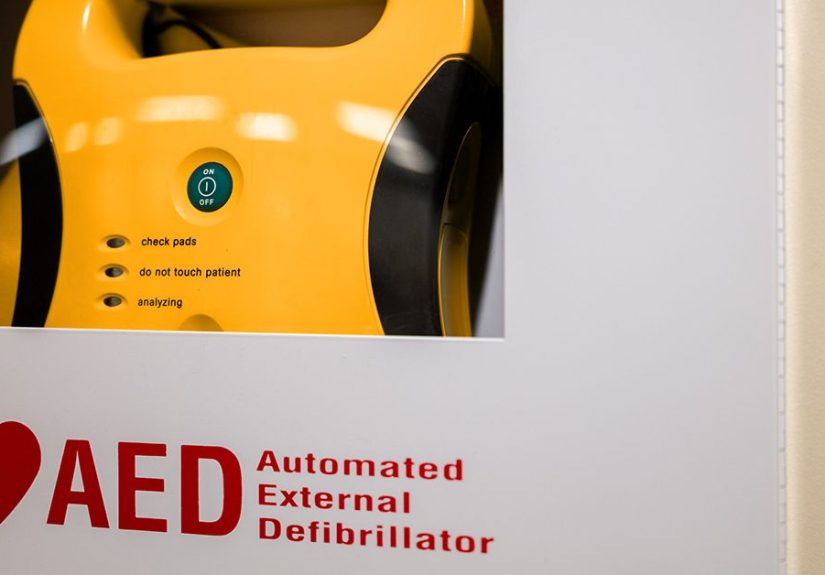
An AED (automated external defibrillator) is the MVP here. It analyzes the rhythm and tells you if a shock is advisedmeaning it can identify shockable rhythms like VF/pVT
without you needing to be a cardiologist.
Immediate Treatment: What To Do First
If you suspect someone is in cardiac arrest, treat it as an emergency right away. If you’re not a healthcare professional, your job is not to pick the perfect diagnosis.
Your job is to start the rescue chain.
For bystanders (non-medical): the lifesaving basics
- Call 911 (or local emergency number) immediately.
- Start CPR (hard and fast chest compressions, minimal pauses).
- Use an AED as soon as it’s available and follow the voice prompts.
- Keep going until EMS takes over or the person clearly wakes up and breathes normally.
If you’ve ever worried, “What if I do it wrong?”here’s the reassuring part: in a true cardiac arrest, doing something quickly is far better than doing nothing perfectly.
AEDs are designed for regular people under stress, not for superheroes with flawless technique and perfect hair.
Why defibrillation is so important for pVT
In shockable cardiac arrest rhythms, early defibrillation combined with high-quality CPR is strongly linked to better survival. Think of CPR as buying time by moving blood,
and defibrillation as the reset button that may allow the heart to restart coordinated pumping.
In-Hospital and EMS Treatment: The Shockable Rhythm Approach
Once trained responders arrive, the approach becomes more structured. In shockable rhythms like pVT, clinicians generally cycle through:
- High-quality CPR with minimal interruptions
- Defibrillation (shock) at appropriate times
- Airway/oxygen support as needed
- IV/IO access for medications
- Medications to support resuscitation and stabilize rhythm
- Search for reversible causes (the “why did this happen?” list)
A practical way to understand the workflow: responders pause briefly to check rhythm, deliver a shock if indicated, then jump back into compressions.
The rhythm is reassessed in repeating intervals while the team works the algorithm.
The “reversible causes” checklist (the H’s and T’s)
During resuscitation, teams look for treatable culprits. A common memory tool is the H’s and T’s, which often include:
- Hypovolemia (not enough blood volume)
- Hypoxia (not enough oxygen)
- Hydrogen ion (acidosis)
- Hypo-/hyperkalemia (potassium imbalance) and other metabolic issues
- Hypothermia
- Tension pneumothorax
- Cardiac tamponade
- Toxins
- Thrombosis (pulmonary embolism)
- Thrombosis (coronary occlusion/heart attack)
This matters because successful resuscitation isn’t only about restarting the rhythmit’s about preventing the heart from immediately falling back into the same problem.
Medications Used in Pulseless V-Tach (What, When, Why)
Medications in pVT are used by trained medical professionals as part of advanced cardiac life support. They aren’t “at-home” treatments, and they are not a substitute for
CPR and defibrillation. In most cases, shocks and compressions come first, because circulation and rhythm correction are the urgent priorities.
Epinephrine
Epinephrine is used during cardiac arrest to improve blood flow to the heart and brain during CPR by constricting blood vessels. The goal is to support the chance of returning
spontaneous circulation (ROSC)meaning the heart starts pumping effectively again.
Antiarrhythmics: amiodarone or lidocaine
If pVT or VF persists despite shocks and CPR, clinicians may use antiarrhythmic medications. Two commonly discussed options are:
- Amiodarone
- Lidocaine
These medications aim to make the heart’s electrical tissue less likely to keep re-entering the dangerous rhythm. Which one is chosen can depend on local protocols,
patient factors, and clinician judgment.
Magnesium (special case: torsades de pointes)
A specific form of polymorphic VT called torsades de pointes is associated with a prolonged QT interval and can lead to pulseless arrest. In that context, magnesium is often
used as part of treatment while clinicians correct the underlying trigger (like medication effects or electrolyte abnormalities).
Bottom line: in pVT, medications support resuscitation, but the cornerstone is early defibrillation plus excellent CPR.
After the Pulse Returns: What Happens Next?
Getting a pulse back (ROSC) is a huge milestone, but it’s not the end of the storyit’s the start of the “make sure this never happens again” chapter.
Post-arrest care typically focuses on:
1) Stabilizing breathing, oxygen, and blood pressure
The brain and heart are sensitive after cardiac arrest. Clinicians monitor oxygen levels, ventilation, blood pressure, temperature, and glucose to reduce secondary injury.
2) Finding the cause
If a heart attack is suspected, the team may move quickly toward cardiac testing and, in some cases, urgent procedures to restore coronary blood flow.
Other investigations may look for pulmonary embolism, bleeding, infection, toxic exposures, or major electrolyte problems.
3) Protecting the brain
Many survivors need ICU-level monitoring. Depending on the situation, clinicians may use targeted temperature management and other strategies aimed at neurological recovery.
Long-Term Treatment and Prevention
Survivors of pVT (or those at high risk) often need a plan that addresses both the electrical problem (arrhythmia risk) and the structural problem
(heart disease or triggers).
Implantable cardioverter-defibrillator (ICD)
An ICD is a small device placed under the skin that monitors the heart rhythm and can deliver therapypacing or a shockif a life-threatening rhythm occurs.
ICDs are widely used to prevent sudden death in people at high risk for dangerous ventricular arrhythmias.
Catheter ablation
If VT originates from a specific area of the heart, an electrophysiologist may perform catheter ablation to reduce or eliminate the abnormal electrical pathway.
For some people, ablation significantly reduces episodes and ICD shocks.
Medications for prevention (not emergency arrest meds)
Long-term medications may include beta-blockers or other antiarrhythmic drugs, depending on the underlying condition. The best regimen is individualizedespecially if a person
has heart failure, prior heart attack, or medication side effects.
Lifestyle and risk-factor control
“Lifestyle” can sound like someone is about to tell you to meditate your way out of physics, but these changes genuinely matter when they reduce the triggers that make arrhythmias
more likely:
- Managing blood pressure, cholesterol, and diabetes
- Taking prescribed heart medications consistently
- Avoiding stimulant misuse and discussing QT-prolonging medications with a clinician
- Following a cardiac rehab or supervised exercise plan if recommended
- Keeping follow-up appointments with cardiology/electrophysiology
Practical Examples (Because Real Life Doesn’t Come With a Flowchart)
Example 1: The gym collapse and the AED that saved a life
A middle-aged person collapses near the treadmill, unresponsive and not breathing normally. Staff call 911, start CPR, and retrieve the gym AED. The AED advises a shock,
which is delivered, and CPR continues. When EMS arrives, they take over and follow shockable rhythm protocols. Later, doctors find a blocked coronary artery and treat it.
The big lesson: early CPR + AED can keep someone alive long enough for the hospital to fix the underlying problem.
Example 2: The medication side effect nobody expected
Someone starts a new medication that can prolong the QT interval, then develops severe vomiting from a stomach bugleading to electrolyte imbalance. The heart becomes electrically
unstable, and an arrhythmia spirals into cardiac arrest. In the hospital, clinicians correct electrolytes, review medications, and create a prevention plan.
The big lesson: triggers can stack, and prevention often includes a careful medication review plus electrolyte awareness during illness.
FAQs
Is pulseless V-tach the same as a heart attack?
No. A heart attack is a blood-flow problem in the coronary arteries. Pulseless V-tach is an electrical rhythm problem causing cardiac arrest. A heart attack can trigger pVT,
but they aren’t the same event.
Can someone be awake in ventricular tachycardia?
Yesif VT still allows enough pumping to maintain circulation, there may be a pulse. Symptoms can range from palpitations and dizziness to fainting.
Pulseless VT, however, means cardiac arrest and unresponsiveness.
What’s the single most important thing bystanders can do?
Call emergency services, start CPR, and use an AED as soon as possible. Those steps give the person their best chance.
Real-World Experiences Related to Pulseless V-Tach (What People Commonly Report)
Because pulseless V-tach is a cardiac arrest rhythm, most survivors don’t “remember” the moment it started. What they often describe instead is the before-and-afterthe
weird normal day that suddenly wasn’t normal, and the long road back that didn’t follow a straight line.
Families frequently talk about how fast everything happens. One minute someone is standing in the kitchen or sitting in the stands at a game, and the next there are 911 operators,
compressions, and someone yelling, “Bring the AED!” Later, many families remember the AED voice prompts with crystal claritycalm, robotic, and oddly grounding.
Survivors often say they’re grateful for that calmness because everyone else was operating on pure adrenaline.
In the hospital phase, the experience can feel like time is made of pudding. Loved ones may hear a string of unfamiliar terms“shockable rhythm,” “ROSC,” “ICU,” “catheterization,”
“echo,” “electrolytes,” “EP consult”and try to translate them into a single question: “Are they going to be okay?” Clinicians usually answer in steps rather than guarantees:
first stabilize, then search for the cause, then protect the brain, then reduce the risk of recurrence. It can be frustrating, but it’s also honest medicine.
Survivors sometimes describe a “post-arrest hangover”: fatigue that feels disproportionate, foggy thinking, mood swings, and a body that takes time to trust itself again.
People who receive an ICD often go through a mental adjustment period. Even though the device is protective, it can also be a constant reminder that something big happened.
Many patients say the first follow-up visits are emotionally intenserelief mixed with “What if it happens again?” Some find reassurance in learning how the ICD works,
how it’s monitored, and what symptoms should trigger a call to the doctor.
A common theme is that recovery isn’t only physical; it’s social. Friends might say, “You look great!” while the survivor is still dealing with short attention span,
sleep disruption, or anxiety in crowded places. Cardiac rehab is often described as helpful not just for exercise, but for confidencebecause it’s supervised, structured,
and packed with people who actually understand why climbing one flight of stairs can feel like an Olympic event at first.
There’s also the “investigation phase,” where patients become accidental detectives of their own health: Was it a blockage? Scar tissue? An inherited rhythm condition?
A medication interaction? Low potassium during an illness? Many people find comfort in getting a clear explanation, even when the explanation is, “Multiple factors lined up.”
The most empowering experiences tend to involve a concrete prevention planmedication adjustments, follow-up testing, lifestyle targets, and a clear “here’s what to do if…” list.
If there’s a takeaway from these shared experiences, it’s this: pulseless V-tach is terrifying, but it’s not only a story of crisis. It’s also a story of fast action,
smart systems (like AEDs), modern cardiology, and the very human process of rebuilding confidence afterwardone normal day at a time.
Conclusion
Pulseless ventricular tachycardia is a shockable cardiac arrest rhythmmeaning the heart’s electrical system is in a dangerous loop and the body isn’t getting blood flow.
The most effective immediate response is rapid recognition, high-quality CPR, and early defibrillation (often via an AED in public settings). In professional care, teams follow
structured shockable-rhythm protocols, may use medications like epinephrine and antiarrhythmics, and aggressively search for reversible causes.
After resuscitation, the focus shifts to stabilizing the patient, identifying the cause, protecting the brain, and preventing recurrenceoften with ICDs, catheter ablation,
medications, and risk-factor control. The best outcomes usually come from a combination of quick bystander action and strong long-term follow-up.