Table of Contents >> Show >> Hide
- First: Is Yellowing Normal or a Red Flag?
- The 3-Minute Orchid Detective Routine
- Cause #1: Natural Leaf Aging (Yes, Sometimes It’s Just… Time)
- Cause #2: Overwatering (Root Rot’s Favorite Love Language)
- Cause #3: Underwatering (Or “I Forgot This Plant Exists”)
- Cause #4: Light Stress (Too Much or Too Little)
- Cause #5: Potting Mix Breakdown (Roots Need Air, Not Compost)
- Cause #6: Fertilizer and Mineral Issues (Too Much, Too Little, or Too Salty)
- When Yellow Leaves Mean “Act Fast”
- Prevention: The “Healthy Roots, Happy Leaves” Checklist
- Grower Experiences: 5 Real-World Yellow-Leaf Stories (and What Usually Worked)
- 1) “I watered every week like clockwork… and it got worse.”
- 2) “The leaves turned yellow after I moved it to a sunnier window.”
- 3) “I thought it was underwatered, but the pot was always wet.”
- 4) “My orchid looked fine for a year, then started yellowing for ‘no reason.’”
- 5) “I fertilized more to ‘help’… and the tips burned.”
Your orchid was minding its own businesslooking elegant, blooming like it pays rentwhen suddenly a leaf turns yellow.
If you felt personally attacked, welcome to the club.
The good news: yellow orchid leaves aren’t always a disaster. The bad news: sometimes they’re your plant’s
way of texting, “We need to talk.” This guide walks you through 6 common causes of orchid leaves turning
yellow (especially for popular grocery-store orchids like Phalaenopsis, aka moth orchids), plus practical, step-by-step
fixes you can actually do without a greenhouse, a PhD, or a pep talk from your fern.
First: Is Yellowing Normal or a Red Flag?
Use this quick reality check before you change your whole routine.
-
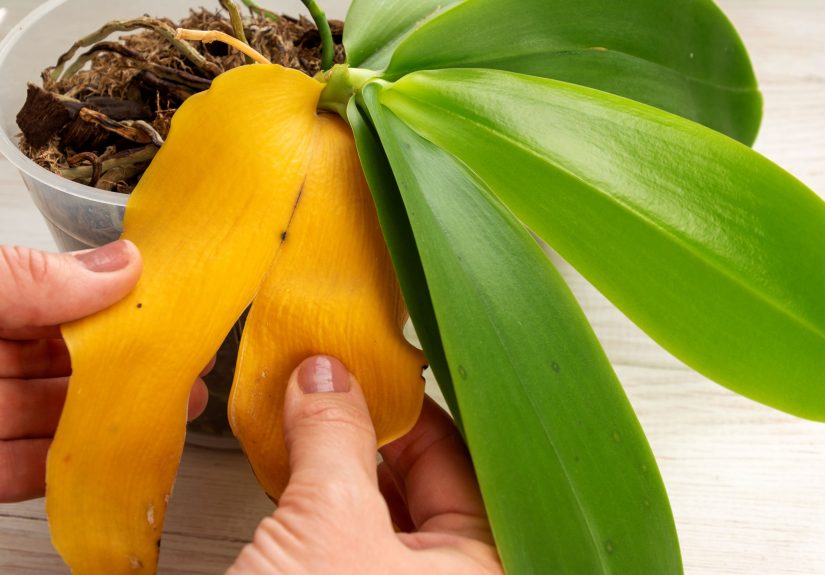
Usually normal: One bottom (oldest) leaf slowly turns yellow over days/weeks, then drops off.
The rest of the plant looks firm, roots look decent, and nothing smells weird. -
Usually a problem: Multiple leaves yellowing at once, newer leaves yellowing, limp/wrinkled leaves,
black spots, mushy crown, soggy media that never dries, or a suspicious “swamp” smell.
The 3-Minute Orchid Detective Routine
Before you “fix,” diagnose. Orchids are dramatic, but they’re also consistent. Look at these three things:
- Which leaf is yellow? Bottom leaf = often aging. Top/new leaves = investigate quickly.
-
What do the roots look like? Healthy orchid roots are typically firm (often green when wet, silvery when dry).
Rotten roots are brown/black, mushy, flattened, or hollow. -
What does the potting mix feel like? If it’s soggy for days, decomposed, or smells sour, the roots may be suffocating.
If it’s bone-dry and pulling away from the pot, dehydration is likely.
Cause #1: Natural Leaf Aging (Yes, Sometimes It’s Just… Time)
Orchids don’t keep every leaf forever. Many Phalaenopsis orchids routinely shed an older bottom leafoften after blooming
or during seasonal shifts. The leaf gradually yellows, softens a bit, then releases with a gentle tug.
What it looks like
- One bottom leaf turns yellow slowly (not overnight).
- The rest of the leaves stay green and firm.
- No widespread wrinkling, no mushy base, no spreading spots.
How to fix it (aka how to not “fix” it)
- Do nothing dramatic. Keep your routine steady.
- If the leaf is fully yellow, you can remove it gently. If it resists, let it finish the jobforced leaf removal can tear tissue.
- Use this moment to double-check basics: bright indirect light, good drainage, and watering based on root/media drynessnot the calendar.
Cause #2: Overwatering (Root Rot’s Favorite Love Language)
Overwatering is the most common reason orchid leaves turn yellow indoors. Orchids are not “soil plants” in the way pothos are.
Many common orchids are epiphytesroots evolved to grab moisture quickly and then breathe. When potting mix stays wet too long,
roots can rot, and the plant can’t take up water or nutrients properly. Result: yellowing leaves, limp texture, and a general vibe of betrayal.
What it looks like
- Yellowing plus soft, limp, or wrinkled leaves (because damaged roots can’t supply water).
- Potting mix is wet for many days, or the pot feels heavy all the time.
- Roots are brown/black and mushy, or the base smells “off.”
How to fix it
- Unpot and inspect roots. This is the orchid equivalent of “turn off the router and restart.”
- Trim dead roots (brown/black, mushy, hollow). Keep firm roots.
-
Repot in fresh orchid media (often bark-based), in a pot with drainage and airflow.
Clear pots can help you monitor roots without constant unpotting. -
Reset watering: Water thoroughly, then let it drain completely. Don’t let the pot sit in water.
Water again when the mix is mostly dry and roots look silvery rather than green. - Avoid “ice cube watering.” It’s convenient, but cold shock + uneven moisture can stress tropical roots.
Example: If you water every Saturday like it’s a sacred ritual but your home is cool and low-light in winter,
your orchid may still be wet from last Saturday. In that case, “weekly” is overwateringeven if it feels responsible.
Cause #3: Underwatering (Or “I Forgot This Plant Exists”)
Orchids can yellow when they’re chronically dry, especially if the potting mix dries so hard that water runs straight through without
rehydrating the roots. Dehydration can also happen if your orchid has damaged roots (often from past overwatering), so the plant
can’t move enough moisture to the leaves even if you water.
What it looks like
- Leaves look wrinkled, accordion-ish, or floppy.
- Potting mix is bone-dry and stays dry; pot feels very light.
- Roots look papery, shriveled, or brittle.
How to fix it
-
Rehydrate properly: Soak the pot (up to the rim) in room-temperature water for about 10–15 minutes, then drain well.
This helps bark/moss re-absorb water evenly. - Check whether water is actually reaching the roots. If roots are badly damaged, watering alone won’t fix itrepotting and root recovery are needed.
- Increase humidity modestly (a pebble tray, grouping plants, or a humidifier nearby), especially during dry heating/AC seasons.
- Adjust the routine: Water based on dryness and root color/firmness, not a fixed schedule.
Tip: If leaves are wrinkled and the pot is always wet, don’t assume “more water.”
That combo often points to root rot: the plant is thirsty because the roots are gone.
Cause #4: Light Stress (Too Much or Too Little)
Light problems can absolutely trigger yellowing. Orchids generally want bright, indirect lightthink “near a sunny window,”
not “on the windowsill roasting like a tiny salad.”
4A. Too much direct sun (sunburn/heat stress)
Direct midday sun can bleach leaves, cause yellow patches, and sometimes create scorched areas that turn tan or brown.
- Clue: Yellowing is strongest on the side facing the window.
- Clue: You see pale, bleached areas or crispy spots.
Fix: Move the plant back from the glass, use a sheer curtain, or switch to an east-facing window for gentler light.
4B. Too little light (slow stress, slow yellowing)
In low light, orchids may struggle to grow and manage resources efficiently. Leaves can become very dark green, and the plant may
weaken over timesometimes leading to yellowing and leaf drop, especially if combined with watering mistakes.
- Clue: No blooms year after year, very dark green leaves, slow growth.
Fix: Move to brighter indirect light (often near an east or bright south window with filtering) or add a simple grow light.
Rotate the pot every week or two so growth stays balanced.
Cause #5: Potting Mix Breakdown (Roots Need Air, Not Compost)
Orchid potting media doesn’t last forever. Bark breaks down, holds more water, and reduces airflow around roots. That “fine, soggy, stays-wet”
mix is a root-rot party waiting to happenand yellow leaves can be one of the earliest signs that the root system is unhappy.
What it looks like
- Media looks crumbly, compacted, or like coffee grounds instead of chunky bark.
- The pot stays wet much longer than it used to.
- Roots are overcrowded, circling, or struggling.
- Yellowing leaves show up even though your watering “hasn’t changed.”
How to fix it
- Repot into fresh orchid mix (bark-based blends are common; many include perlite and charcoal for airflow).
- Pick the right pot: drainage holes are non-negotiable. Slotted orchid pots improve airflow.
- Timing: Repotting is often easiest after blooming or when you see new root tips startingyour orchid recovers faster.
Example: If your orchid was fine for a year, then suddenly started yellowing with no routine changes,
the “invisible change” may be the media decomposing. Bark ages like bananas: fine, fine, fine, then suddenly… not.
Cause #6: Fertilizer and Mineral Issues (Too Much, Too Little, or Too Salty)
Orchids generally need less fertilizer than most houseplants, but they do need consistent nutrition during active growth.
Yellowing can happen from underfeeding (especially over long periods), from overfeeding (salt burn), or from mineral imbalances.
Some growers also see improvement when correcting low magnesiumone reason “orchid supplements” and occasional magnesium support get mentioned.
What it looks like
- Salt buildup/overfertilizing: leaf tips may burn; white crust on media; plant looks stressed despite watering.
- Underfeeding: slow growth, pale leaves, fewer blooms, gradual decline (often subtle).
- Mineral imbalance: can look like generalized yellowing, sometimes more noticeable between veins depending on the issue.
How to fix it
-
Adopt the “weakly, weekly” mindset: Fertilize at a low dose (often around 1/4 strength) more regularly during growth,
instead of heavy feeding once in a while. - Flush monthly: About once a month, water thoroughly with plain water (no fertilizer) to rinse excess salts from the media.
-
Match fertilizer to season: Fertilize mainly when the orchid is actively growing (often spring/summer indoors),
and reduce in slower seasons. -
Consider your water: Very hard water can contribute to mineral buildup. If you see persistent crusting, try filtered, rain,
or reverse-osmosis water if available. - Be cautious with supplements: If you try a magnesium supplement, follow product guidance and go lightmore is not better.
Quick sanity rule: If you’re fertilizing and never flushing, salts can accumulate. If you’re never fertilizing at all,
the orchid may run low over timeespecially in bark media that doesn’t provide nutrition.
When Yellow Leaves Mean “Act Fast”
Most yellowing is fixable, but these symptoms deserve quick attention:
- Yellowing with a mushy crown (center of the plant) or water sitting in leaf joints: possible crown rot.
- Rapidly spreading black/brown areas with yellow margins: possible fungal/bacterial issues.
- Sticky residue, cottony clusters, or raised bumps on leaves: possible pests like mealybugs or scale.
If you suspect pests, isolate the orchid, physically remove what you can, and treat carefully (many indoor pest management guides recommend
targeted approaches like alcohol swabs for small infestations and horticultural oils/soaps with testing to avoid leaf damage).
If you suspect rot, improve airflow, keep water out of the crown, and consider seeking local orchid society guidance for severe cases.
Prevention: The “Healthy Roots, Happy Leaves” Checklist
- Light: Bright, indirect (east window is a classic sweet spot).
- Watering: Soak and drain; water again when media is mostly dry and roots look silvery.
- Drainage: Never let the pot sit in water.
- Media: Repot when mix breaks down or stays wet too long.
- Fertilizer: Low dose during growth; flush monthly to prevent salt buildup.
- Airflow: Don’t cram orchids together; stagnant air invites problems.
- Quarantine: New plants get a short “separate but equal” period to prevent pest surprises.
Grower Experiences: 5 Real-World Yellow-Leaf Stories (and What Usually Worked)
While every home is its own tiny climate zone, orchid problems tend to repeat like sitcom reruns. Across orchid society advice,
extension Q&As, and common indoor plant troubleshooting, the same yellow-leaf scenarios show up again and again. Here are five
“you’re not alone” experiences that can help you recognize patterns faster.
1) “I watered every week like clockwork… and it got worse.”
This is the classic well-intentioned mistake. A new orchid owner hears “water weekly,” sets a reminder, and follows it faithfully.
The problem is that “weekly” depends on light, temperature, humidity, pot type, and potting mix. In a bright, warm space, weekly might be fine.
In a dim winter window, that same schedule can keep roots wet for too long. The result is often one yellowing leaf, then another,
plus leaves that feel oddly soft or limp.
What helped: People who recovered their orchids usually did two things: they checked the roots (often finding some rot),
and they switched to watering based on dryness/root appearance rather than the calendar. Repotting into fresh bark and using a pot
with better drainage often turned the situation around within a few weeks of new root growth.
2) “The leaves turned yellow after I moved it to a sunnier window.”
Another common story: “My orchid needs more light,” so it goes straight into strong sun. A week later, the leaf facing the glass looks pale,
yellow, or blotchy. Sometimes there’s a crisp patch that looks like it got toastedbecause it did.
What helped: The fix is usually simple: pull it back from the window, add a sheer curtain, or switch to gentler morning light.
The damaged area may not turn green again, but new leaves can grow in healthy once the light is right.
3) “I thought it was underwatered, but the pot was always wet.”
This one feels unfair: the mix is wet, yet the leaves are wrinkled and droopy. Many growers learn (the hard way) that wrinkled leaves can mean
“not enough water reaching the leaves,” not necessarily “not enough water in the pot.” If roots are compromised, the plant can’t drink
even while sitting in moisture.
What helped: Successful rescues typically involved removing rotten roots, repotting, and then watering carefully while new roots formed.
People often report that leaf firmness improves slowly over time as root function returnsso patience is part of the treatment plan.
4) “My orchid looked fine for a year, then started yellowing for ‘no reason.’”
This is where potting mix breakdown sneaks in. Bark that used to be airy becomes compacted and water-retentive. The owner hasn’t changed anything,
but the environment around the roots has changed dramatically. Yellowing leaves can be an early sign that roots aren’t getting enough oxygen.
What helped: Repottingoften into fresh, chunky orchid mixfrequently fixes the “mystery decline.” Many growers say their orchid
perked up once the roots could breathe again, especially when paired with a more flexible watering routine.
5) “I fertilized more to ‘help’… and the tips burned.”
When plants struggle, we tend to feed them like we’re offering soup to someone with the flu. But orchids often prefer gentle, consistent feeding.
Heavy fertilizer can contribute to salt buildup, and some people notice leaf tip burn or a stressed look shortly after an “extra boost.”
What helped: Switching to diluted fertilizer during active growth and flushing with plain water regularly is a common turning point.
Growers who get consistent results often keep fertilizing simple: low dose, regular schedule, and a monthly “salt rinse.”
Bottom line: most yellow-leaf episodes aren’t a death sentencethey’re a diagnosis prompt. Once you connect the symptom (yellow leaves) to the cause
(watering, light, roots, media, or minerals), orchids are surprisingly willing to forgive… as long as you stop doing the thing they hate.