Table of Contents >> Show >> Hide
- What Is the Droog Milkbottle Lamp, Exactly?
- Design Details That Make It Work
- Single Pendant vs. the Multi-Bottle Statement
- Where This Lamp Looks Best (and Why)
- Hanging Height and Placement: The Difference Between Chic and Bonk
- Bulb Choice: Make It Glow, Not Scorch
- How to Style the Milkbottle Lamp (Remodelista-Inspired, Not Costume-y)
- Cleaning and Care: Keep the Frosted Glass Gorgeous
- Buying Notes: What to Check Before You Commit
- Why It Still Feels Fresh
- Conclusion
- Experiences: Living With the Droog Milkbottle Lamp (The Stuff You Notice After the “Ooh!”)
Some design objects whisper. The Droog Milkbottle Lamp doesn’t whisperit politely clears its throat with a Dutch accent and says,
“Yes, I’m a milk bottle. Yes, I’m also a serious lighting fixture. Please stop giggling and turn on the dimmer.”
Featured on design-forward radars like Remodelista, the Droog Milkbottle Lamp is the kind of piece that makes a room feel instantly
more intentionallike you alphabetize your spices and you know what “patina” means. It’s minimalist without being cold,
playful without being precious, and iconic without needing a neon sign that says ICONIC.
What Is the Droog Milkbottle Lamp, Exactly?
At its simplest: it’s a pendant light built around a classic milk bottle shapetypically sandblasted or frosted glasspaired with a
straightforward cord and a clean metal cap. The magic is in the idea: turning a familiar, everyday object into a design statement that
still works like a dependable light over your table, counter, or reading nook.
The lamp is associated with designer Tejo Remy and the Dutch design label Droog (often dated to the early 1990s). Remodelista has listed
the piece as designed in the early ’90s as well, and museums and catalogs commonly place it in that same era. The takeaway: it’s not a
“new trend.” It’s a modern classic that simply refuses to age.
The “Less + More” Appeal
The Milkbottle Lamp nails a paradox that great lighting often pulls off: it looks almost absurdly simple, yet it changes the atmosphere
of a space. One bottle. One cord. One bulb. And suddenly your kitchen island looks like it belongs in an editorial spreadminus the
stylist who steals your personal items and calls it “decluttering.”
Design Details That Make It Work
1) The Bottle Shade: Soft, Diffused Light
The frosted/sandblasted glass is doing a lot of heavy lifting. Instead of a bare bulb glare situation (also known as “Why is my kitchen
yelling at me?”), the glass diffuses light into a softer glow. This makes it friendly for dining tables, bedside hangs, and anywhere you
want light that feels warm rather than interrogational.
2) The Metal Cap: Clean Finish, Not Fussy
The cap is typically a polished metal lookoften described as chrome or stainless steel depending on the version and seller. It keeps the
overall silhouette crisp and modern, and it visually “finishes” the top so the bottle reads as intentional design, not “I found this in a
recycling bin and got crafty.”
3) The Cord Drop: A Big Part of the Look
Pendant lighting is basically jewelry for ceilingsand the cord is the chain. Many versions of the Milkbottle Lamp come with a long drop,
giving you flexibility for tall ceilings, stairwells, reading corners, and dramatic clusters. It can be subtle overhead or intentionally
low and sculptural.
Single Pendant vs. the Multi-Bottle Statement
When people say “Droog Milkbottle Lamp,” they might mean two related ideas:
-
The single pendant: one milk bottle shade hanging on its ownperfect for a small kitchen, a hallway, a bedside
installation, or a pair/trio over an island. -
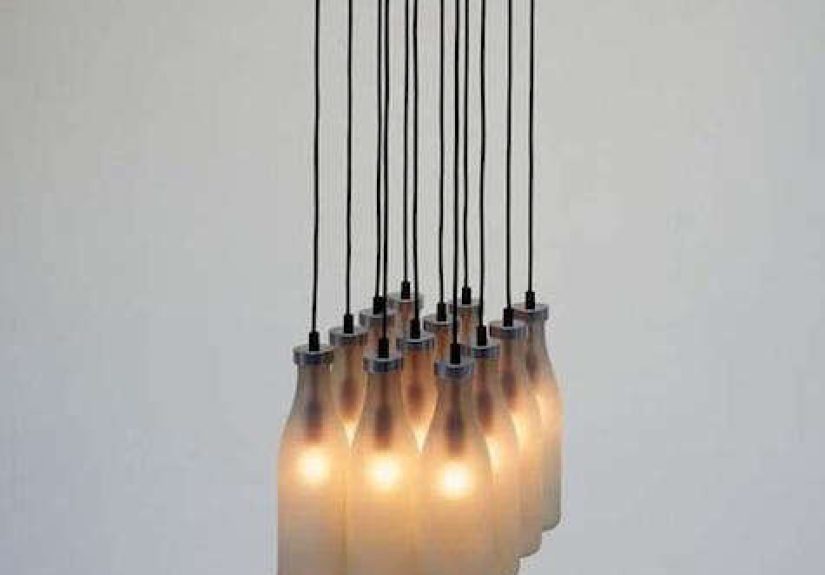
The multi-bottle arrangement: a more dramatic configuration using multiple bottles (often discussed as a “chandelier” or
grouped set), referencing the visual rhythm of milk bottles in old-style crates. This is the version that turns lighting into an
installation.
Remodelista-style rooms tend to love both: the single pendant for quiet, clean-lined utility; the multi-bottle moment for a sculptural
focal point that still feels airy because the materials are so restrained.
Where This Lamp Looks Best (and Why)
Over a Kitchen Island: Practical, Editorial, and Forgiving
The Milkbottle Lamp is especially strong over islands because it’s visually slim. You get character without blocking sightlines, and the
frosted shade helps reduce harsh hotspots on glossy countertops. If you’re doing multiple pendants, the repetition becomes the design
clean, rhythmic, and very “yes, I have my life together.”
Over a Dining Table: Cozy Light Without the Chandelier Drama
If your taste leans modern but you still want a dining area that feels welcoming, this is a great middle ground. A single pendant can feel
sculptural and quiet; a pair can frame a long table; a cluster can add energy without resorting to crystals.
By the Bed: The Small-Space Power Move
Swapping bedside lamps for pendants frees up surface space and instantly makes a room feel designed. The Milkbottle Lamp works here because
it’s compact and softly diffused. It reads as intentional, not trendy.
In an Entryway or Stairwell: A Vertical Moment
This is where that long cord drop earns its keep. A single pendant can become a subtle sculptural element; a grouping can echo the movement
of stairs or a tall foyer. It’s minimal, but it still feels like an “arrival.”
Hanging Height and Placement: The Difference Between Chic and Bonk
Pendant lights are unforgiving. Hang them too high and they look lost. Hang them too low and your guests will do that awkward dodge like
they’re avoiding a low tree branch on a hiking trail.
Common, Designer-Friendly Height Guidelines
-
Over a dining table: a widely used guideline is to hang the bottom of the pendant about 30–36 inches
above the tabletop, then adjust for ceiling height and sightlines. -
Over a kitchen island/counter: similar guidance often lands at 30–36 inches from the counter surface to
the bottom of the pendant. -
Multiple pendants: spacing is commonly planned around 24–30 inches apart (center-to-center), depending on
fixture width and how visually “busy” you want the lineup to feel.
The Milkbottle Lamp’s slim profile makes it more forgiving than wide drum pendants, but you still want alignment. A simple trick: mark
heights with painter’s tape first, stand back, sit down at the table, and check sightlines like a normal personnot like a ceiling-obsessed
gremlin. (No judgment. We’ve all been there.)
Bulb Choice: Make It Glow, Not Scorch
The shade diffuses light, but the bulb still sets the mood. For most homes, a warm-white LED is the sweet spot: enough brightness for
function, warm enough to feel comfortable, and efficient enough that you won’t feel personally attacked by your electric bill.
Quick Bulb Tips
- Color temperature: warm white (often around 2700K) tends to feel most inviting in kitchens and dining spaces.
- Dimming: if your version supports dimming, use a compatible dimmable LED for maximum mood control.
- Brightness: aim for “pleasantly bright” rather than “operating room.” The frosted bottle already softens the output.
How to Style the Milkbottle Lamp (Remodelista-Inspired, Not Costume-y)
Pair It with Honest Materials
This lamp loves materials that feel straightforward: wood, stone, concrete, linen, unlacquered brass, matte tile. If your room has a lot of
glossy finishes, the frosted bottle becomes a helpful softener.
Let Negative Space Do Its Job
Minimal pendants look best when you don’t clutter everything around them. Give the lamp room to “breathe.” If you’re hanging multiples,
keep the rest of the ceiling area calmno competing beams, busy crown molding, or a ceiling fan trying to photobomb.
Use Repetition for Calm
If you want that Remodelista-level calm, repeat shapes elsewhere: cylindrical candles, simple stools, rounded vases. The Milkbottle shape is
friendly and familiar; echo it subtly and the room feels cohesive without screaming “theme.”
Cleaning and Care: Keep the Frosted Glass Gorgeous
Frosted or sandblasted glass is beautiful, but it can hold onto grime a little more than smooth glass. The good news: maintenance is
straightforward if you keep it gentle.
A Simple, Safe Cleaning Routine
- Turn off the light and let everything cool completely.
- Use a mild cleaner: a little dish soap and warm water works well for everyday dust and kitchen residue.
- Choose soft tools: microfiber cloths are your best friend; skip abrasive pads that can scratch.
- Dry thoroughly to avoid spotsespecially if your water is mineral-heavy.
If you’re dealing with heavier buildup (hello, kitchen life), remove the shade if possible and clean it like you would a delicate glass
piece: gentle soap, soft wipe, and a careful dry. The goal is “softly matte glow,” not “mysterious smudges that look like modern art.”
Buying Notes: What to Check Before You Commit
Voltage and Hardware
If you’re in the U.S., confirm you’re getting the correct voltage and wiring setup for your home. Many listings specify a U.S.-compatible
option, but it’s worth double-checkingespecially if you’re sourcing from design retailers or specialty shops.
Dimensions and Drop Length
The single pendant is typically slender, with a narrow bottle profile and a generous maximum drop. Measure your ceiling height, then decide
whether you want a tight, tidy hang or a longer, more dramatic drop.
Authenticity and Finish
Because the concept is so recognizable, similar “milk bottle pendant” styles exist. If you want the Droog version specifically, verify the
product details (finish, materials, and maker attribution) from a reputable seller. That’s how you avoid accidentally buying a “Milk Bottle
Inspired-ish Pendant-ish Object” that looks fine online and odd in real life.
Why It Still Feels Fresh
The Milkbottle Lamp has stayed relevant because it’s built on a strong idea, not a fleeting trend. It’s familiar but surprising; simple but
not boring. And it’s a reminder that great lighting isn’t just illuminationit’s atmosphere, comfort, and a subtle cue that the space is
thoughtfully lived in.
In other words: it’s a milk bottle that grew up, got a design degree, and now pays rent by making your home look better.
Conclusion
If you’re drawn to the Remodelista aestheticquiet materials, purposeful objects, and lighting that feels like part of the architecturethe
Droog Milkbottle Lamp is an easy yes. Use a single pendant for a clean, minimal statement, or lean into repetition with multiple bottles
for a more sculptural installation. Keep the hanging height sensible, choose a warm, dimmable bulb, and treat the frosted glass gently.
The result is lighting that’s functional, iconic, and just witty enough to make your ceiling feel like it has a personality.
Experiences: Living With the Droog Milkbottle Lamp (The Stuff You Notice After the “Ooh!”)
A lot of lighting looks great for the first ten minutesright up until you try to live with it. The Milkbottle Lamp tends to win people
over in the long game because it behaves like a good roommate: it’s calm, it’s not needy, and it makes the place feel nicer without making
everything about itself.
The first thing many homeowners notice is how forgiving the light feels. That frosted glass doesn’t just diffuse brightness;
it also softens the mood of the room. Over a kitchen island, it can take the edge off shiny surfacesquartz, stainless appliances, glossy
tileso the space feels less like a showroom and more like a place where you can actually eat toast in peace. If you’ve ever turned on a
pendant and immediately regretted every life choice that led to “bare bulb glare,” this is the opposite experience.
In dining rooms, people often discover a second benefit: conversation stays comfortable. When pendants are hung at a sensible
height, the Milkbottle silhouette is slim enough that it doesn’t create a visual wall between guests. You still get a focal point, but you
don’t get that “I can’t see Aunt Linda across the table” effect. And because the lamp reads as sculptural even when it’s off, the dining
area still feels styled in daylightno need to rely on nighttime magic to make the room look finished.
By the bed, the experience is mostly about space and calm. A pendant frees up your nightstand, which is great if your
nightstand is already doing three jobs: holding a phone, a water glass, and the emotional burden of your unread books. The diffused light is
gentle for winding down, especially with a warm bulb, and the bottle shape feels quietly nostalgiclike a modern nod to the old milk-delivery
era without going full “farmhouse signage.”
Real-life maintenance is also pleasantly un-dramaticif you stay ahead of it. In kitchens, a frosted shade can collect a light film over
time (steam, cooking oils, airborne life stuff). People who love theirs usually have the same habit: a quick wipe with a soft cloth on a
regular schedule, and an occasional deeper clean when they’re already doing the “adulting marathon” of wiping cabinet doors and cleaning
the range hood. The key is staying gentleno harsh scrubbing that changes the frosted finish.
Finally, there’s the surprisingly emotional part: it becomes a signature. Guests remember it. It’s one of those fixtures
that people point at and say, “Where did you get that?” even if they can’t name why it’s compelling. It’s not loud, but it’s distinctive.
And that’s a rare sweet spot in home design: a piece that feels iconic, livable, and quietly funnylike it’s in on the joke that a milk
bottle is now running your lighting plan.