Table of Contents >> Show >> Hide
- What Is Laser Hair Removal on the Face?
- How Much Does Laser Hair Removal on the Face Cost?
- Who Is a Good Candidate?
- How to Prepare Before Your Appointment
- What Happens During the Procedure?
- What Happens Afterward?
- How Many Sessions Will You Need?
- Possible Risks and Side Effects
- Laser Hair Removal vs. Electrolysis vs. Waxing
- When to See a Doctor About Facial Hair
- Conclusion
- Real-World Experiences: What Facial Laser Hair Removal Is Actually Like
- SEO Tags
If you are tired of tweezers, chin stubble, upper-lip shadow, or that one annoying hair that seems to clock in for work before you do, facial laser hair removal probably sounds pretty appealing. And honestly, it can be. But it is not magic, it is not one-and-done, and it is definitely not the same as waving a futuristic flashlight over your face and emerging as a perfectly smooth moonbeam.
Done well, laser hair removal on the face can reduce unwanted hair for months or even years, make regrowth finer and lighter, and cut way down on shaving, threading, and waxing. Done poorly, it can irritate the skin, trigger pigment changes, or leave you with an expensive lesson in why “discount cosmetic laser night” should never have existed in the first place.
This guide breaks down how facial laser hair removal works, what it costs, what the procedure feels like, who tends to benefit most, and what you should know before booking a consultation.
What Is Laser Hair Removal on the Face?
Laser hair removal is a medical procedure that uses concentrated light to target pigment in the hair shaft. That light turns into heat, and the heat damages the hair follicle so future growth is slowed down. On the face, the most commonly treated areas include the upper lip, chin, sideburns, jawline, cheeks, beard line, and neck.
The key word here is reduction. Facial laser hair removal is excellent for long-term hair reduction, but it is not always a permanent forever goodbye, especially on hormonally sensitive areas such as the chin and upper lip. Facial hair has a habit of being a little dramatic. Hormones, genetics, and medical conditions like hirsutism or polycystic ovary syndrome can all encourage regrowth.
That does not mean the treatment is not worth it. It just means your expectations should be realistic. Think less “hair vanishes into another dimension forever” and more “far less hair, far less often, with the occasional maintenance session.”
How Much Does Laser Hair Removal on the Face Cost?
The cost of laser hair removal on the face can vary a lot depending on where you live, who performs the treatment, what device is used, and whether you are treating a tiny area like the upper lip or a larger zone like the full beard area or full face.
As a general benchmark, the American Society of Plastic Surgeons reports an average cost of $697 for laser skin treatments such as laser hair removal. But that figure is not the full story. It usually does not include everything that affects your final bill, and it is not specific to facial areas alone.
Published pricing from U.S. medical providers shows how quickly facial costs can diverge. A small area like the upper lip or chin may be priced around $100 to $150 per session, while a beard area or full-face treatment can run significantly higher. And because most people need a series of treatments, your total cost is usually the per-session fee multiplied by four, six, or sometimes more visits.
What Affects the Price?
- Treatment area size: Upper lip costs less than full face. No surprises there.
- Hair density and thickness: Coarser, denser hair may require more time and more sessions.
- Provider credentials: Board-certified dermatologists and medically supervised practices may charge more, but they also bring more expertise.
- Laser type: Different devices are used for different skin tones and hair types.
- Geographic location: Big-city pricing usually hits harder than small-town pricing.
- Package deals: Many clinics sell bundles of four to six sessions.
Is It Covered by Insurance?
Usually, no. Facial laser hair removal is generally considered a cosmetic treatment, so insurance does not typically cover it. There can be exceptions in certain medical or gender-affirming care situations, but for most patients, this is an out-of-pocket expense.
Who Is a Good Candidate?
The ideal candidate traditionally has darker, coarser hair and lighter skin, because the laser can more easily distinguish pigment in the hair from pigment in the skin. That said, technology has improved, and many modern systems can treat a much wider range of skin tones more safely than older devices.
Even so, results still depend heavily on contrast. Blonde, gray, white, and red hair often respond poorly because there is not enough pigment for the laser to target well. If your facial hair is very light, electrolysis may be the better long-term option.
You May Be a Good Candidate If:
- You have dark or medium-pigment facial hair.
- You get razor bumps, ingrown hairs, or frequent irritation from shaving or waxing.
- You want longer-lasting results than threading, tweezing, or depilatory creams can provide.
- You are willing to complete multiple sessions and possibly maintenance visits.
You Need Extra Caution If:
- You have darker skin and need a provider experienced with your skin tone.
- You are prone to keloids or pigment changes.
- You have a history of cold sores.
- You have a recent tan or use self-tanner.
- You are taking acne medications or other photosensitizing drugs.
- Your facial hair appeared suddenly or is accompanied by acne, irregular periods, or other hormonal symptoms.
That last point matters more than people think. Sometimes facial hair is just facial hair. Sometimes it is part of hirsutism, PCOS, medication effects, or another underlying issue. If the growth is new, worsening, or clearly hormone-driven, it is smart to talk with a clinician instead of treating the hair like the whole story.
How to Prepare Before Your Appointment
Preparation can make or break your results. A good consultation should include a review of your medical history, medications, skin history, past hair removal methods, and your goals. You should also be told exactly how to prep your skin.
Before facial laser hair removal, most providers recommend:
- Avoiding sun exposure and tanning beds: Tanned skin increases the risk of burns and pigment changes.
- Skipping self-tanner: Artificial color can interfere with treatment.
- Not waxing, threading, tweezing, or plucking: These remove the root, which the laser needs in order to work.
- Shaving or trimming the area: This is often recommended the day before treatment, depending on the provider’s instructions.
- Reviewing your medications: Some drugs can increase sensitivity or affect healing.
If you have a history of herpes simplex outbreaks around the mouth, tell your provider. Facial laser treatment can sometimes trigger a cold sore flare, and preventive medication may be recommended.
Also worth noting: do not randomly slather your face with ultra-strong numbing cream you bought online. The FDA has warned consumers about certain topical pain products marketed for laser hair removal and other cosmetic procedures, especially high-lidocaine formulas that can pose serious health risks if used improperly.
What Happens During the Procedure?
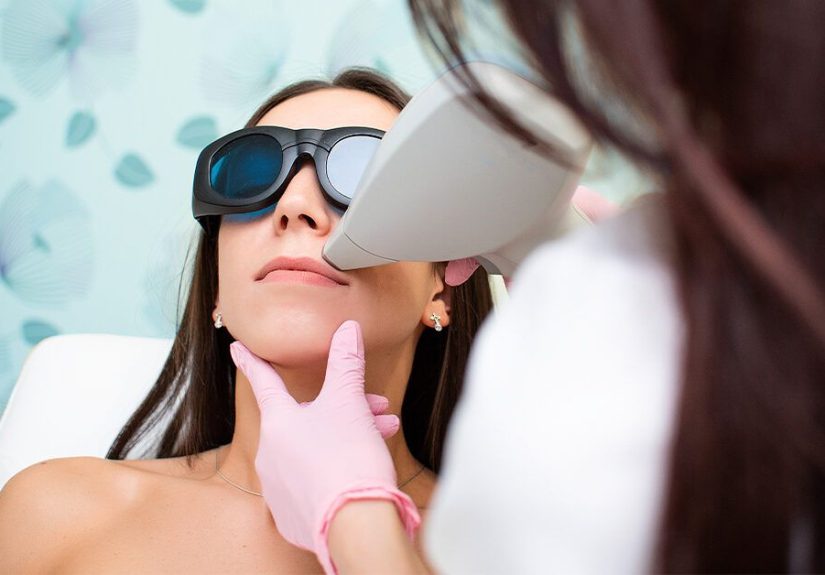
Facial laser hair removal is an office procedure, and it is usually pretty quick. Small areas like the upper lip may take only minutes. A larger facial treatment can still be done in a relatively short visit, often around 10 minutes or a bit longer depending on the area.
Here is the usual step-by-step:
- Your provider cleans the treatment area.
- You and everyone in the room put on protective eyewear.
- A cooling gel, cooling tip, or similar protective measure may be used.
- The provider delivers pulses of laser light across the treatment area.
- A cool compress or soothing product may be applied afterward.
How does it feel? Most people describe the sensation as a warm pinprick, mild sting, or a rubber band snapping against the skin. In other words, not exactly a spa nap, but generally tolerable. Sensitive areas like the upper lip can feel sharper than the cheeks or jawline.
There may also be a faint burnt-hair smell during treatment. Glamorous? No. Normal? Yes.
What Happens Afterward?
After treatment, the skin often looks pink or mildly swollen, similar to a light sunburn. For most people, that fades within hours to a couple of days. There is usually little to no real downtime, which is one reason facial laser hair removal is so popular.
Common aftercare tips include:
- Use a cool compress if the area feels warm or tender.
- Avoid direct sun exposure.
- Wear broad-spectrum sunscreen daily.
- Follow your provider’s instructions on skin care, makeup, and active ingredients.
- Do not pick at the skin or aggressively exfoliate right away.
One thing that surprises people: the hairs do not disappear instantly. Instead, they often shed over days to weeks. It can look like the hair is still growing, but in many cases it is working its way out.
Most facial treatments are repeated every four to eight weeks, depending on the area and how quickly the hair cycles.
How Many Sessions Will You Need?
Most people need multiple sessions because hair grows in cycles, and the laser works best when follicles are in the active growth phase. If the follicle is taking the day off when the laser hits, it may survive to bother you later.
A common starting point is four to six sessions, though many patients need six to eight for facial areas. Hormonal facial hair often needs extra patience and occasional maintenance visits, especially on the chin and upper lip.
You may notice some reduction after the first treatment, often in the range of about 10% to 25%. But the more meaningful change usually shows up after several sessions, when regrowth becomes patchier, softer, and slower.
Possible Risks and Side Effects
Laser hair removal is generally safe when performed by an experienced medical professional, but it is not risk-free. The face is a visible area, so even “temporary” side effects can feel like a big deal.
Common short-term side effects:
- Redness
- Swelling around follicles
- Mild discomfort
- A sunburn-like feeling for a day or two
Less common but more serious risks:
- Burns or blisters
- Hyperpigmentation or hypopigmentation
- Scarring
- Cold sore outbreaks
- Rare paradoxical hair growth near treated areas
If you have darker skin, the treatment is not off-limits, but device choice and provider experience matter even more. Longer wavelengths and appropriate settings can improve safety, but this is not the moment to bargain-hunt based on a social media coupon and vibes alone.
And because the face is near the eyes, laser treatment should not be used on the eyelids or the surrounding area. Protective eyewear is not optional. It is the opposite of optional.
Laser Hair Removal vs. Electrolysis vs. Waxing
If you are choosing between facial hair removal options, here is the practical breakdown:
Laser Hair Removal
Best for darker hair, especially when you want long-term reduction and fewer ingrown hairs. Faster than electrolysis over larger areas. Not ideal for very light hair.
Electrolysis
Works on all hair colors, including blonde, white, and gray. It is the go-to option when you want true permanent destruction of follicles, but it can take more sessions and more time because each follicle is treated individually.
Waxing, Threading, Tweezing, Shaving
Useful for short-term control, but maintenance is constant. These options can also irritate sensitive facial skin or trigger ingrown hairs in some people.
If your facial hair is light-colored, electrolysis often beats laser. If your hair is dark and coarse and you want a lower-maintenance routine, laser is often the better fit.
When to See a Doctor About Facial Hair
Sometimes unwanted facial hair is just a cosmetic issue. Sometimes it is a clue. It is worth checking in with a healthcare professional if:
- The hair growth is sudden or rapidly worsening.
- You also have irregular periods, acne, or scalp hair thinning.
- You suspect PCOS or another hormonal condition.
- You are growing coarse hair in new areas.
- You take medications known to affect hair growth.
Laser hair removal can improve appearance and daily comfort, but if hormones are driving the issue, treating the underlying cause can improve long-term results too.
Conclusion
Laser hair removal on the face can be a fantastic option if you want to spend less time shaving, stop battling ingrown hairs, and reduce the constant maintenance that comes with upper-lip, chin, or beard-area growth. It is quick, usually has little downtime, and can deliver long-lasting reduction when done correctly.
But the best results come from realistic expectations and a smart provider choice. Facial hair is often influenced by hormones, so you may need more sessions than you expected and touch-ups later. Cost can range from manageable to “wow, my chin has a luxury budget,” depending on the area and the clinic. And because the face is such a visible treatment zone, experience matters more than ever.
If you are thinking about facial laser hair removal, look for a medically qualified provider with experience treating your skin tone and hair type, ask detailed questions at the consultation, and treat sun protection like part of the procedure, not an optional side quest.
Real-World Experiences: What Facial Laser Hair Removal Is Actually Like
For many people, the emotional side of facial laser hair removal is almost as significant as the cosmetic side. Unwanted facial hair can be exhausting in a very specific, very daily way. It is the chin check in the car mirror. The upper-lip inspection under overhead lighting. The emergency tweezing before brunch. The weird confidence dip that arrives because a few coarse hairs somehow have the power of a supervillain.
A common first experience is surprise at how clinical the appointment feels. A good consultation is less “beauty counter makeover” and more “let’s talk about your skin type, medical history, medications, cold sores, tanning habits, and whether this is the right treatment for you.” That is a good sign. The safer the practice, the less casual the laser tends to feel.
During the first session, many patients expect unbearable pain and then discover the reality is more annoying than agonizing. The upper lip often gets the most complaints because it is a small area packed with nerve endings. It can feel zingy, snappy, and rude. The chin and jawline are often easier. Most people can get through a facial session without much drama, though some definitely leave thinking, “Well, that was not my favorite hobby.”
The first week afterward can be psychologically strange because you may not look dramatically different right away. The skin may be slightly pink, and the hairs can seem like they are still there. Then comes the shedding phase. What looked like stubborn regrowth may actually start loosening and falling out over the next several days or weeks. For first-timers, that part can feel oddly satisfying, like your face is quietly taking out the trash.
By the second or third treatment, people often start noticing the changes that matter in real life: less shadow, fewer ingrown hairs, softer regrowth, and less time spent doing maintenance. Someone who used to tweeze daily may find they now only notice a few finer hairs. Someone who shaved every morning may be able to skip days without feeling self-conscious. These are not flashy movie-montage results, but they are meaningful.
There are also frustrations. Facial hair can be stubborn, especially when hormones are involved. Patients with PCOS or hirsutism often describe improvement, but not total freedom. They may still need maintenance visits. Some people feel disappointed if they expected smooth skin after one session or assumed laser would permanently erase every follicle on the chin forever. On the face, the process often rewards patience more than optimism.
Cost is another real part of the experience. A single upper-lip session may not seem too bad, but once you add the chin, jawline, neck, package pricing, and maintenance, the numbers climb. Patients often say the treatment feels worth it when they compare it with years of waxing, threading, shaving supplies, and the mental energy spent managing facial hair. Still, the investment is real, and it helps to go in with clear expectations.
In the end, the most positive experiences usually come from people who choose a qualified provider, follow prep and aftercare instructions closely, protect their skin from the sun, and understand that progress on the face is often gradual. The happiest patients are not the ones promised perfection. They are the ones promised honest results and then actually get them.