Table of Contents >> Show >> Hide
- Why This Renovation Story Hooked the Internet So Fast
- The Doll Factor: Why One Old Toy Can Turn a House Into a Horror Set
- What the Couple Actually Found, Minus the Paranormal Screenplay
- Old Houses Love Secrets, and Renovators Keep Finding Them
- Why the Internet Immediately Said, “Move Out”
- What Homeowners Should Actually Do If They Find Something Strange During a Renovation
- The Bigger Meaning Behind the Viral Suitcase Story
- Related Experiences: Other Renovation Finds That Prove This Suitcase Story Hit a Nerve
- Conclusion
Every renovation starts with optimism. You picture fresh paint, better lighting, and maybe a kitchen that no longer looks like it was designed during a national avocado-green emergency. What you do not picture is crawling into a hidden space, finding an old suitcase, opening it, and realizing the internet has instantly decided your house is haunted.
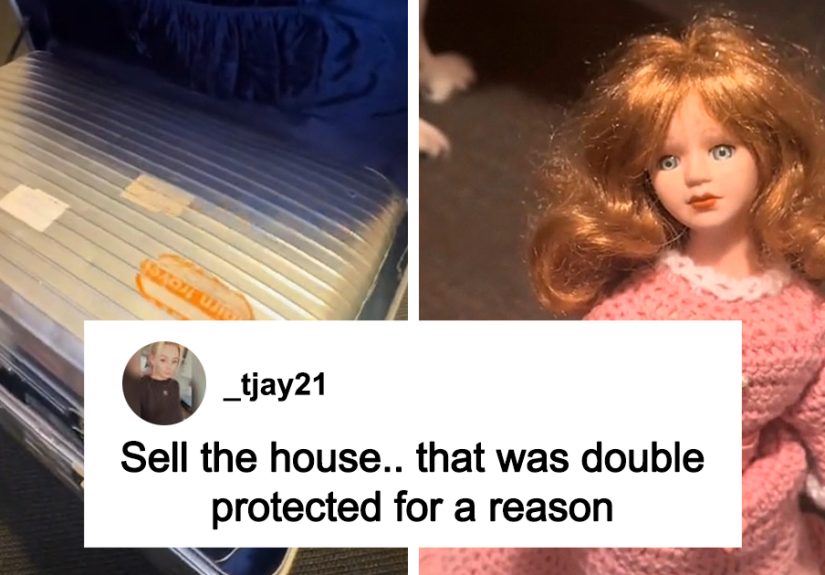
That is exactly why this story took off. A couple renovating a retro 1960s home discovered a concealed crawl space tucked behind doors and a curtain. Inside was a silver suitcase. Inside that suitcase were a few ordinary items, then a smaller case, and then the object that launched a thousand “absolutely not” comments: a strange vintage-looking doll secured inside like someone wanted it very, very much to stay put.
Online, viewers wasted no time doing what the internet does best: turning a weird home improvement surprise into a full-blown horror franchise in the comments. Some joked that the couple should sell the house immediately. Others insisted the doll had been hidden for a reason. A few practical souls focused on the real prize: the suitcase itself. But the bigger reason this moment exploded is simple. It sits at the perfect crossroads of renovation curiosity, old-house mystery, and the eternal human belief that if a doll looks at you funny, it probably knows something.
Why This Renovation Story Hooked the Internet So Fast
There is something irresistible about hidden spaces in old homes. Walls, floorboards, attics, crawl spaces, and sealed-off nooks all suggest that a house has a second life under its everyday one. Renovation content already performs well online because people love transformation. Add a secret compartment and an eerie object, and suddenly viewers are not just watching a remodel. They are watching a mystery unfold in real time.
That is exactly what made this suitcase story so shareable. It had all the ingredients of viral storytelling: suspense, a slow reveal, a believable homeowner reaction, a dog acting weird at the worst possible moment, and a final image creepy enough to trigger everyone’s inner 12-year-old who watched one scary movie too young and never fully recovered.
The pacing mattered too. The initial discovery looked ominous, but not criminal. The contents started out oddly harmless: old sweets, a sewing kit, a pencil. Then came the smaller case. Then came the doll. The reveal worked like a miniature thriller. By the end, viewers were not just reacting to a found object. They were assigning meaning to it.
The Doll Factor: Why One Old Toy Can Turn a House Into a Horror Set
Let’s be honest: if the suitcase had contained old tax returns and a rain bonnet, this story would not have traveled very far. The doll did the heavy lifting. Vintage dolls have a long cultural history, but they also carry a strange emotional charge. They are familiar, childlike, and designed to resemble people, yet they are frozen in expressions that never change. That combination tends to hit the brain in a weird place.
Psychologists and museum experts often connect that feeling to the “uncanny valley,” the uneasy response people have when something looks almost human but not quite human enough. Dolls became even creepier to modern audiences as they grew more realistic over time. Once a doll has glassy eyes, a fixed smile, and the weathered face of something that has seen three wars and six wallpaper trends, the imagination does the rest.
Porcelain and vintage dolls also come loaded with cultural baggage. They appear in horror movies, ghost stories, Halloween décor, and family lore. Even when they are completely harmless collectibles, they can feel unnerving when discovered in the wrong setting. A doll in a curated display case says “antique charm.” A doll strapped inside a smaller suitcase hidden in a crawl space says “please call a priest, an appraiser, and maybe your mom.”
What the Couple Actually Found, Minus the Paranormal Screenplay
Strip away the jokes, and the find was more curious than supernatural. The larger suitcase reportedly held commonplace odds and ends, the sort of leftovers people stash away during moves or forget in tucked-away corners. The smaller case contained the doll, which the homeowner herself suggested might be collectible rather than sinister.
That detail matters. Old homes are full of objects that feel eerie only because their original context has vanished. A tucked-away sewing kit once belonged to someone who probably used it often. A vintage toy may have been treasured, repaired, or stored for safekeeping. A hidden nook could have been practical storage, an attempt to save space, or simply the result of a long-ago remodel that sealed off an area by accident.
In other words, the house does not need to be haunted for the discovery to feel spooky. It only needs to remind us that other people lived full lives there before us, and that they left traces behind in places we do not expect to find them.
Old Houses Love Secrets, and Renovators Keep Finding Them
This is where the story gets even more interesting. Strange finds during renovations are not rare. They are practically a genre now. Across home and design media, homeowners have uncovered hidden apartments under stairs, indoor wells beneath kitchens, long-sealed tunnels, buried objects in yards, forgotten architectural details, and all kinds of things that make a contractor pause mid-sentence.
That does not mean every house is hiding a cursed artifact and a side quest. Usually, these discoveries are the byproduct of age, adaptation, and changing lifestyles. Older homes were modified repeatedly over the decades. Storage spaces were closed off. Mechanical systems were rerouted. Rooms were divided, then reopened. Features that once made perfect sense can look baffling today.
Sometimes the hidden surprise is wonderful, like original brick, old woodwork, or a beautiful staircase buried behind a wall. Sometimes it is weird-but-fine, like a sealed well or a stash of old household items. And sometimes it is the kind of thing that sends your group chat into cardiac arrest.
Why the Internet Immediately Said, “Move Out”
The over-the-top reactions were part joke, part instinct. When people online told the couple to leave the house, they were really responding to a deeper fear: hidden objects suggest hidden stories. If an item looks deliberately concealed, especially inside another container, viewers assume intention. And when they cannot identify that intention, they fill the gap with folklore, horror logic, or comedic panic.
There is also a very modern layer to all this. Social media trains people to participate in stories, not just watch them. Commenters were not passive readers. They were co-authors, adding theories, warnings, punch lines, and spooky interpretations. One person sees an antique doll. Another sees a “demon doll.” Another sees a resale opportunity. Suddenly the house is not just a house. It is a live event.
That collective reaction says as much about internet culture as it does about the suitcase. Online audiences love narratives where normal domestic life gets interrupted by something bizarre. A renovation project is relatable. A creepy hidden doll is clickable. Together, they are algorithm catnip.
What Homeowners Should Actually Do If They Find Something Strange During a Renovation
Now for the less cinematic but much more useful part. If you uncover something weird while renovating, resist the urge to go full haunted-house influencer for five seconds and do the boring grown-up things first.
1. Stop and document the area
Take photos before moving anything. Hidden spaces can also contain old wiring, plumbing, structural clues, or signs of prior repairs that may matter later. Good documentation can save you money, confusion, and a dramatic argument with your future self.
2. Treat sealed or suspicious items carefully
If an object appears hazardous, unstable, or intentionally concealed in a way that feels genuinely concerning, do not keep poking it with renovation confidence. Safety guidance for suspicious packages is very clear: back off and call emergency services if something seems dangerous.
3. Remember that old homes can hide real environmental hazards
The scariest thing in many old houses is not a doll. It is lead dust, damaged asbestos, mold, unsafe air quality, or other renovation-related hazards. Homes built before 1978 deserve extra caution because disturbing older painted surfaces can create dangerous lead dust. Damaged asbestos-containing material is another serious issue that should not be handled casually.
4. Bring in the right expert
A contractor, structural professional, environmental specialist, or local authority can tell you whether you found a design quirk, a preservation opportunity, or a legitimate problem. The internet can supply jokes. It cannot inspect a crawl space.
The Bigger Meaning Behind the Viral Suitcase Story
At heart, this story is not really about a creepy doll. It is about the way houses store memory. Every old home is a layered object. One owner patches over a doorway. Another adds a wall. Someone else tucks away a suitcase because they plan to come back for it, then never does. Decades later, a new owner pulls at the thread and discovers a tiny time capsule with no explanation attached.
That is why renovation stories like this resonate so deeply. They remind us that homes are not static investments or pretty backdrops for kitchen islands. They are lived-in archives. They collect habits, repairs, losses, jokes, shortcuts, mistakes, and sentimental choices. Sometimes those traces are elegant. Sometimes they are dusty. Sometimes they are staring at you from inside a suitcase with unnerving blue eyes.
The internet may have urged the couple to run, but a more grounded takeaway is this: strange discoveries are part of what makes old houses fascinating. They turn renovation into archaeology, design into detective work, and everyday spaces into stories with unfinished endings.
Related Experiences: Other Renovation Finds That Prove This Suitcase Story Hit a Nerve
If the reaction to this suitcase felt intense, it is because people have seen enough renovation surprises online to know that demo day can swing from charming to chaotic in one swing of a hammer. In recent years, homeowners and renovators have documented all kinds of discoveries that make a plain old wall look suspicious by default.
Some finds are wonderfully strange. One homeowner uncovered a hidden apartment beneath a staircase, complete with access points that made viewers compare the discovery to a horror movie and a real-estate jackpot at the same time. Others found indoor wells under kitchens and decided to preserve them beneath glass, turning what could have been a maintenance headache into a dramatic design feature. There have even been stories about long-buried architectural treasures reappearing during renovations, like old brick walls, concealed trim, and once-covered stair details that make homeowners feel like they hit the renovation lottery.
Then there are the discoveries that instantly change the mood in the room. Some homeowners have dug up tiny coffins, suspicious buried objects, or forgotten household items so unsettling that police or professionals had to step in. Others have opened walls and found odd improvised materials, hidden crawl spaces, or sealed nooks that clearly carried a purpose no one bothered to write down for future generations. The practical lesson is simple: houses are full of surprises, and not all of them belong on a mood board.
What connects these stories is not just shock value. It is the emotional whiplash. One minute you are planning tile. The next, you are confronting evidence that your house had a whole secret chapter before you arrived. That gap between ordinary renovation work and unexpected discovery is exactly what makes these moments so memorable. It also explains why audiences pile into the comments with theories, jokes, and strong opinions from the safety of their very normal, definitely-not-haunted sofas.
The suitcase story lands right in the middle of that tradition. It is creepy, but not impossibly so. It is funny, but with just enough mystery to keep people talking. And it taps into something many homeowners quietly suspect: the older the house, the greater the chance that behind one random panel, under one awkward floorboard, or inside one sealed cavity, there is a surprise waiting to derail your weekend and dominate your camera roll.
So no, every strange find is not a paranormal emergency. Sometimes it is old craftsmanship. Sometimes it is forgotten storage. Sometimes it is an object that only looks sinister because time has stripped away its explanation. But stories like this remind us that renovation is never just demolition and design. It is discovery. And every once in a while, discovery comes with a suitcase, a creepy doll, and a comment section yelling, “Absolutely not.”
Conclusion
The viral suitcase discovery was the perfect internet storm: a hidden space, a carefully stored object, a creepy doll, and a renovation setting that made everything feel more intimate and more unnerving. The reactions were exaggerated, hilarious, and deeply predictable. But beneath the jokes, the story reflects something real about old houses and the people who love them. Renovation is messy, revealing, and full of surprises. Sometimes you uncover beauty. Sometimes you uncover confusion. And sometimes you uncover a doll that makes the whole internet tell you to list the house by morning.
If there is a smart takeaway, it is this: stay curious, but stay careful. Document what you find, bring in professionals when needed, and remember that the weirdest discovery in your house may not be supernatural at all. It may simply be a leftover piece of somebody else’s life, waiting decades for a new audience.