Table of Contents >> Show >> Hide
- What Is an Oven Controlled Crystal Oscillator, Anyway?
- A Peek Inside the Vintage OCXO from Hackaday
- Anatomy of a Classic OCXO Module
- Why Vintage OCXOs Still Matter
- Using Vintage OCXOs in Modern DIY Projects
- Practical Tips for Working with Vintage OCXOs
- Inside A Vintage Oven Controlled Crystal Oscillator: Why This Stuff Is Fun
- Hands-On Experiences with Vintage OCXOs
- Conclusion
Crack open a vintage piece of RF gear and you might find something that looks like a tiny metal loaf pan
with way more pins than feels reasonable. That, friend, is likely an
oven controlled crystal oscillator an OCXO and it’s one of the reasons yesterday’s
test equipment could keep time and frequency like a champ for decades.
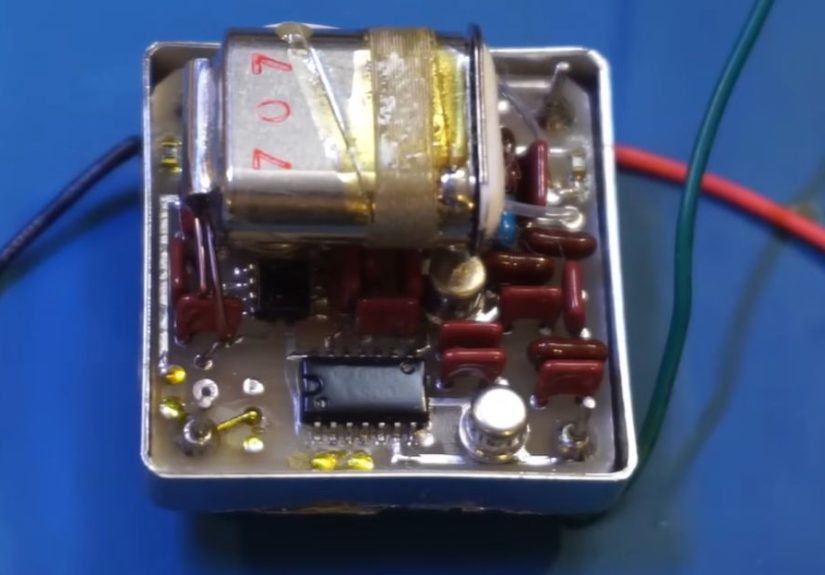
Hackaday’s teardown of a vintage oven controlled crystal oscillator gives us a rare look
inside one of these precision modules: insulation packed around a quartz crystal, a heater wrapped around
it, a thermistor pressed right against the case, and analog control circuitry doing its best impression of
a thermostat on caffeine. It’s nerdy, it’s clever, and it’s surprisingly elegant for something that lives
its whole life buried in a metal can.
In this deep dive, we’ll explore what an OCXO is, why anyone would heat a crystal on purpose, what Hackaday
found in their vintage unit, and how you can reuse surplus OCXOs in your own DIY frequency standards and
lab gear. We’ll also share some hands-on experiences and “gotchas” so you don’t let the magic smoke out of
a beautiful old oscillator.
What Is an Oven Controlled Crystal Oscillator, Anyway?
At its core, an oven controlled crystal oscillator (OCXO) is just a quartz crystal oscillator
living inside a tiny, temperature-controlled chamber. The idea is simple but powerful: if temperature changes
cause frequency drift, lock the crystal at one constant temperature and keep it there. The result is a clock
signal so stable that many commercial OCXOs drift only a few parts per billion per year.
Why Temperature Is the Enemy of Frequency
Quartz crystals vibrate at a frequency set by their cut, shape, and size. Unfortunately, quartz doesn’t stay
perfectly stable as the temperature changes. The crystal’s resonant frequency follows a curved relationship
with temperature, usually with a “sweet spot” where the slope is almost zero. That’s called the
turnover temperature.
In a normal XO (simple crystal oscillator), ambient temperature swings can push the crystal up and down this
curve, nudging the frequency higher or lower. For many applications clocks in microcontrollers, basic radios,
consumer gear a few parts per million (ppm) of drift is fine. But for precision gear like frequency counters,
spectrum analyzers, or lab references, that’s not even close to good enough.
An OCXO solves this by heating the crystal above ambient and holding it right at or near its turnover temperature.
Instead of chasing room temperature, the crystal lives in its own little thermal world, insulated and regulated
so that outside changes barely matter.
OCXO vs XO vs TCXO: How Fancy Do You Need to Be?
-
XO (Crystal Oscillator): Runs at ambient temperature. Simple, cheap, good enough for most
digital electronics. Typical stabilities are in the tens of ppm range. -
TCXO (Temperature Compensated XO): Adds compensation circuitry or lookup tables to correct for
temperature drift. Think better stability (around 1 ppm or better), still low power and compact. -
OCXO: Adds a full oven system: heater, temperature sensor, insulation, and a control loop.
It’s bulkier, consumes more power, and needs warm-up time but you get phenomenal stability, often in the
parts-per-billion (ppb) range and very low phase noise.
Above the OCXO tier, you’re into atomic standards (rubidium, cesium) or GPS-disciplined
oscillators. Those bring even better long-term accuracy, but at the cost of complexity and usually price.
The OCXO is the sweet spot for “serious but still hobby-accessible” frequency performance.
A Peek Inside the Vintage OCXO from Hackaday
The Hackaday feature on a vintage oven controlled crystal oscillator walks through the guts of
an older module: a metal can containing a thermal “oven” block, a quartz crystal, and analog control circuitry
that maintains a tight thermal lock.
The Outer Can and Thermal Nest
Start from the outside and you’ll typically see a screened metal can, sometimes with a label showing frequency
(10 MHz is common), supply voltage, and pinout. Remove the lid and you discover the thermal inner sanctum:
an insulated block that looks somewhere between a tiny brick and a metal capsule, depending on the manufacturer
and era.
Inside that block lives the crystal assembly and heater. The insulation might be foam, fiberglass-like material,
or custom-molded plastic designed to slow heat transfer. The goal is simple: once that small mass reaches its set
temperature, it should take a long time for ambient changes to disturb it.
The Crystal, Heater, and Thermistor Team-Up
In the Hackaday teardown, the crystal’s metal case is wrapped by a heating element, effectively making it a tiny
electric blanket for quartz. A thermistor is attached directly to the metal case to sense temperature as closely
as possible to the crystal itself.
Those two parts, plus an analog amplifier, form a closed-loop temperature controller:
- The thermistor changes resistance with temperature.
- The control circuit compares that resistance to a reference (the target temperature).
- The heater gets more or less current depending on the error.
When the temperature drifts low, the heater current increases. When it overshoots high, heater power is reduced
until the system stabilizes. It’s basically a tiny, carefully tuned thermostat, optimized for precision rather
than room comfort.
The Oscillator Circuit Itself
Often the entire oscillator circuit shares the oven environment, not just the crystal. That means critical
components capacitors, resistors, sometimes even active devices sit inside the oven so that the whole loop
sees a stable temperature. The end result is a clean, stable sine wave that barely flinches as your bench or
shack warms and cools through the day.
Anatomy of a Classic OCXO Module
Modern application notes and manufacturer guides match what you see in vintage units surprisingly well. A typical
OCXO, old or new, has:
- Quartz crystal resonator often AT-cut or SC-cut, chosen for low temperature coefficient.
- Heater element wirewound or transistor-based heating to generate controlled heat.
- Temperature sensor usually a thermistor, sometimes a diode or RTD.
- Control amplifier an analog loop that drives the heater to maintain the setpoint.
- Oscillator circuit can be sine or square wave, sometimes voltage controlled (VCXO-style).
- Insulation and enclosure mechanical structure to keep it all cozy and shielded from noise.
Even though the packaging and parts have evolved, the underlying topology hasn’t changed much. Your vintage OCXO
and a brand-new one from a high-end RF supplier would feel right at home next to each other on a block diagram.
Why Vintage OCXOs Still Matter
It’s easy to assume that old oscillators are obsolete, but in many cases, vintage OCXOs still meet or beat
the needs of modern hobbyists, RF experimenters, and even some lab setups.
Typical high-quality OCXOs offer:
- Excellent short-term stability ideal for frequency counters, SDR references, and RF test gear.
- Low phase noise cleaner close-in noise than many cheap modern oscillators.
- Respectable long-term aging often specified in single-digit ppb per day or a few 10s of ppb per year.
For lab work, ham radio, or precision timing projects, a surplus or salvaged OCXO can be “the poor person’s
frequency standard.” Pair it with a GPS-disciplined correction loop and you’re frighteningly close to what was
top-tier gear a couple of decades ago.
Using Vintage OCXOs in Modern DIY Projects
Salvaged OCXOs especially 10 MHz units are incredibly useful building blocks. A few classic DIY uses:
1. DIY Frequency Standard
The classic project is a 10 MHz frequency reference for the bench. Feed the OCXO from a
clean, regulated supply, add a buffer amplifier or logic translator, and you can deliver a rock-solid reference
signal to:
- Frequency counters
- Spectrum analyzers and RF generators
- SDR radios and transceivers that accept external references
Even without GPS disciplining, a good OCXO will be more stable than the internal oscillators in many hobby-grade
instruments.
2. GPS-Disciplined Oscillator (GPSDO)
Combine a vintage OCXO with a GPS module that outputs a 1 PPS signal, and you can build a
GPS-disciplined oscillator. The GPS provides long-term accuracy, while the OCXO handles short-term
stability and keeps running smoothly between GPS updates or dropouts.
The control loop nudges the OCXO slightly (if it’s voltage controlled) to minimize the difference between the
OCXO’s 10 MHz output and the timing provided by GPS. Over time, the oscillator “learns” where it needs to sit
to stay in lockstep with UTC.
3. Ultra-Stable Local Oscillator for RF Projects
Need a clean, low-drift LO for a homebrew transceiver, transverter, or narrowband digital mode like WSPR or FT8?
A vintage OCXO is your friend. Frequency drift in those applications translates to decode failures and misaligned
signals; an OCXO helps you stay exactly where you think you are on the dial.
Practical Tips for Working with Vintage OCXOs
Know Your Pinout Before You Power It
The fastest way to convert an old OCXO into a very small, very precise paperweight is to guess the pinout and “see
what happens.” Don’t. Track down the original datasheet if possible, or look for:
- Silkscreen or stamped pin numbers on the base
- Model numbers that you can search online
- Community posts or teardowns using the same module
Many OCXOs use supply voltages like 12 V or 5 V, with separate pins for heater and oscillator sections
in some designs. Make sure you know which is which.
Budget for Warm-Up Time and Power
These things are ovens they will take time to heat up. It’s common for OCXOs to need several minutes to
reach full stability after power-on. During that time, the heater may draw its maximum specified current, and the
frequency will drift toward its final value.
Design your supply to handle the inrush current comfortably. If the module is rated for, say, 8 W at startup
and 2 W at steady state, don’t feed it from a marginal regulator you pulled from a scrap drawer and hope for
the best.
Let It Age Gracefully
All crystal oscillators change slightly over time a process called aging. Good OCXOs are
pre-aged by the manufacturer, but a vintage module has already lived a life. When you first put one back into
service, expect a small amount of drift over weeks or months as it “settles” into its new normal.
If you can, periodically compare it to a GPS reference or a known-good lab standard. Record the offset and trend;
you might find that your particular unit has an almost comically consistent slow wander you can compensate for in
software or calibration.
Mind Heat, Ventilation, and Mounting
An OCXO is basically a tiny heater in a metal can. In tight enclosures, the extra heat can gently roast your other
components if you’re not careful. Give the module some breathing room, consider ventilation slots, and avoid
mounting heat-sensitive parts directly next to it.
Inside A Vintage Oven Controlled Crystal Oscillator: Why This Stuff Is Fun
There’s something deeply satisfying about understanding how a device like this works. It’s not magic just physics,
clever engineering, and some very patient analog design. Vintage OCXOs embody a time when engineers squeezed stunning
performance out of relatively simple building blocks:
- Analog control loops instead of microcontrollers
- Carefully chosen crystal cuts and packages
- Thoughtful mechanical design for thermal behavior
When you open an old OCXO, you’re not just looking at a part you’re looking at a tiny, self-contained laboratory
that someone tuned, tested, and probably signed off on with pride. Reusing one in a modern project is a way of
honoring that work while giving the hardware a second life.
Hands-On Experiences with Vintage OCXOs
If you’ve never powered up a vintage oven controlled crystal oscillator before, your first experience can be a mix
of excitement and mild confusion. You flip the switch, the current spikes, and… nothing obvious happens. No lights,
no beeps, just a warm can slowly drifting toward its happy place while your multimeter insists everything is fine.
The first lesson you learn is patience. A cold OCXO can take several minutes to fully stabilize.
At first, your frequency counter might show the output creeping closer and closer to 10 MHz, overshooting a
bit, then easing back. Over time, the drift shrinks until eventually it looks rock solid. It feels almost alive:
you can sense the thermal loop quietly doing its thing, trimming heater power by tiny amounts to hold the setpoint.
Another common experience is discovering that the “vintage” in your vintage OCXO sometimes means “mysterious.”
Unless you’re lucky enough to find a clear datasheet, you end up doing detective work: matching model numbers,
comparing photos, tracing connections with a continuity tester, and measuring resistance between pins to guess
which pair feeds the heater. It’s a great way to sharpen your reverse-engineering skills and a great way to
learn respect for putting 12 V in the wrong place.
Many hobbyists report that their first serious use of a salvaged OCXO comes when they build a DIY frequency
standard or GPSDO. After wiring everything up and letting the system run for a while, you start comparing it
against other gear: a handheld frequency counter, your HF rig, maybe even a cheap RTL-SDR. That’s when you notice
what “good” looks like frequency readouts that barely twitch, waterfall traces that hold perfectly still on a
narrowband mode, digital decoders that stay locked for hours.
There’s also the very human joy of taking something discarded and giving it a new job. More than a few OCXOs have
been rescued from old telecom racks, dead test sets, or surplus auctions. Instead of ending up as scrap metal,
they’re now running in small home labs, club stations, and workshop benches quietly anchoring measurements that
would have required serious money not that long ago.
Of course, not every experience is perfect. Sometimes you discover that your unit has seen better days the warm-up
time is longer than expected, the output frequency sits a bit off even after trimming, or the aging is worse than
the original spec sheet promised. That’s part of the charm. Each vintage OCXO has a personality: some come back to
life like they were built yesterday, others show their age with a slow, dignified drift.
Over time, you learn to build your projects around those quirks. Maybe you house the OCXO in a dedicated box with a
well-regulated supply and a front-panel “ready” LED that only turns on after a 15-minute warm-up timer. Maybe you
log its behavior against GPS once a month and keep a little notebook of offset values. Maybe you use it as a teaching
tool, showing friends or students how thermal control, analog loops, and frequency stability all come together.
In the end, working with a vintage oven controlled crystal oscillator is less about chasing
absolute perfection and more about appreciating the engineering behind stable time and frequency. It’s a hands-on
reminder that behind every “10.000 000 MHz” display there’s real hardware sweating quietly in the background
to keep that many zeros in line. And when that hardware is something you salvaged, restored, and understood down to
the screws and solder joints, those zeros feel just a little more satisfying.
Conclusion
Inside that unassuming metal can, the vintage oven controlled crystal oscillator from Hackaday’s
teardown packs careful thermal engineering, solid analog design, and a surprisingly elegant solution to a very old
problem: keeping frequency rock solid in a messy, changing world. Whether you’re building a DIY frequency standard,
cleaning up your RF projects, or just geeking out over beautifully over-engineered parts, an OCXO is a fantastic
rabbit hole to fall into.
Treat it with respect, give it clean power and some time to warm up, and it will reward you with stability that still
holds its own in the age of GPS and atomic clocks. And the next time you see one hiding inside an old instrument at
a hamfest or surplus shop, you’ll know there’s a tiny oven in there just waiting to go back to work.