Table of Contents >> Show >> Hide
- Meet the Artist: Aeppol’s Quiet, Whimsical “Forest Girl” World
- Why These Illustrations Hit So Hard Right Now
- What the 65 Illustrations Teach Us About Solo Happiness
- The Reality Check: Living Alone Can Be HappyAnd Still Need Connection
- How to Build “Aeppol Energy” in Your Own Solo Life
- Common Myths About Living Alone (And What the Illustrations Actually Say)
- Extra: of Solo-Living Experience (The Real Stuff Nobody Posts)
- Conclusion: Solitude Isn’t a SentenceIt’s a Skill
Living alone has a reputation problem. People hear “solo apartment” and immediately picture a sad microwave dinner eaten over the sink while a single sock spins in the dryer like a tiny, haunted carousel.
But then you see 65 gentle illustrations by Korean artist Aeppolsoft light, quiet routines, and a “forest girl” who looks like she has never once had to negotiate thermostat settings with another humanand the whole story changes.
These drawings don’t sell loneliness. They sell the underrated luxury of being the CEO of your own time: the calm mornings, the small rituals, the peaceful messes, the freedom to be weird in the most wholesome way possible.
And in a world that’s loud, fast, and aggressively group-chatted, that message hits like a warm mug you didn’t have to share.
Meet the Artist: Aeppol’s Quiet, Whimsical “Forest Girl” World
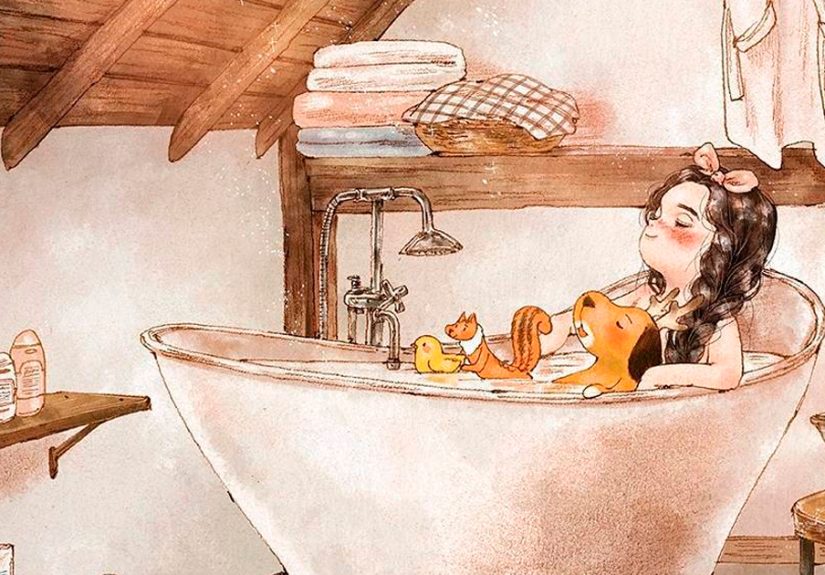
Aeppol is a Seoul-raised illustrator best known for dreamy scenes of a young woman living simplyoften in or near naturefinding joy in tiny, ordinary moments. Her work leans into cozy solitude:
reading under blankets, watching snowfall, making tea, tending plants, walking with animal companions, and generally behaving like someone who has mastered the art of “doing less” without feeling guilty about it.
What makes the series feel so personal is that it reads like a gentle rebellion. The character isn’t “alone because nobody wants her.”
She’s alone on purposebecause she chose a life that gives her room to breathe.
Why These Illustrations Hit So Hard Right Now
1) Living alone isn’t rare anymoreit’s a major way people live
More Americans than ever are building one-person households. That doesn’t automatically mean they’re isolated; it means home life is being redesigned.
When “normal” includes living alone, art that shows solo living as peaceful (not pitiful) becomes instantly relatable.
2) We’re finally separating “solitude” from “loneliness”
Solitude is time alone you actually want. Loneliness is time alone you didn’t ask for.
From the outside, they can look identicalsame couch, same silence, same leftoversbut emotionally they’re opposites.
Aeppol’s illustrations are basically a masterclass in intentional solitude: a life filled with choices, not emptiness.
3) Tiny joys feel like survival skills now
Big happiness is great, but it’s not always available on demand. Small happiness, though? That’s portable.
Aeppol’s “forest girl” finds comfort in micro-moments: warm light, a quiet room, a familiar routine, and the feeling that you’re safe where you are.
It’s not dramatic. It’s effective.
What the 65 Illustrations Teach Us About Solo Happiness
Theme 1: Autonomy is cozy
A major hidden stressor in adult life is constant negotiationwhere to eat, what to watch, when to sleep, how clean is “clean,” and why the sponge is always questionable.
Living alone removes a surprising amount of friction. Aeppol’s scenes make that freedom look soft, not selfish:
the character does what she wants, when she wants, at the pace her nervous system prefers.
Theme 2: Ritual beats “motivation” every time
The illustrations celebrate repeatable comfort: the same mug, the same window, the same reading corner, the same evening rhythm.
These aren’t flashy “glow-up” habits. They’re grounding habits.
When you live alone, rituals aren’t just cutethey’re structure. They tell your brain: we’re okay, we’ve done this before, we know what comes next.
Theme 3: Nature is the easiest roommate
The natural world shows up constantly in Aeppol’s imagery: forests, snow, clouds, flowers, birdsquiet companions that don’t demand small talk.
It’s a reminder that “being alone” doesn’t have to mean “being cut off.”
You can be deeply connectedto seasons, weather, light, plants, and the simple sensory proof that life is still happening around you.
Theme 4: Gentle productivity is still productivity
These drawings don’t glorify hustle. They glorify doing a few things well: cooking something simple, tidying a corner, making a home feel like home.
It’s the kind of productivity that supports your life rather than swallowing it.
The message is subtle but strong: rest is not a reward; it’s part of the plan.
Theme 5: Companionship comes in many forms
In several scenes, animals appear as everyday co-starsdogs, cats, birdssuggesting a softer, quieter companionship.
The point isn’t “replace people with pets.”
The point is that warmth and connection can exist without constant social performance.
Theme 6: You’re allowed to be joyfully “unoptimized”
Solo living can make you feel like you should become a hyper-efficient life machine.
Aeppol’s character does the opposite: she pauses, daydreams, stares out windows, and treats peace like a legitimate activity.
Honestly, it’s inspirational in the way a nap is inspirational.
The Reality Check: Living Alone Can Be HappyAnd Still Need Connection
Solitude is powerful, but social health still matters
There’s a reason public-health experts talk about social connection as a real health factor. Chronic loneliness and disconnection are associated with worse mental and physical outcomes,
and “living alone” can increase risk when it comes with low support.
The key difference is whether solo living includes meaningful connectionfriends, family, neighbors, communities, or even consistent routines that keep you engaged with the world.
Think of it like nutrition
Some people thrive on more social interaction. Others need more alone time to feel regulated.
There’s no single “correct” amount of people-ing. The goal is balance:
enough solitude to feel like yourself, enough connection to feel held by life.
How to Build “Aeppol Energy” in Your Own Solo Life
1) Design a home that supports your nervous system
Pick one “calm corner.” It doesn’t need to be Pinterest-perfect. It needs to be yours:
a chair you like, a blanket that feels good, lighting that makes evenings kinder, and a small place to put your drink so you stop balancing it on your stomach like a circus act.
2) Create a signature ritual you can repeat on hard days
Choose a simple sequence: tea + shower + book, or music + tidy + candle, or “put phone away and open the window for five minutes.”
Rituals are emotional shortcuts. They help you return to yourself without negotiating with your mood.
3) Schedule connection the way you schedule groceries
Connection doesn’t have to be spontaneous to be real.
Plan a weekly dinner, a walk with a friend, a class, a volunteer shift, a standing callanything that creates reliable human contact so your world stays populated.
4) Practice “micro-nature”
If you don’t live near a forest, borrow the concept: a small plant, a nearby park, a balcony moment, a morning sky check.
Nature is free therapy with fewer forms to fill out.
5) Keep your independence, ditch the isolation
Living alone doesn’t mean you must do everything alone.
Build your “support menu”: the friend you can text, the neighbor you can ask, the local place you’re a regular, the person who will help you carry the thing you absolutely should not carry by yourself.
Common Myths About Living Alone (And What the Illustrations Actually Say)
Myth: “If you live alone, you must be lonely.”
Reality: loneliness is about disconnection, not square footage.
You can be lonely in a relationship, and deeply content by yourself.
Myth: “Solo living is selfish.”
Reality: choosing peace isn’t selfish; it’s mature.
A stable, well-rested person tends to show up better for others, not worse.
Myth: “Your life should look exciting.”
Reality: quiet joy is still joy.
Aeppol’s scenes remind us that a “good life” can look like soup, blankets, books, and a little sunlight on the floor.
Extra: of Solo-Living Experience (The Real Stuff Nobody Posts)
Living alone teaches you the difference between silence that heals and silence that worries you. At first, the quiet can feel loudlike your apartment is waiting for something to happen.
Then one day you realize the quiet isn’t empty. It’s spacious. It’s the sound of your life belonging to you.
The best part is the tiny freedom you stop noticing because it becomes normal. You eat when you’re hungry, not when it’s “dinner time.”
You play the same song five times in a row without defending yourself in court.
You leave a book open on the table because you can. Your home becomes a physical extension of your preferences, not a compromise document.
The hard part is that every choice is yours, too. When the trash needs to go out, the Trash Fairy does not arrive. When you’re sick, nobody automatically notices.
Living alone can sharpen your self-reliance, but it also nudges you to build systems: a pharmacy run before you’re miserable, a neighbor’s number in your phone,
a friend who knows you’ll go quiet when you’re overwhelmed.
There’s also a sneaky emotional benefit people don’t talk about: you start trusting yourself. In shared living, it’s easy to outsource your sense of “normal” to the room.
Alone, you learn your own rhythms. You figure out what kind of morning you like. You discover which routines make you feel steady.
You become fluent in your own signals: the difference between “I need a nap” and “I need to talk to someone,” between “I’m drained” and “I’m lonely.”
And then there’s the Aeppol-style joy: the kind that arrives without fireworks. It’s making coffee and watching rain hit the window.
It’s folding laundry while a comforting show plays in the background.
It’s taking a slow walk and realizing your brain is finally quiet enough to hear a good idea.
It’s the moment you clean your kitchen at night and wake up to a peaceful roomlike you did a favor for Future You, and Future You is genuinely grateful.
If you live alone and you’re happy, you don’t need to justify it. If you live alone and you’re struggling, you don’t need to romanticize it.
The goal is not to prove anything. The goal is to build a life that feels supportiveone where solitude is chosen, connection is available, and your home feels like a place that restores you.
Aeppol’s illustrations aren’t telling you to disappear into the woods. They’re reminding you that peace is allowed, and small happiness counts.
Conclusion: Solitude Isn’t a SentenceIt’s a Skill
Aeppol’s 65 illustrations resonate because they tell a truth many people feel but don’t always say out loud:
living alone can be full, warm, funny, and deeply satisfying. Not because you’ve rejected people, but because you’ve made room to hear yourself.
When solo living includes intentional rituals, meaningful connection, and a bit of nature (even the “one houseplant named Steve” variety),
it stops being a placeholder life and becomes the real thing.