Table of Contents >> Show >> Hide
- Why Orchid Pots Are Different (And Why “Any Old Pot” Usually Fails)
- What Makes a Pot “Orchid-Friendly”?
- Orchid Pot Materials: Pros, Cons, and Who They’re For
- Orchid Pot Designs Explained (So You Know What You’re Buying)
- Picking the Right Pot Size: The Rule That Saves More Orchids Than Any Fertilizer
- Match the Pot to the Orchid Type (Quick Examples That Actually Help)
- Choosing a Pot Based on Your Home Conditions (Because Your Orchid Lives With You)
- Watering and Pots: The One Habit That Makes or Breaks Everything
- Repotting 101: When to Switch Pots (And When to Leave Well Enough Alone)
- Troubleshooting: Pot-Related Orchid Problems (And What to Change)
- Shopping Checklist: How to Pick a Great Orchid Pot (Without Overthinking It)
- Grower Experiences: The Real-Life Orchid Pot Learning Curve (About )
- Conclusion
Orchids have a reputation for being “divas,” but here’s the plot twist: most orchid drama is actually
pot drama. Put an orchid in the wrong container and it’s like asking someone to run a marathon in flip-flops.
The good news? Orchid pots aren’t mysteriousthey’re just designed around one big truth:
orchid roots want air as much as they want water.
In this guide, we’ll break down orchid pot types, materials, sizing rules, drainage and airflow features,
when to repot, and how to match a pot to your orchid and your home conditionswithout turning your kitchen
into a potting-soil crime scene.
Why Orchid Pots Are Different (And Why “Any Old Pot” Usually Fails)
Many of the most popular orchids (like Phalaenopsis) are epiphytesplants that naturally grow on trees rather
than in soil. Their roots evolved to grip bark, breathe freely, and get soaked by rain… then dry out again.
That’s why orchids typically struggle in standard potting soil and in containers that stay wet for too long.
A great orchid pot is basically a tiny, controlled environment that helps you do three things at once:
- Drain water quickly so roots don’t sit in soggy conditions.
- Keep oxygen moving around the roots.
- Hold the orchid steady without smothering it in heavy, water-retentive media.
Think of orchid pots as “root ventilation systems” with a side job as home décor.
What Makes a Pot “Orchid-Friendly”?
1) Drainage is non-negotiable
Orchid pots usually have larger drainage holes than typical houseplant containers, and many have extra
openings along the sides. That design helps water exit fast and lets fresh air reach the root zone.
If your orchid pot has a single tiny hole and the rest is sealed like a soup bowl… congratulations, you’ve
invented a root rot slow cooker.
2) Airflow matters as much as water
Orchid roots don’t just “tolerate” airthey need it. Healthy orchid care is a balancing act:
water thoroughly, then let the root zone breathe and partially dry. Pots with side slits, mesh walls,
or basket-style designs can dramatically improve airflowespecially if your home is humid or you tend to water
with enthusiasm (we’ve all been there).
3) Stability keeps roots from snapping and media from shifting
Some orchids get top-heavy when they bloom. A pot that tips easily can stress the roots and damage new growth.
Heavier materials (like terracotta) or wider, squat shapes help. So can a pot-and-cachepot combo (more on that soon).
4) Visibility can be a superpower (hello, clear pots)
Clear orchid pots let you watch root health and moisture levels without guessing. With certain orchids,
roots can even photosynthesize, which is one reason clear pots are commonly used for Phalaenopsis.
The tradeoff? Light plus moisture can encourage algae on the inner pot walls. Usually it’s more “ugly green film”
than “plant emergency,” but it can signal that conditions are staying wet for too long.
Orchid Pot Materials: Pros, Cons, and Who They’re For
Plastic (opaque)
Plastic pots are lightweight, inexpensive, and widely available. They also hold moisture longer than terracotta,
which can be helpful in dry homes or for orchids that dislike drying out too quickly. The downside is the same:
if you overwater, plastic won’t “breathe” its way out of trouble. If you choose plastic, prioritize
excellent drainage (lots of holes) and use an airy orchid mix.
Clear plastic
Clear pots are popular for a reason: they make it easier to monitor roots and moisture, and they’re often paired
with decorative outer pots. They’re especially common for Phalaenopsis grown indoors. Watch for overheating if a
clear pot sits in harsh sun, and don’t panic if you see some algaetreat it as feedback about light + moisture,
not an instant death sentence.
Terracotta / clay
Terracotta is porous, which helps the potting medium dry faster and allows extra airflow through the pot walls.
That can be fantastic if your conditions are humid or you tend to water frequently. Clay is also heavier,
giving stability to tall plants and flower spikes.
The classic downside: orchid roots sometimes cling to clay, making repotting feel like a tiny breakup.
(Spoiler: the roots will not accept “it’s not you, it’s me.”) If you go with clay, plan to repot carefully
and consider soaking to loosen the root system.
Glazed ceramic
Ceramic pots can look amazing, but many decorative options don’t have ideal drainage. The best practice is often
to keep the orchid in a functional inner pot (like clear plastic) and “stage” it inside ceramic for looks.
That gives you drainage + root visibility while still letting your décor live its best life.
Wooden baskets
Baskets (often teak or cedar) mimic how many epiphytic orchids grow in natureexcellent airflow, quick drying,
and plenty of room for roots to wander. They can be a great match for orchids that hate staying wet, but they
require more frequent watering and higher humidity to prevent the plant from drying out too fast.
Net pots / mesh pots
These have maximum ventilation and are commonly used for orchids that like fast drying or for growers who
want extra airflow. Indoors, mesh/net pots are often used as a liner placed inside a more stable outer pot.
If your home is dry, you may need to adjust watering frequency (or use a slightly more moisture-retentive mix).
Orchid Pot Designs Explained (So You Know What You’re Buying)
Slotted orchid pots
Slotted pots have vertical openings along the sides (and usually generous drainage holes on the bottom).
They increase airflow and help media dry more evenlyespecially useful in humid environments or for growers who
want to reduce the risk of stagnant, soggy pockets in the pot.
Side-hole “orchid cache” pots
Some orchid pots (often ceramic) have side openings for airflow and style. They can work well, but expect water
to flow out quicklythese pots are best watered over a sink or in a location where drainage mess is manageable.
Raised-center or domed-base pots
Some plastic orchid pots have a raised center at the base. This keeps the plant’s roots from sitting in the last
puddle of water that collects after wateringbasically, a tiny anti-soggy insurance policy.
Double-potting (grow pot + decorative pot)
This is one of the best “best of both worlds” approaches: keep the orchid in a functional inner pot
(often clear plastic with good holes), then place it inside a decorative outer pot. The key rule:
never let water pool in the outer pot. After watering, let the inner pot drain completely
before returning it to its stylish sleeve.
Picking the Right Pot Size: The Rule That Saves More Orchids Than Any Fertilizer
Orchids generally prefer being snug in their pots. Many bloom better when moderately pot-bound,
and oversized containers can keep media wet for too longraising the risk of root rot.
Practical sizing guidelines
- Choose a pot that comfortably fits the root mass, with just enough room for your medium.
- Don’t “upgrade” dramatically. If you must go bigger, a modest step up is usually enough.
- Sympodial orchids (like Cattleya) often do well when you select a pot that accommodates roughly a couple years of growth without drowning the roots in extra media.
- Monopodial orchids (like Phalaenopsis) usually prefer a pot that fits the root system neatlytoo large, and the center stays damp.
If you’re torn between two pot sizes, the smaller option is often saferassuming the roots can fit without being
crushed or forced into extreme bends.
Match the Pot to the Orchid Type (Quick Examples That Actually Help)
Phalaenopsis (moth orchid)
Often thrives in clear plastic pots that let you monitor roots and moisture. Many growers use a breathable inner
pot (clear or mesh) and place it inside a decorative container. Aim for excellent drainage and an airy mix.
Cattleya
Likes to dry a bit more between waterings. Clay pots can be a great match because they “breathe” and speed drying.
Many Cattleyas are also grown in baskets due to their preference for airflow.
Paphiopedilum (lady slipper orchids)
Many are more terrestrial-leaning and often prefer mixes that hold a bit more moisture than classic chunky bark.
That doesn’t mean soggyjust a slightly more consistent moisture level. Pot choice should support that balance:
good drainage, but not an ultra-ventilated basket in a desert-dry living room unless you’re prepared to water often.
Cymbidium
Often grown in more traditional containers compared to many epiphytes, but still needs drainage and a suitable mix.
Because Cymbidiums can become large, stability and pot strength matter.
Choosing a Pot Based on Your Home Conditions (Because Your Orchid Lives With You)
Orchid pot selection isn’t just “what’s best”it’s “what’s best for your conditions.”
A pot that’s perfect in humid Florida can be a thirsty disaster in a heated winter apartment.
If your home is dry (heat/AC, low humidity)
- Plastic or glazed pots can help retain moisture a bit longer.
- Consider a slightly more moisture-retentive orchid mix (often with some sphagnum, depending on orchid type).
- Double-potting can help: inner pot drains well, outer pot buffers airflow a little.
If your home is humid (or you tend to overwater)
- Clay/terracotta can help the mix dry faster.
- Slotted or mesh pots improve airflow and reduce stagnant wet zones.
- Use a chunkier mix that drains fast.
If you want “easy mode” monitoring
- Clear inner pots make it easier to read root health and moisture.
- Pair with a decorative cachepot so you don’t have to stare at plastic all day.
Watering and Pots: The One Habit That Makes or Breaks Everything
No orchid pot can rescue consistently poor watering habits. The healthiest routine is usually:
water thoroughly (so the medium is fully moistened), then let it drain completely.
Orchids do not want to sit in standing water.
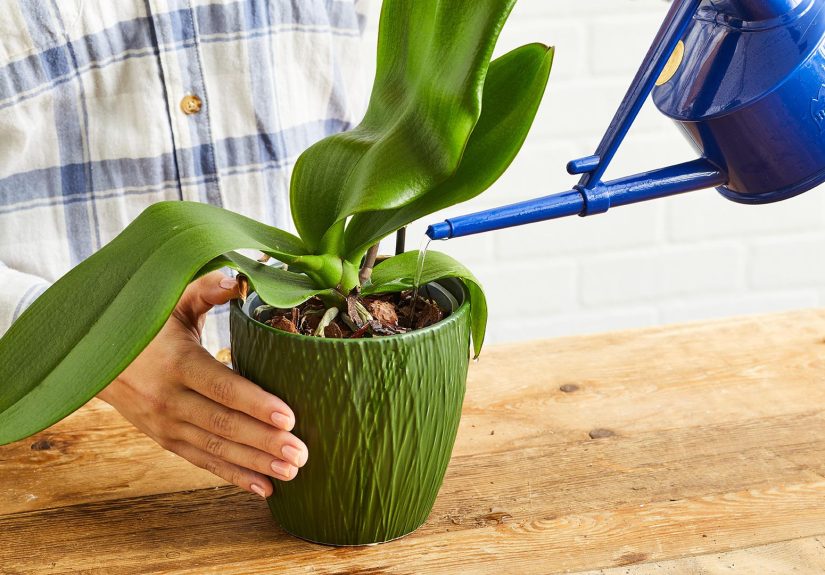
If you use a decorative outer pot, treat it like a jacket, not a bathtub. Remove the inner pot to water,
let it drain, then put it back. If water collects in the outer pot, dump it. Your orchid roots are not training
for a swimming event.
Repotting 101: When to Switch Pots (And When to Leave Well Enough Alone)
Orchids typically need repotting when the potting medium breaks down and holds too much moisture, when roots
outgrow the container, or when the plant becomes unstable. Many orchids are repotted every couple of years,
but timing varies by orchid type, medium choice, and your growing conditions.
Signs your orchid pot situation needs an upgrade
- Medium looks decomposed, stays wet too long, or smells “off.”
- Roots are packed so tightly the plant won’t sit securely.
- Water runs through unevenly (some areas stay dry, others stay soggy).
- The orchid wobbles like it’s trying to moonwalk out of the pot.
A simple repotting approach
- Choose a pot that fits the rootssnug, not spacious.
- Use an orchid-appropriate medium (not regular potting soil).
- Remove dead, mushy, or hollow roots; keep firm, healthy roots.
- Position the plant so it sits securely, then gently fill medium around roots without packing it like concrete.
- Water appropriately after repotting and keep conditions stable while the orchid settles in.
Repotting is also a great time to learn: you’ll see what healthy roots look like, how wet your medium stays,
and whether your pot design is actually working for your environment.
Troubleshooting: Pot-Related Orchid Problems (And What to Change)
Problem: Roots look brown/mushy and the medium stays wet
This often points to poor drainage, an oversized pot, broken-down medium, or overwatering. Solutions include
switching to a smaller pot, choosing a more ventilated design, refreshing the medium, and adjusting watering.
Problem: Roots are shriveled or silvery-dry all the time
Your setup may be drying too fastespecially in baskets, mesh pots, or terracotta in low humidity. Consider
plastic (or double-potting), a slightly more moisture-retentive mix, or more frequent watering (without leaving
standing water behind).
Problem: Algae inside clear pots
Algae is common when light hits consistently moist surfaces. It’s usually cosmetic, but it can indicate the
pot stays wet too long. Reduce light exposure to the pot walls, improve airflow, let the mix dry slightly more,
or switch to an opaque outer pot (keeping a functional inner pot for drainage).
Problem: Roots glued to clay
This is a classic terracotta side effect. Soak the pot to loosen roots, repot gently, and accept that a few roots
may breakthen focus on keeping conditions steady so the orchid can regrow.
Problem: The orchid keeps tipping over
Choose a heavier pot, a wider base, or use a cachepot for stability. Make sure the plant is anchored in the
medium and not perched awkwardly on top like it’s afraid of commitment.
Shopping Checklist: How to Pick a Great Orchid Pot (Without Overthinking It)
- Drainage: Large bottom holes; bonus points for side holes/slits if your conditions are humid.
- Size: Fits the roots snugly; avoid big jumps in size.
- Material: Plastic for moisture retention; terracotta for faster drying; clear plastic for monitoring; ceramic for staging.
- Shape: Squat/wide pots add stability; tall narrow pots can stay wet longer.
- Function + style: If you want pretty, use a decorative outer pot with a functional inner pot.
Grower Experiences: The Real-Life Orchid Pot Learning Curve (About )
If you’ve ever bought an orchid that looked flawless at the store and then started acting offended at home,
you’re in excellent company. One of the most common grower experiences goes like this: the orchid arrives in a
basic plastic pot, then immediately gets upgraded into a gorgeous decorative containeroften one with little
or no drainage. The orchid looks fabulous… for a while. Then the leaves soften, the roots sulk, and suddenly
you’re googling “why is my orchid mad at me” at 1 a.m.
Another familiar moment: switching to a clear inner pot for the first time and realizing orchids are far more
communicative than they get credit for. Growers often notice that root color and texture are instant feedback.
In many cases, firm roots and changing root color after watering can help people stop guessing and start watering
based on what the plant is actually doing. That “aha” moment is hugebecause it turns orchid care from superstition
(“maybe it wants a vibe?”) into observation (“okay, the medium is still damp and the roots look hydratedno need
to water yet”).
Pot size lessons tend to arrive the hard way, too. Many beginners assume “bigger pot = happier plant,” because
that’s true for plenty of houseplants. Orchids love to be the exception. Growers often report that when they move
an orchid into a pot that’s too large, the mix stays wet longer than expected, especially in the center. The plant
may respond with stalled growth, weakened roots, and fewer blooms. Then they downsize into a snug pot with a fresh,
airy mix and the orchid suddenly starts behaving like it’s been forgiven for its past crimes.
There’s also the “mesh pot whiplash” story: someone sees a super-breathable net pot online, tries it indoors,
and discovers their orchid dries out at lightning speedbecause their home air is dry and the pot’s ventilation is
working very well. The solution usually isn’t abandoning mesh forever; it’s pairing that airy pot with a
cachepot, tweaking the mix, or simply watering more often. The best setups are rarely one-size-fits-allthey’re
adjustments that match real life.
Finally, experienced growers often describe orchid pots as “tools,” not trophies. They’ll use a plain, practical
inner pot for the plant’s health, then add a decorative outer pot for style. That approach quietly solves a ton of
problems: great drainage, easy watering, quick root checks, and a home that still looks like a home. If you take
only one lesson from other growers, make it this: the prettiest orchid pot is the one that keeps your orchid alive
long enough to bloom again.