Table of Contents >> Show >> Hide
- What “false sense of security” actually means
- What masks do (and don’t) do in the real world
- So… do masks make people reckless? What the evidence says
- When masks can backfire (hint: it’s usually not psychology)
- How to avoid “mask overconfidence” without ditching masks
- Practical examples (because real life isn’t a laboratory)
- FAQ: Quick answers people actually want
- Bottom line: Masks don’t create false confidenceconfusing messaging does
- Experiences from the real world: where the “false sense of security” feeling actually shows up (and how people fixed it)
If you’ve ever watched someone confidently stroll into a packed room wearing a flimsy, chin-hammock mask like it’s a magic force field, you’ve probably wondered: “Wait… do masks make people act riskier?” That concern has a namerisk compensationand it’s been debated loudly since the early days of COVID-19.
Here’s the reality: masks can absolutely reduce the spread of respiratory germs when they’re used correctly. But masks are not invincibility cloaks. The real question isn’t “Are masks bad because some people misuse them?” It’s: What does the evidence say about behaviorand how do we prevent ‘mask overconfidence’ from undoing the benefit?
What “false sense of security” actually means
“False sense of security” is basically shorthand for: “If I do one protective thing, will I slack off on other protective things?” Researchers often call this risk compensationthe idea that safety measures can sometimes change behavior in ways that partially offset the benefit.
The classic examples are seat belts, helmets, or anti-lock brakes: if people feel safer, will they drive faster? In public health, the worry is that someone who wears a mask might:
- Stand closer to others in crowded spaces
- Spend more time indoors with poor ventilation
- Skip staying home when sick (“It’s fine, I’m masked!”)
- Touch their face or adjust the mask constantly (hello, germ transfer)
Important note: risk compensation is not guaranteed. It depends on the person, the setting, the message they’ve heard, and what the mask feels like it’s “doing” for them.
What masks do (and don’t) do in the real world
Masks reduce respiratory particlesespecially when fit and filtration are good
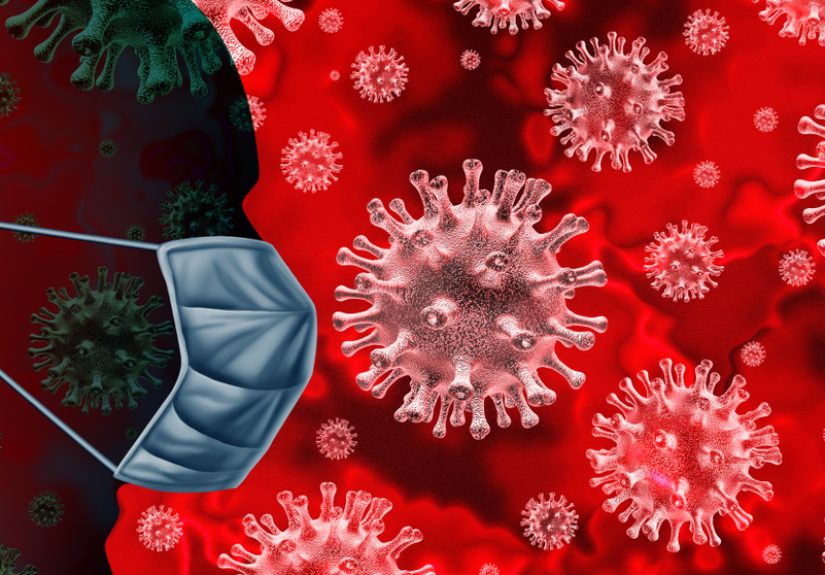
Masks help by filtering and blocking some of the respiratory droplets and aerosols that carry viruses. They can work as source control (reducing what an infected person releases) and as wearer protection (reducing what a person breathes in). But how well they do that depends heavily on fit and filtration.
A high-filtration respirator (like an N95) is designed to seal more tightly and filter more efficiently than many loose-fitting face coverings. Meanwhile, a mask with gaps around the cheeks is basically giving your breath an express lane around the filter. (Air is lazy. It will take the shortcut.)
What masks don’t do: replace every other layer of protection
Masks do not “cancel out” crowded indoor air, poor ventilation, or close-range exposure for long periods. Even a great mask can’t make a basement party with 45 people and zero fresh air magically become a spa day for your immune system.
The most honest framing is: masking is one layeroften a helpful oneespecially when combined with staying home when sick, improving ventilation, and choosing lower-risk settings.
So… do masks make people reckless? What the evidence says
The short version: the evidence is mixed, and context matters. Some research finds little to no sign that masks reduce distancing. Other research finds signals that mandates or masking can be associated with increased mobility or certain behaviorsthough measuring “recklessness” is tricky.
Evidence that argues against a big “false security” effect
Multiple studies have tested whether mask-wearing makes people physically distance less. In some experiments, masks did not reduce distancingand in certain contexts, masks acted as a social signal that encouraged more space. In other words, the mask wasn’t a green light to crowd people; it was a polite “I’m trying” sign that made others keep their distance.
Large-scale research has also looked at real-world outcomes and found community masking can reduce illnesssuggesting that, even if some behavior shifts happen, masking can still produce net benefit.
Evidence that suggests some risk compensation can happen
Some analysesoften using mobility datasuggest that after mask mandates, people spent a bit less time at home and visited certain locations more. This is sometimes interpreted as risk compensation: people may have felt safer or believed restrictions were easing, and adjusted their routines accordingly.
But here’s the catch: mobility is an imperfect proxy for “taking dangerous risks.” People may leave home for essential tasks. They may also change behavior for reasons unrelated to masks, such as evolving local policies, seasonality, pandemic fatigue, or economic pressure. So these studies can raise a flag, but they don’t automatically prove “masks caused reckless behavior.”
Why findings differ: behavior is messy, and measurement is hard
If you’re wondering why research doesn’t give one clean answer, it’s because “false sense of security” has multiple moving parts:
- Who’s masking? People who choose to mask may already be more cautious than average.
- What kind of mask? A well-fitted respirator feels different than a loose cloth maskand that can change confidence.
- What’s being measured? Distancing, mobility, contact counts, time indoors, ventilation, and duration of exposure are not the same thing.
- What’s the messaging? “Masks are one layer” produces different behavior than “Masks make you safe.”
The most defensible conclusion is: risk compensation is possible, but it’s not inevitableand it doesn’t automatically erase the protective value of masking.
When masks can backfire (hint: it’s usually not psychology)
In everyday life, the biggest “mask problems” often come from mechanics, not mindset:
1) Poor fit = leaky edges
If air is escaping upward (fogging glasses) or puffing out the sides, a lot of airflow is bypassing the filter. Improving fit can substantially improve protection.
2) “Mouth-only masking”
Wearing a mask under the nose is like wearing pants that only cover one leg. Technically clothing? Sure. Functionally? We need a moment.
3) Constant adjusting and face touching
A mask that slips, itches, or doesn’t seal encourages frequent fiddlingexactly what you don’t want if your hands have touched public surfaces.
4) Counterfeits and misunderstood labels
Not all “KN95-looking” masks are equal. When someone buys a sketchy, unverified mask and then behaves as if they’re fully protected, that’s not a “mask” problemit’s a “product and expectations” problem.
How to avoid “mask overconfidence” without ditching masks
If you want the benefits of masking without the accidental overconfidence, here’s the playbook:
Use the “Swiss cheese” mindset
Every protective layer has holes. Combine layers so the holes don’t line up: stay home when sick, improve ventilation, choose less crowded settings, reduce time indoors with strangers, and add masking when risk is higher.
Match the mask to the moment
- Quick, low-density errands: A well-fitting high-quality mask can be a reasonable layer.
- Crowded indoor spaces / public transit / clinics: Consider a better-fitting, higher-filtration option.
- High-risk household exposure: Masking helps more when combined with ventilation and isolation of the sick person when possible.
Improve fit in simple ways
- Choose a mask with a nose wire and adjust it firmly
- Check for gaps around cheeks and chin
- If using a respirator, do a quick seal check each time you put it on
Translate “I’m masked” into smarter choices, not riskier ones
A useful rule: masking should expand your options slightly, not erase your limits. If your plan is “crowded indoor space for hours,” a mask is helpfulbut it’s not a permission slip to ignore ventilation, duration, and crowding.
Practical examples (because real life isn’t a laboratory)
Example 1: The grocery store sprint
You’re in and out in 15 minutes. Masking can meaningfully reduce exposureespecially if the store is busy and you’ll pass close to many people. But if it’s packed, consider going at a quieter time too. The mask is great; fewer people is also great.
Example 2: The family gathering where “everyone feels fine”
The “feels fine” standard is famously unreliablepeople can be contagious before symptoms. Masking can help, but the bigger risks are time indoors and ventilation. Opening windows, using air cleaners, or gathering outside (weather permitting) can reduce risk in ways no face covering can fully replace.
Example 3: The doctor’s office waiting room
You’re around people who might be ill, and you can’t control who’s nearby. This is a classic “masking makes sense” scenario. It’s also a reminder that masks are most useful when you treat them as part of a risk strategy, not a vibe.
FAQ: Quick answers people actually want
Do masks work if other people aren’t masking?
Often, yesespecially when the mask fits well and filters effectively. But protection can vary by mask type, fit, and exposure conditions (crowding, ventilation, time).
Is the “false sense of security” worry totally made up?
Not totally. Some people may loosen other precautions. But many studies do not find a large or consistent drop in distancing from mask-wearing, and some findings suggest the opposite. The bigger risk tends to be misunderstanding the mask’s limits.
What’s the safest mindset?
“A mask helpsespecially a good onebut I still care about crowding, time, and ventilation.”
Bottom line: Masks don’t create false confidenceconfusing messaging does
Masks can reduce transmission of respiratory viruses, particularly when they fit well and offer good filtration. The claim that masks automatically create a “false sense of security” is too simplistic. Risk compensation can happen in some contexts, but it’s not a guaranteed behavioral law of nature.
The best approach is not “masks vs. no masks,” but masks plus smart choices. If we treat masks like one tool in a kitrather than a superhero capewe can get the protection without the overconfidence.
Experiences from the real world: where the “false sense of security” feeling actually shows up (and how people fixed it)
If you ask people about masks, you’ll hear two stories at once: the “masks helped me feel safer” story and the “masks made me forget the basics” story. The interesting part is that both can be truesometimes in the same person, on the same Tuesday.
The commuter experience: A lot of people describe public transit as the first place they realized masks are not a force field. They’d mask up, board a crowded train, and still feel uneasy because the bigger factor was the density and duration. Over time, many commuters adjusted by doing small, practical things: choosing a higher-filtration mask for rush hour, avoiding the most packed cars, or timing trips a bit earlier. The “security” didn’t come from pretending risk was goneit came from matching protection to the moment.
The teacher and office-worker experience: In schools and workplaces, some people noticed a subtle “mask math” happening in their heads. If everyone was masked, they felt comfortable having longer conversations in small rooms. Later, many re-learned the lesson that time and airflow matter. So they started cracking windows, using fans, meeting outdoors when possible, or keeping meetings shorter. One common takeaway: masks made routines possible, but ventilation made them sustainable.
The “foggy glasses” experience: This one deserves its own support group. People with glasses often report that fogging leads to constant adjustmentstouching the mask, touching the face, then touching everything else. It’s not a moral failing; it’s physics and frustration. The fix is usually practical: a better nose wire, a snugger fit, mask tape, or placing glasses over the top edge of the mask to reduce airflow upward. Once the mask stopped slipping, people touched their face lessand felt more genuinely protected.
The “I wore a mask, so I went anyway” experience: Many people recall at least one event where they didn’t feel great but still showed up because they thought, “I’ll just mask.” Sometimes it worked out. Other times it didn’t, especially when the setting was indoors for hours. Those experiences often changed behavior more than any infographic ever could: people started staying home when sick, or at least skipping the high-risk environments. In hindsight, the mask wasn’t the problemthe assumption that masking alone made an obviously risky choice “safe” was.
The healthcare experience: Healthcare workers and caregivers often describe masks as essentialbut also as something that requires discipline. They talk about small habits: washing hands before and after handling the mask, avoiding touching the front, replacing masks when they’re damaged or soiled, and doing quick fit checks. Their perspective tends to be blunt: “Masks workif you use them like you mean it.” That mindset can be helpful for everyone: treat masking like a skill, not a symbol.
The most common “real life” conclusion is refreshingly simple: masks helped, but the best outcomes came from layering. People felt the most confident when they combined a well-fitting mask with smarter timing, better air, shorter exposures, and staying home when sick. That’s not a false sense of securityit’s earned security. And it looks a lot less like superhero confidence and a lot more like practical adulthood.