Table of Contents >> Show >> Hide
- Quick answer (because you’re busy and your socks are judging you)
- What compression socks actually do (and why daytime is their main event)
- So… can you wear compression socks while sleeping?
- When wearing compression socks at night might be recommended
- Who should not sleep in compression socks without medical advice
- Picking the right compression level (mmHg): the part most people skip
- How to wear compression socks safely (day or night)
- Do compression socks help sleep… or hurt it?
- Specific examples: who might need them at night (and who probably doesn’t)
- Alternatives to compression socks at night
- Bottom line: Do you need compression socks at night?
- Real-Life Experiences: What People Notice When They Try Sleeping in Compression Socks
Compression socks have a funny reputation: half medical device, half “I’m a serious adult who owns a label maker.”
They’re worn by nurses, frequent flyers, pregnant people, runners, and anyone whose legs feel like they’ve been
quietly negotiating with gravity all day. But the big question shows up right around bedtime, when you’re peeling
off layers like a human onion:
Should you wear compression socks at night?
The answer is usually: no, not unless a clinician specifically told you to. For most people,
compression socks are designed for daytimewhen you’re upright, your veins are fighting gravity, and swelling tends
to build. When you lie down to sleep, your legs are closer to heart level and blood return generally improves on its
own. But “usually no” isn’t the same as “never,” and there are exceptions where overnight compression may be recommended.
Quick answer (because you’re busy and your socks are judging you)
- Most people don’t need compression socks at night. Sleep naturally reduces leg pooling for many.
- Nighttime wear may be recommended after certain surgeries, for specific vein/lymph conditions, or if you’re less mobilebut only with proper guidance and fit.
- If you have poor arterial circulation (like peripheral artery disease), numbness, or fragile skin, wearing compression without medical input can be risky.
- If you try sleeping in them and feel pain, numbness, tingling, or see new discoloration, take them off and get advice.
What compression socks actually do (and why daytime is their main event)
Compression socks (especially graduated compression socks) apply the most pressure at the ankle
and gradually less as they go up the leg. That “graduated” design helps encourage blood and fluid to move upward
instead of hanging out in your lower legs and ankles like it owns the place.
Common reasons people wear compression socks
- Leg swelling (edema) from standing/sitting for long periods
- Varicose veins and chronic venous insufficiency
- Long travel (especially flights), when you’re sitting still for hours
- Pregnancy-related swelling and heaviness
- Recovery support after certain procedures or when mobility is reduced
- Lymphedema management (often as part of a bigger treatment plan)
Notice the theme? These are mostly “I’m upright, gravity is rude” situations. That’s why many patient instructions
emphasize putting compression on in the morning (when legs are least swollen) and removing them around bedtime.
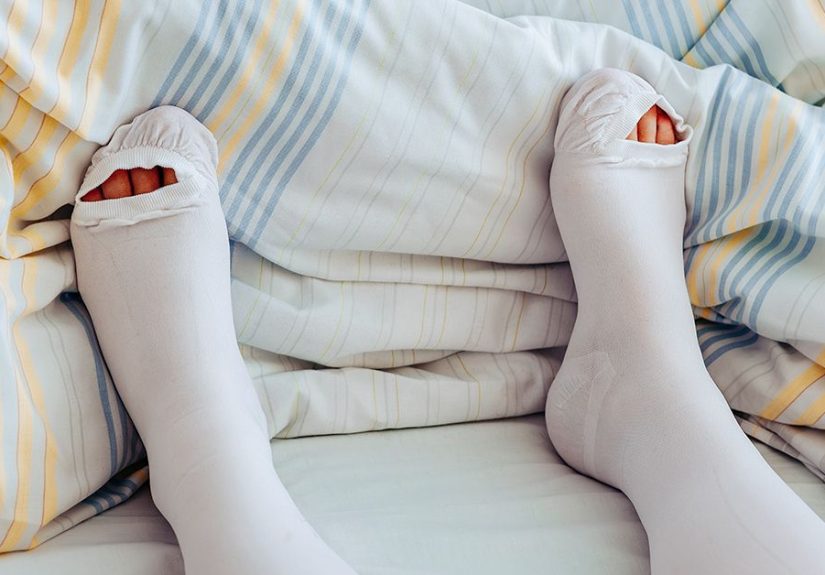
So… can you wear compression socks while sleeping?
Sometimes you can, but most people don’t need to. If your socks are properly fitted, not overly
tight, and you don’t have conditions that make compression unsafe, an occasional nap or short overnight wear is
unlikely to cause problems for many people. The bigger issue is whether it’s usefuland whether it raises
risks you can easily avoid by taking them off.
Why many clinicians suggest taking them off at night
-
Sleep already helps circulation. Lying down reduces hydrostatic pressure in the legs, which can
reduce swelling and pooling naturally. -
Your skin needs a break. Wearing tight fabric 24/7 can increase irritation, dryness, itching,
or pressure areasespecially if your socks slide, bunch, or dig in. -
Nighttime is “low-feedback mode.” If something is too tight and you fall asleep, you may ignore
early discomfort cues.
Think of it like brushing your teeth: doing it all day would be… enthusiastic, but not necessarily better.
Compression is a tool. More tool-time isn’t always more benefit.
When wearing compression socks at night might be recommended
There are situations where a healthcare professional may advise overnight compression stockings or
a specific compression approach during sleep. This isn’t typically a “grab any pair from the internet and hope for
the best” scenarioit’s more “follow the plan and the pressure level you were given.”
1) After certain surgeries or during limited mobility
In hospitals, you may see anti-embolism stockings or other compression methods used to support circulation when
someone is less mobile. Sometimes these are worn for extended periods, with regular skin checks.
2) Significant swelling that returns quickly (rebound edema)
If swelling returns aggressively when compression is removed, a clinician may adjust your plan. That could mean a
different garment type, different pressure level, or a structured routine that includes compression at night
for a specific reason.
3) Lymphedema management (under supervision)
Lymphedema care often involves a full program (manual drainage, wrapping, garments, skin care). Some people use
specialized nighttime garments or bandaging rather than standard daytime socks, depending on the plan.
4) Specific venous disease plans
Chronic venous insufficiency and certain vein treatments may come with instructions about when and how long to wear
compression. Some plans are daytime-only; others include longer wear, particularly early after procedures.
Who should not sleep in compression socks without medical advice
This part matters. Compression is meant to help circulation, but in some conditions it can backfireespecially if
the pressure is too high, the fit is wrong, or sensation is reduced.
Be cautious (or avoid) if you have:
- Peripheral artery disease (PAD) or known poor arterial circulation
- Diabetes with neuropathy or reduced sensation in the feet/legs
- Skin breakdown, ulcers, fragile skin, dermatitis, or active infection
- Severe heart failure or sudden unexplained swelling (needs evaluation)
- Allergies or sensitivity to sock materials that cause rashes/irritation
If you’re thinking, “I’m not sure if that’s me,” that’s your cue to treat nighttime compression as a
clinician-guided decision.
Picking the right compression level (mmHg): the part most people skip
Compression isn’t one-size-fits-all. The pressure is measured in mmHg. Higher numbers mean more
compressionand more potential to cause trouble if you don’t need it.
Common compression ranges (general guidance)
- 8–15 mmHg: light support, often for mild “tired legs”
- 15–20 mmHg: moderate, common over-the-counter range
- 20–30 mmHg: firm, often used for significant swelling/varicose vein symptoms (frequently clinician-recommended)
- 30–40 mmHg: extra firm, typically for specific medical conditions and usually prescribed
For nighttime use, if it’s recommended at all, it’s usually with a specific plan: correct size, correct pressure,
and attention to skin checks. Sleeping in a “high compression” sock you picked because the label sounded impressive
is not a personality traitit’s a risk factor.
How to wear compression socks safely (day or night)
Get the fit right
Proper fit is everything. Socks that are too small can cause pain, numbness, marks that don’t fade, or skin injury.
Socks that are too big won’t help much (and will bunch up like a tiny ankle scrunchie).
- Measure your ankle and calf per the brand instructions (usually best in the morning).
- Choose the right length: knee-high is common; thigh-high is sometimes used for specific conditions.
- Avoid rolling the top downrolling can create a tight band that acts like a tourniquet.
Put them on at the right time
Many people do best putting compression socks on in the morning, before swelling builds. If you’re
putting them on after a long day, elevate your legs for a bit first so you’re not wrestling a swollen ankle into a
snug sock like it’s an Olympic event.
Use a safety checklist
- Comfort: snug, not painful
- Color & warmth: toes shouldn’t turn pale, blue, or cold
- Sensation: no numbness, tingling, burning
- Skin: no new blisters, sores, or angry red lines that don’t fade shortly after removal
Care matters more than people admit
Compression socks need regular washing and replacement so they keep the right elasticity. Old, overstretched socks
may feel comfy but provide inconsistent compression. On the flip side, socks that have shrunk or lost shape can
create pressure points.
Do compression socks help sleep… or hurt it?
Some people report that compression socks feel soothing and reduce that “heavy legs” sensation at the end of the day.
Others find them annoying, warm, itchy, or too tight to relax in. Sleep is already a delicate negotiation between
your brain and your blanket. Adding “tight sock politics” may not help.
If you’re considering nighttime wear, try this approach
- Start with daytime use and see if swelling and discomfort improve.
- Elevate your legs before bed (even 10–15 minutes can help some people feel lighter).
-
If you still want to try sleeping in them, use a lower compression level, ensure perfect fit,
and test it for a short period (like a nap) first. - Stop immediately if you feel pain, tingling, numbness, or notice skin changes.
And if you’re wearing compression because of a medical conditionespecially blood clot history, severe swelling,
or vascular diseaseskip the experimentation phase and talk to a clinician.
Specific examples: who might need them at night (and who probably doesn’t)
Example A: The desk worker with puffy ankles
If you sit for long hours and your ankles swell by evening, daytime compression plus movement breaks
(stand, walk, calf raises) is often the first step. Sleeping in compression socks usually isn’t necessarytry leg
elevation and hydration, and consider checking in if swelling is persistent or one-sided.
Example B: The pregnant person with leg heaviness
Pregnancy can bring swelling and varicose veins. Compression socks can be very helpful during the dayespecially
during long standing or travel. But at night, many do better taking them off to let skin breathe and to avoid
unnecessary pressure while lying down.
Example C: Post-procedure instructions
After some vein procedures or surgeries, you may be told to wear compression for a set number of hours per day
(sometimes including sleep). In that case, follow the plan, use the prescribed garment, and do the recommended skin checks.
Example D: Chronic venous insufficiency with significant edema
If swelling is severe and persistent, treatment often includes compressionbut the “how” may involve specific
pressure levels, medical-grade stockings, wraps, or nighttime garments. That’s a structured plan, not a random sock choice.
Alternatives to compression socks at night
If your goal is to reduce swelling or leg discomfort overnight, there are other options that don’t involve sleeping
in tight knitwear:
- Leg elevation (a pillow under calves/ankles, not just under knees)
- Gentle ankle pumps and calf stretches before bed
- Hydration balance (too little can worsen cramping; too much right before bed can ruin sleep for other reasons)
- Skin care (moisturize at night if daytime compression dries your skin)
- Clinician-fitted garments if you have a diagnosed condition that needs a specific approach
Bottom line: Do you need compression socks at night?
For most people, compression socks at night aren’t necessaryand taking them off at bedtime is
often the simplest, safest routine. Daytime wear tends to deliver the main benefits, because that’s when gravity
is most likely to cause leg swelling and blood pooling.
The exceptions are real: certain post-surgical situations, limited mobility, and specific venous/lymph conditions
may involve overnight compression or specialized nighttime garments. But those scenarios work best when guided by
a professional who can match the pressure level, fit, and wear schedule to your body and condition.
If you’re unsure, use this rule: comfort + safety + a clear medical reason. If you’re missing one
of those, it’s probably a “take them off and sleep peacefully” kind of night.
Real-Life Experiences: What People Notice When They Try Sleeping in Compression Socks
(These are common, real-world patterns people describethink of them as composite experiences, not medical advice.)
1) “I woke up feeling lighter… but also weirdly impatient with fabric.”
Some people with end-of-day swelling say they fall asleep in compression socks and wake up with less heaviness in
their lower legs. The catch? A lot of them also report the socks feel more noticeable at nightlike their calves are
having a quiet argument with the knit. If the socks are even slightly too tight, the nighttime “awareness factor”
can turn into restless sleep.
2) “Naps are fine. Full nights are… a different vibe.”
A common compromise is using compression for a short nap after work or travel. People often tolerate that well,
especially if they don’t want to peel socks off and then struggle to get them back on later. But a full night can
magnify small annoyances: toe seams, warm feet, the top band that suddenly feels like it’s plotting.
3) “My skin got cranky.”
This one shows up a lot. Even when socks aren’t painful, wearing compression around the clock can lead to dryness,
itching, or mild irritationespecially in winter or in dry climates. Some people notice faint marks that linger
longer than expected. The fix is usually simple: take socks off at bedtime, moisturize (let lotion absorb before
putting anything tight back on), and make sure you’re washing socks regularly so sweat and detergent residue don’t
become your skin’s new nemesis.
4) “It helped after a long flight… but only when I did daytime right.”
Travelers who use compression socks often say the biggest win is wearing them during the flight and walking
when possiblenot necessarily sleeping in them afterward. When they combine daytime compression with movement and
hydration, they report less ankle puffiness by the time they land. Overnight wear doesn’t always add much once they’re
back horizontal and resting.
5) “My doctor told me toso I did. And we monitored it.”
People who are instructed to wear compression longer (including sleep) often describe a more structured routine:
the correct medical-grade garment, a clear wear schedule, and frequent skin checksespecially early on. They’re also
more likely to have guidance on what symptoms mean “take them off now,” such as new pain, numbness, discoloration,
or skin breakdown. In these cases, the experience is less “DIY sock experiment” and more “part of a treatment plan.”
6) “The biggest difference was switching to the right size and pressure.”
Many first-time compression users buy the wrong size (too small because they want it to ‘work harder’a classic mistake).
Once they switch to a properly measured fit and a reasonable compression level, comfort improves dramatically.
Some discover they don’t even wonder about nighttime wear anymore because daytime use finally feels effective.
7) “I realized my swelling needed a check-up.”
A surprisingly helpful outcome: trying compression leads some people to notice patternslike swelling that’s much worse
on one side, sudden new swelling, or swelling paired with shortness of breath or pain. Those aren’t “sock problems.”
They’re “get evaluated” signals. In that sense, compression socks can function like a spotlight: they don’t just
support your legs; they help you pay attention to what your body has been hinting at all along.