Table of Contents >> Show >> Hide
- What Is a Catch-All Shelf, Exactly?
- Why a Catch-All Shelf Works So Well
- Where to Put a Catch-All Shelf
- What Should Go on a Catch-All Shelf?
- What Should Never Go There?
- How to Design a Catch-All Shelf That Stays Useful
- Catch-All Shelf Ideas by Style
- Mistakes That Turn a Catch-All Shelf Into a Mess Magnet
- How to Keep It Organized Long-Term
- Why the Catch-All Shelf Is More Than a Trend
- Real-Life Experiences With a Catch-All Shelf
- Conclusion
A catch-all shelf sounds suspiciously like the kind of thing that starts as a smart organizing idea and ends as a museum of loose batteries, expired coupons, and one lonely chapstick. But when it is planned well, this little shelf can become one of the hardest-working spots in the house. It acts like a landing pad for daily essentials, a visual reset button for busy routines, and a stylish buffer between the outside world and your actual living space.
In plain English, a catch-all shelf is a designated place for the small things that tend to wander: keys, sunglasses, mail, earbuds, wallets, dog leashes, grocery lists, and the mysterious screw you are “definitely saving for later.” Instead of allowing these items to scatter themselves across counters, tables, and sofa arms like unruly confetti, the shelf gives them a proper home.
And that is the magic. A catch-all shelf is not just about storage. It is about friction reduction. It saves time in the morning, reduces visual clutter, and helps your home feel less like a tornado hit the entryway and more like a place where adults occasionally have their lives together. Even if only for eight minutes.
What Is a Catch-All Shelf, Exactly?
A catch-all shelf is a compact, easy-access shelf placed in a high-traffic area where everyday essentials naturally collect. Most often, it lives near the front door, back door, mudroom, kitchen entry, hallway, or home office. The idea is simple: instead of fighting human behavior, organize around it. If people drop things the second they walk in, create a smart place for dropping things the second they walk in.
Unlike a large storage cabinet or full built-in system, a catch-all shelf is usually modest in size. That is actually part of its genius. It is accessible, visible, and just limited enough to discourage total chaos. Think of it as a practical middle ground between “everything is on the counter” and “everything is hidden in twelve labeled boxes no one wants to open.”
Why a Catch-All Shelf Works So Well
It gives clutter a legal address
Most daily clutter is not random. It follows patterns. Mail lands by the door. Keys migrate to the nearest flat surface. Sunglasses vanish into another dimension unless they have a specific resting spot. A catch-all shelf works because it meets those habits where they already happen. Instead of demanding perfect discipline, it creates a zone that supports real life.
It saves time during rushed moments
Morning routines are rarely elegant. They are usually a mix of coffee, mild panic, and someone asking where the car keys are while standing next to the car keys. A catch-all shelf cuts down on those scavenger hunts. When essentials live in one predictable place, leaving the house becomes faster and less annoying.
It makes a home feel calmer
Visual clutter has a sneaky way of making a room feel smaller, noisier, and more stressful. A slim shelf with a tray, a small basket, and maybe a hook or two can turn a messy entry point into a tidy visual pause. It is a tiny intervention with surprisingly outsized impact.
It can be stylish without being fussy
The best catch-all shelves are practical first, pretty second, and impossible to ignore in the best way. A warm wood floating shelf, a narrow painted ledge, or a compact shelf with hooks underneath can feel intentional and polished. This is functional decor at its finest: handsome enough to look designed, useful enough to earn its keep every single day.
Where to Put a Catch-All Shelf
Entryway
This is the classic location. Near the front door, a catch-all shelf becomes a daily landing station for keys, wallets, sunglasses, outgoing mail, and whatever else arrives home in your pockets or bag. Add hooks below for coats or tote bags, and suddenly your entryway behaves like it has a personal assistant.
Back door or mudroom
In many homes, the back entrance gets more real-life traffic than the front. That makes it prime real estate for a shelf. Here, it can handle school papers, pet gear, reusable grocery bags, sports schedules, and the endless parade of things that enter and leave with the family.
Kitchen edge or family command center
If the kitchen is where paper clutter goes to reproduce, a catch-all shelf nearby can help contain the mess. This version may hold incoming mail, chargers, pens, shopping lists, and small containers for coupons or receipts. The goal is not to create a paper mountain with better branding. The goal is to create limits.
Bedroom
A bedroom catch-all shelf is ideal for watches, jewelry, hand cream, reading glasses, and nighttime essentials. It works especially well in small bedrooms where a traditional nightstand is too bulky or where you want a minimalist setup that still feels useful.
Home office
In a workspace, a catch-all shelf can stop desk sprawl before it starts. Use it for notebooks, sticky notes, charging cables, headphones, and that one pen you guard like family heirloom silver.
What Should Go on a Catch-All Shelf?
The best shelf contents are items you use often, need quickly, and tend to misplace. That usually includes keys, wallets, sunglasses, earbuds, mail to sort today, dog leashes, access cards, reusable shopping bags, lip balm, hand sanitizer, and chargers. In family homes, it may also include permission slips, library books, and one lonely mitten waiting for its partner to return from the wild.
But here is the rule that keeps the shelf from becoming a clutter swamp: only keep what belongs to the routine of that location. A shelf near the door should support leaving and arriving. A shelf in the bedroom should support winding down and waking up. A shelf in the office should support work. Once an item stops matching the room’s purpose, it starts adding confusion instead of convenience.
What Should Never Go There?
Not everything deserves front-row shelf space. Spare keys in plain view are not a great security habit. Piles of unopened mail can quickly turn into paper geology. Large bags, sentimental keepsakes, random shopping receipts from three seasons ago, and bulky gear can overwhelm the shelf and defeat its purpose.
If an item cannot be identified at a glance, used regularly, or contained neatly, it probably does not belong on a catch-all shelf. This is not a tiny attic. It is a working zone.
How to Design a Catch-All Shelf That Stays Useful
Start with the right size
Bigger is not always better. A shelf that is too deep or too long invites clutter to spread out and settle in like it pays rent. A narrower shelf creates natural limits and keeps the setup looking crisp. You want enough room for essentials, not enough room to host a reunion of forgotten objects.
Add a tray or shallow bowl
A tray is the shelf’s secret weapon. It visually groups small items and prevents them from scattering. Keys, coins, earbuds, and rings look tidy when contained. Without a tray, they look like evidence.
Use a basket for paper or grab-and-go items
A small basket or bin can hold mail, reusable masks, dog waste bags, chargers, or other loose daily items. This adds texture and keeps the shelf from looking overly precious. It also gives paper clutter boundaries, which is the organizational version of crowd control.
Go vertical with hooks
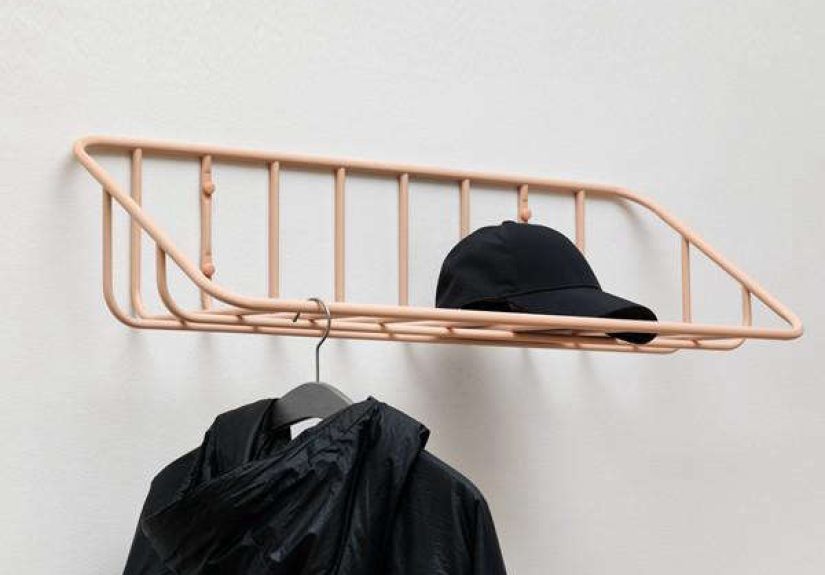
If space is tight, pair the shelf with hooks underneath or beside it. Hooks dramatically increase function without increasing the footprint. Bags, umbrellas, hats, and light jackets can hang neatly while the shelf handles smaller essentials above.
Think about lighting and mirrors
A mirror above the shelf can make a narrow entryway feel more open and practical. A small lamp or nearby sconce adds warmth and turns the area into a true design moment rather than a utility corner. Translation: less “holding zone,” more “intentional welcome.”
Label if your household needs it
In busy family homes, labels are not overkill. They are survival. A labeled basket for mail, a hook for each family member, or a designated tray for school forms can make the system easier to maintain. People are far more likely to use an organizing system when it is obvious and fast.
Catch-All Shelf Ideas by Style
Minimalist
Choose a slim floating wood shelf, one ceramic tray, one small bowl, and hidden wall hooks. Keep the palette neutral and the objects edited. The shelf should feel calm, not crowded.
Farmhouse or classic
Use a painted shelf with pegs, a woven basket for mail, and maybe a small framed print or greenery. This style works beautifully in entryways that want warmth without sacrificing function.
Modern family-friendly
Pick durable materials, easy-clean finishes, and a hook-and-bin system. If children use the zone, lower hooks and reachable bins matter. A family system only works when every user can actually use it.
Small-space renter setup
Go with a removable wall shelf, a narrow ledge, or a compact over-console shelf paired with adhesive hooks if needed. In a tiny apartment, even a very small shelf can create the feeling of order. Square footage may be limited, but chaos does not need to be the decor theme.
Mistakes That Turn a Catch-All Shelf Into a Mess Magnet
The biggest mistake is calling it a catch-all and taking that too literally. A good shelf catches essentials, not everything you touched in the last 72 hours. Another common mistake is adding too much decor. Candles, stacked books, vases, framed photos, and decorative objects are lovely, but if there is no room left for actual daily life, the shelf becomes more stage set than solution.
Another trap is skipping containment. Without a tray, bowl, or basket, small items multiply visually. And finally, many people forget maintenance. Even the smartest shelf needs a quick reset. It is not a self-cleaning island. If only.
How to Keep It Organized Long-Term
The shelf should take less than a minute to reset each day. Put keys back, toss junk mail, return stray items to their real homes, and clear anything that does not belong. Once a week, do a deeper edit: recycle old papers, wipe the surface, and rotate seasonal items if needed. In winter, that may mean gloves and lip balm. In summer, sunscreen and sunglasses take center stage.
One useful rule is the one-touch habit. When you come home, place the item where it belongs the first time. Not on the counter “for now.” Not on the dining table “for later.” The shelf works best when it becomes part of a routine, not a backup plan for chaos.
Why the Catch-All Shelf Is More Than a Trend
What makes this idea stick is not just aesthetics. It solves a recurring problem in an elegant, low-cost way. Homes function better when everyday items have intuitive homes. A catch-all shelf does that without demanding a renovation, a custom mudroom, or a personality transplant into someone who loves color-coded bins at sunrise.
Whether you live in a small apartment, a busy family house, or a stylish home that still somehow attracts paper clutter like a magnet, a catch-all shelf can deliver structure, convenience, and visual calm. It is humble. It is practical. It is occasionally heroic.
Real-Life Experiences With a Catch-All Shelf
One of the most interesting things about a catch-all shelf is how quickly people notice the difference after installing one. At first, it seems almost too simple to matter. It is just a shelf, after all. But within a few days, the effect becomes obvious. The keys stop disappearing. Mail stops colonizing the kitchen counter. Sunglasses stop being “somewhere in the house.” In everyday life, that feels less like a decorating upgrade and more like gaining ten extra minutes of peace each week.
For people in small homes or apartments, the experience is often even more dramatic. Without a mudroom, foyer, or large closet, every item entering the home can end up in plain sight. A catch-all shelf creates a mini transition zone where there was none before. That can make a tiny entry feel more functional and more grown-up. Suddenly, walking in the door feels organized instead of abrupt. There is a place to put your things, and that changes the mood of the space immediately.
Busy parents often experience the shelf differently. For them, it becomes less about aesthetics and more about damage control. A shelf near the family entrance can hold school forms, car keys, hand sanitizer, dog leashes, and all the tiny daily items that usually drift across multiple rooms. The biggest benefit is not perfection. It is predictability. When everyone knows where the essentials go, mornings feel less chaotic, and the house recovers faster after a hectic day.
Work-from-home households also tend to appreciate the psychological boundary a catch-all shelf creates. When a bag, badge, headphones, and notebook all land in one neat zone at the end of the day, it signals that work is over. That small ritual can help separate job stress from home life. It sounds minor, but routines built around physical spaces often have a strong emotional effect. A shelf can quietly support that transition.
There is also a styling experience that surprises people. Many assume an organizing shelf will look cold or purely utilitarian. In practice, it often becomes one of the nicest little moments in the room. A wood shelf, a mirror, a woven basket, a ceramic bowl, maybe one small plant, and suddenly the area feels intentional. It works hard, but it also looks good doing it. That balance is what makes people stick with the setup instead of abandoning it after a month.
Of course, the experience is not flawless if the shelf has no boundaries. People who struggle with clutter often discover that a catch-all shelf only works when it stays edited. Once it becomes a parking lot for receipts, random cords, unopened packages, and mystery objects, the magic disappears. The shelf is most satisfying when it is treated like a working station rather than a dumping ground.
In the end, living with a catch-all shelf feels like living with fewer tiny daily frustrations. It is not flashy. It will not fix every bad habit. But it does make ordinary routines easier, and that is often what the best home upgrades do. They do not shout. They quietly make life smoother.
Conclusion
A catch-all shelf may be small, but its impact can be surprisingly big. It helps control clutter, supports everyday routines, and turns high-traffic spaces into calmer, more functional zones. The trick is to keep it intentional: right-size the shelf, contain the small stuff, limit what lives there, and reset it often. Do that, and your catch-all shelf stops being a random ledge and starts becoming one of the smartest organizational tools in the house.