Table of Contents >> Show >> Hide
- Why Brain Differences Matter in OCD
- The Main Brain Circuits Linked to OCD
- OCD Is Not Just One Circuit: Bigger Brain Networks Also Matter
- Brain Structure vs. Brain Function: What Is the Difference?
- Neurotransmitters: Serotonin Is Involved, but It Is Not the Whole Story
- How OCD Can Affect Thinking
- Can a Brain Scan Diagnose OCD?
- Do Treatments Change the Brain?
- What This Means for People with OCD
- Experiences Related to Brain Differences in OCD
- Conclusion
Obsessive-compulsive disorder, or OCD, is one of the most misunderstood mental health conditions around. It gets flattened into jokes about color-coded closets and perfectly lined-up pencils, when in reality it can feel more like having a brain alarm that refuses to clock out. People with OCD deal with intrusive thoughts, images, or urges that create distress, along with compulsions or mental rituals meant to lower that distress. The result is exhausting, time-consuming, and about as fun as getting stuck in a pop-up ad you cannot close.
So where does the brain come in? Quite a lot, actually. Researchers have found that people with OCD often show differences in brain activity, connectivity, and sometimes brain structure when compared with people who do not have the disorder. But there is an important catch: OCD is not caused by one tiny “broken spot” in the brain, and no doctor can look at a single brain scan and say, “Yep, there it is, classic Tuesday-model OCD.” The science points instead to network-level differences involving how certain regions communicate, especially those involved in threat detection, habit formation, error monitoring, attention, and self-control.
That makes OCD less like a cracked light bulb and more like a glitchy group chat between brain circuits. The messages keep coming, the notifications will not stop, and everyone seems to be overreacting.
Why Brain Differences Matter in OCD
Understanding brain differences in OCD matters for two big reasons. First, it helps explain why OCD is not simply a matter of being overly worried, overly neat, or lacking willpower. OCD has biological roots, and those roots show up in how the brain processes uncertainty, danger, habits, and control. Second, the brain science helps researchers develop better treatments, including more targeted psychotherapy, medication strategies, and brain stimulation approaches for severe cases.
At the same time, it is important to stay realistic. Brain imaging findings in OCD are often small, varied, and sometimes inconsistent. That is not because researchers are making things up for fun between coffee breaks. It is because OCD is a highly diverse condition. One person may struggle with contamination fears and washing rituals. Another may have intrusive religious thoughts. Another may battle a relentless need for reassurance, checking, or symmetry. Different symptoms can involve overlapping but not identical brain patterns.
The Main Brain Circuits Linked to OCD
The best-known model of OCD involves something called the cortico-striato-thalamo-cortical circuit, often shortened to CSTC. That sounds dramatic, and honestly, it earns the drama. This circuit helps regulate thoughts, actions, habits, and emotional significance. In OCD, researchers believe parts of this loop may become overactive or poorly regulated, making it harder to dismiss intrusive thoughts and easier to get stuck in repetitive behaviors.
Orbitofrontal Cortex: The “Something Is Wrong” Messenger
The orbitofrontal cortex, or OFC, sits near the front of the brain and helps evaluate whether something is safe, risky, rewarding, or wrong. In OCD, this region is often described as being too reactive. It may keep signaling that something is off, incomplete, contaminated, dangerous, or morally unacceptable, even when the evidence says otherwise.
That can help explain why a person with OCD may know, logically, that the stove is off or their hands are already clean, but still feel a powerful internal nudge that says, “Cool story, check again.”
Anterior Cingulate Cortex: The Error Detector
The anterior cingulate cortex, or ACC, helps with attention, emotion, and error monitoring. Think of it as part of the brain’s quality-control department. In many people with OCD, that system seems extra sensitive. It may over-detect mistakes, uncertainty, or conflict, which can create the persistent feeling that something is not quite right.
This is one reason OCD is often tied to the dreaded “just right” sensation. It is not always about fear in the classic sense. Sometimes it is about an unbearable mismatch between how something is and how the brain insists it should feel.
Striatum and Basal Ganglia: The Habit Engine
The striatum, part of the basal ganglia, helps select actions and build habits. In OCD, this system may have trouble filtering out unnecessary actions or stopping repetitive loops once they begin. That matters because compulsions often feel automatic, sticky, and weirdly compelling, even when the person performing them knows they are irrational.
In other words, the brain may be making “repeat behavior” feel easier than “let the thought pass.” That is not a character flaw. It is a circuit problem.
Thalamus: The Relay Station
The thalamus acts like a relay hub, sending information between brain regions. In OCD research, the thalamus shows up again and again as part of the feedback loop that may keep obsessive thinking and compulsive responding alive. If the loop stays too active, the brain may keep recycling the same mental warning instead of moving on.
OCD Is Not Just One Circuit: Bigger Brain Networks Also Matter
For years, OCD research focused heavily on the classic fronto-striatal model. That model is still important, but newer work suggests the story is broader. Large studies now point to differences in whole-brain connectivity, including networks involved in motor control, cognitive control, attention, salience, and self-focused thinking.
One major finding from large-scale imaging work is that OCD may involve altered functional connectivity, which means the way brain regions coordinate with one another. Some studies have found changes in the sensorimotor network, which may relate to the difficulty suppressing irrelevant thoughts, urges, or repetitive actions. Others report differences involving the frontoparietal network, the brain system associated with executive control, flexibility, and goal-directed behavior.
Researchers have also looked at the default mode network, which becomes active during inward-focused thinking, and the salience network, which helps the brain decide what deserves attention. If these systems do not communicate efficiently, intrusive thoughts may feel especially important, emotionally loaded, or impossible to ignore.
So yes, the OCD brain may be doing too much in some places, too little in others, and coordinating less efficiently across the board. It is less “one bad node” and more “the network needs a software update.”
Brain Structure vs. Brain Function: What Is the Difference?
When people hear “brain differences,” they often imagine visible damage or major anatomical changes. That is usually not what OCD research shows. Brain structure refers to the size, thickness, or volume of brain areas. Brain function refers to how active those regions are and how they communicate during rest or tasks.
In OCD, structural findings tend to be subtle and mixed. Some studies have reported differences in regions such as the caudate, thalamus, or hippocampus, but those findings are not identical across all age groups or study designs. Functional findings are often more consistent than simple size differences. In plain English: researchers more reliably see differences in how the OCD brain works than in how it looks.
That is useful because OCD is fundamentally about patterns of thought, emotion, attention, and behavior. Those are living processes, not just static anatomy.
Neurotransmitters: Serotonin Is Involved, but It Is Not the Whole Story
OCD is often described as a serotonin problem, largely because medications that affect serotonin, especially SSRIs, can help many people. That is partly true, but it is not the whole picture. Modern researchers do not think OCD can be reduced to one simple “chemical imbalance.” The brain is not a soup where you just add one missing ingredient and suddenly become emotionally al dente.
Serotonin does appear to matter, and that is one reason serotonin reuptake inhibitors are common first-line medications. But research also points to roles for glutamate, dopamine, and possibly other signaling systems. These chemicals do not act in isolation. They influence how circuits fire, adapt, inhibit, and reinforce behavior. That matters in OCD because obsessions and compulsions often involve both emotional urgency and repeated habit loops.
So the brain differences seen in OCD likely reflect an interaction between chemistry and circuitry. It is not just what signals the brain uses. It is also how the wiring responds to those signals over time.
How OCD Can Affect Thinking
OCD is not an intelligence disorder, and it is not a sign that someone is irrational all the time. Many people with OCD are highly insightful. They know their fear does not fully make sense. The problem is that insight does not always silence the alarm.
Researchers have found that some people with OCD show difficulties in areas such as response inhibition, cognitive flexibility, decision-making under uncertainty, working memory, and processing speed. These differences are often modest, not universal, and not the same in every age group. Still, they can help explain why OCD can feel mentally tiring. The person may be constantly monitoring for danger, second-guessing themselves, shifting less easily away from intrusive content, and spending a lot of cognitive energy on internal conflict.
This is also why OCD can make everyday tasks weirdly hard. Choosing an email subject line, leaving the house, locking a door once, or deciding whether a thought is “safe enough” can become a full-length feature film in the brain.
Can a Brain Scan Diagnose OCD?
Not at this point. This is one of the most important things to know.
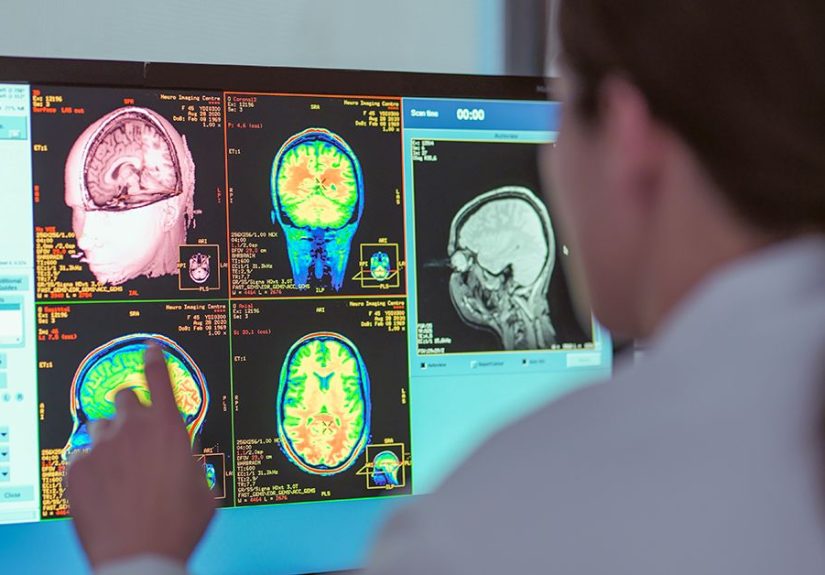
Brain imaging studies are incredibly helpful for understanding OCD at the group level, but they are not yet good enough to serve as a standalone diagnostic test for individual patients. Large studies using machine learning have found that although there are real patterns in OCD brain data, those patterns do not reliably separate every person with OCD from every person without it.
Why not? Because OCD is heterogeneous. Symptoms vary. Ages of onset vary. Medication use varies. Severity varies. Comorbid conditions vary. And human brains, generally speaking, are not exactly famous for being simple. A scan might show trends across hundreds or thousands of people, while still being too fuzzy to settle the question for one specific individual.
For now, diagnosis still depends on clinical assessment: symptoms, history, impairment, pattern, and careful evaluation by a qualified professional.
Do Treatments Change the Brain?
In many cases, yes. This is one of the most hopeful parts of the science.
Exposure and Response Prevention (ERP)
Exposure and response prevention, or ERP, is a leading form of therapy for OCD. It helps people face triggers without doing compulsions. That sounds simple on paper and deeply rude in real life, but it is effective. Over time, ERP teaches the brain that anxiety can rise and fall without rituals. It also helps weaken the false association between obsession and compulsion.
Brain imaging research suggests that successful treatment can be associated with changes in the very circuits that appear overactive in OCD. In other words, therapy is not “just talking.” It is experience-driven brain training.
Medication
SSRIs can reduce the intensity and frequency of obsessions and compulsions for many people. They do not erase personality or turn the brain into a meditation app, but they may reduce the volume of the alarm enough for a person to use therapy more effectively.
TMS and Other Brain Stimulation Treatments
For people with treatment-resistant OCD, doctors may consider transcranial magnetic stimulation, or TMS. This noninvasive treatment uses magnetic pulses to target brain regions involved in dysfunctional patterns. The FDA has authorized TMS for OCD, and clinics now use OCD-specific protocols, sometimes including symptom provocation before stimulation.
In the most severe and treatment-resistant adult cases, deep brain stimulation, or DBS, may also be considered. This is not a first-line option and is reserved for carefully selected patients. But its existence says something important: the field takes the brain-circuit model of OCD seriously enough to intervene at the level of the circuit itself.
What This Means for People with OCD
The biggest takeaway is this: OCD is real, brain-based, and treatable. Brain differences do not mean someone is broken, doomed, or fundamentally less capable. They mean the brain may be processing uncertainty, threat, habits, and control in a way that makes intrusive thoughts stickier and compulsions harder to resist.
That also means recovery is not about “trying harder” in a vague motivational-poster sense. It is about using evidence-based treatment to retrain patterns that have become overlearned and overpowered. The brain changes that help create OCD are not necessarily permanent. Brains are plastic. They adapt. And that is very good news.
Experiences Related to Brain Differences in OCD
For many people, the experience of OCD does not feel like having quirky preferences or being extra organized. It feels like living with a brain that treats doubt as an emergency. A small uncertainty does not stay small. It expands, loops, and starts acting like it pays rent. Someone may lock the door, know they locked the door, even remember the sound of the lock, and still feel a burst of inner friction that says, “But are you absolutely sure?” That experience matches what researchers describe in terms of overactive error monitoring and habit circuitry. The brain is not failing to understand the situation. It is failing to let the situation go.
People with OCD often describe intrusive thoughts as “sticky.” That is a useful word. Everyone gets random odd thoughts, but in OCD those thoughts can grab attention like Velcro. A thought may feel important simply because it is upsetting. A harmless mental image may feel dangerous because it triggers a strong bodily response. A doubt may feel morally significant because the brain keeps replaying it. This does not mean the person wants the thought, agrees with it, or is likely to act on it. In fact, the opposite is usually true. The thought feels horrifying precisely because it clashes with the person’s values.
Compulsions can also feel less voluntary than outsiders assume. The person may understand that checking, confessing, counting, washing, reviewing, or repeating is not logically necessary. But in the moment, doing the ritual can feel like the only way to get a few seconds of relief. That relief is real, but usually short-lived. Then the doubt comes back, often louder. This cycle is one reason OCD can consume so much time and energy. The brain learns that rituals reduce distress for a moment, so it keeps recommending them like an algorithm with terrible judgment.
There is also the mental fatigue. People with OCD may spend enormous effort trying to filter thoughts, seek certainty, prevent harm, or mentally replay events. That can make school, work, sleep, and relationships harder. It is not unusual for people to feel embarrassed by symptoms they know do not make rational sense. They may hide rituals, delay treatment, or worry they will be misunderstood. Unfortunately, they are often right about the misunderstanding part.
But there is another side to these experiences: improvement is possible. Many people who start ERP or appropriate medication describe the shift gradually. The thought still shows up, but it feels less magnetic. The urge to ritualize becomes more resistible. The “something is wrong” signal gets quieter. The brain does not become silent, because no human brain has ever been that cooperative, but it becomes more flexible. And flexibility is a big deal. It means a person can feel uncertainty without automatically obeying it. That may sound small from the outside. For someone with OCD, it can feel like getting their life back one choice at a time.
Conclusion
Brain differences in people with OCD are real, but they are not simple. Research points to altered activity and connectivity in circuits involving the orbitofrontal cortex, anterior cingulate cortex, striatum, thalamus, and broader brain networks tied to attention, control, and self-focused thought. Neurotransmitters such as serotonin, glutamate, and dopamine also appear to play a role. Still, no single scan or single chemical explains OCD on its own.
The best current view is that OCD reflects a disorder of brain networks that become too good at flagging danger, tracking errors, and reinforcing repetitive responses. The encouraging part is that treatment can help change those patterns. Whether through ERP, medication, or in some cases brain stimulation, the goal is not perfection. It is freedom from the loop.