Table of Contents >> Show >> Hide
- What Happens During an At-Home UV Gel Manicure?
- So, Are At-Home UV Gel Manicures Safe?
- The Bigger At-Home Risks Most People Overlook
- Who Should Be Extra Careful?
- How to Make At-Home Gel Manicures Safer
- 1. Choose an LED Lamp Over a Traditional UV Lamp
- 2. Use Broad-Spectrum Sunscreen or UV Gloves
- 3. Keep Uncured Gel Off the Skin
- 4. Follow the Product’s Cure Time Exactly
- 5. Do Not Peel or Pry Off Gel Polish
- 6. Limit Frequency
- 7. Ventilate the Room
- 8. Stop Immediately if You Notice Burning, Itching, or Rash
- Better Alternatives if You Want Less Risk
- The Final Verdict
- Real-World Experiences With At-Home UV Gel Manicures
At-home UV gel manicures are one of modern life’s more convincing scams: they promise salon-worthy shine, chip resistance, and the smug satisfaction of saying, “I did these myself,” all while luring you into buying a tiny lamp that looks harmless enough to toast marshmallows. The good news is that at-home gel manicures are not automatically dangerous. The less sparkly news is that they are not completely risk-free either.
If you want the honest answer, here it is: at-home UV gel manicures can be reasonably safe when done carefully and occasionally, but they are not something to treat like a zero-risk beauty hack. The lamp exposes your hands to ultraviolet light, the polish and primer can irritate skin, repeated removal can rough up the nail plate, and sloppy technique can trigger allergies that are far more annoying than a chipped thumbnail at brunch. In other words, the manicure itself is not the villain. Bad habits, overuse, and “close enough” DIY technique are the real troublemakers.
This matters because gel manicures are designed to last. That durability is exactly why people love them, and exactly why they come with a few trade-offs. Traditional nail polish mostly sits on top of the nail and air-dries. Gel polish, by contrast, hardens through exposure to UV light, creating a tougher finish that resists smudges and chips. Convenient? Absolutely. Entirely consequence-free? Not quite.
What Happens During an At-Home UV Gel Manicure?
A typical at-home gel manicure involves several steps: prepping the nails, applying base coat, curing under a lamp, adding color in thin layers, curing again, then finishing with a top coat. The result is a glossy manicure that often lasts two weeks or longer. That long wear time is the reason gel manicures became the Beyoncé of nail products. They enter the room and regular polish immediately loses confidence.
But every step in that process has a safety angle. Filing too aggressively can thin the nail. Getting uncured gel on the surrounding skin can increase the chance of irritation or allergy. Over-curing or doing extra lamp rounds “just to be safe” adds more UV exposure than necessary. Then comes removal, which usually means acetone, patience, and resisting the primal human urge to peel everything off like a sunburned sticker.
So, Are At-Home UV Gel Manicures Safe?
The most accurate answer is mostly safe for many people when used correctly and not too often, but not ideal for everyone and not risk-free. If you do a gel manicure once in a while, follow instructions, protect your skin, and remove the polish gently, your overall risk is probably low. If you do them constantly, skip protection, flood the cuticles with gel, rough-file the surface, and rip the polish off when you get bored during a TV episode, the “beauty routine” starts looking more like a nail sabotage program.
What About the UV Lamp?
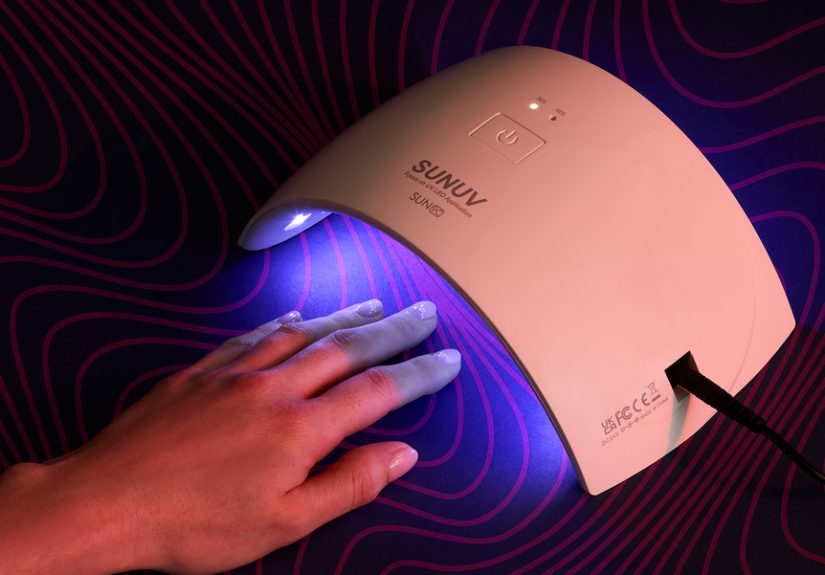
This is the part most people worry about first, and fairly so. UV nail lamps emit ultraviolet light, usually in the UVA range. UVA is associated with skin aging and can contribute to skin damage over time. Some devices are marketed as LED lamps, which sounds soothing and futuristic, but that does not mean they are UV-free. In many cases, LED lamps still emit UV light; they just tend to cure polish faster and often at lower levels than traditional UV lamps.
That distinction matters. “LED” is not the magical unicorn option people sometimes assume it is. It is more like the slightly more efficient cousin. Faster curing can reduce total exposure, but it does not erase it.
Does the Lamp Cause Skin Cancer?
Here is where nuance earns its paycheck. Existing research does not prove that occasional gel manicures are a major skin cancer driver for the average person. Several reviews and expert sources describe the overall cancer risk from nail lamps as low, limited, or uncertain, especially for infrequent use. At the same time, that is not the same thing as saying the risk is zero. Laboratory research has shown that UV nail dryers can damage cells and DNA under experimental conditions, and repeated exposure adds up over time.
So the sensible conclusion is not “panic,” and it is not “no worries, live under the lamp forever.” It is this: the cancer risk appears relatively low for typical personal use, but the exposure is real, the evidence is still developing, and taking precautions is simply smarter than pretending your hands are invisible to physics.
The Bigger At-Home Risks Most People Overlook
Ironically, the biggest downside of home gel manicures may not be the lamp. For many users, the immediate and more common problems involve the nails, the skin around them, and the chemicals used during application and removal.
Nail Damage and Thinning
Gel manicures can leave nails brittle, peeled, cracked, or rough over time. Sometimes the damage comes from the product itself, but often it comes from prep and removal. People buff too much, file too hard, or scrape too aggressively when taking the gel off. The nail plate is not a hardwood floor. It does not need to be refinished every Sunday.
If your nails feel thin, bendy, or weirdly sensitive after repeated gel use, that is your cue to take a break. Healthy nails generally rebound, but they need time without constant polishing, soaking, and friction.
Allergic Reactions to Acrylates and Methacrylates
This is one of the most important at-home safety issues. Gel products may contain acrylates or methacrylates, which can trigger allergic contact dermatitis in some people. That can show up as redness, itching, swelling, stinging, pain, peeling skin around the nails, or a rash on the fingers and hands. In some cases, reactions can become more serious or persistent after repeated exposure.
DIY users are especially vulnerable when uncured gel touches the skin or when products are not fully cured. Translation: a messy manicure is not just a cosmetic issue. It can become a sensitization issue. Once you develop an allergy, that drama may not stay confined to nail day. Acrylate allergies can complicate future exposure to other products and materials, which is not exactly the kind of long-lasting result anyone signs up for.
Acetone Removal Can Be Rough on Skin
Acetone works, but it is not famous for being gentle. Frequent soaking can dry out the skin and leave the fingertips feeling tight, chalky, and vaguely betrayed. If you soak your entire hand instead of just the nails, you make that irritation even worse. People with eczema, sensitive skin, or already-dry hands may notice this quickly.
And because this is an at-home setup, there is another practical concern: acetone and nail polish remover should be stored carefully. They are household chemicals, not countertop decorations. If kids are around, safe storage matters.
Fumes and Ventilation Matter More Than People Think
At-home manicures are often done in small bedrooms, bathrooms, or corners with the windows shut and a candle trying its best. That is not great. Nail products can give off fumes that may irritate the eyes, nose, or skin, especially in poorly ventilated spaces. Opening a window, using a fan that moves air away from your face, and keeping bottles closed when not in use are simple habits that make the process less irritating and a lot more sensible.
Cuticle Trauma and Infection
Your cuticles are tiny bodyguards. They help protect the area where the nail grows. Cutting, pushing, or picking at them can lead to inflammation and create an opening for infection. If your DIY manicure routine includes “trimming just a little bit” until the cuticle disappears, congratulations, you have fired the security team.
Who Should Be Extra Careful?
Some people should be more cautious than others with at-home UV gel manicures. That includes anyone with a history of skin cancer, very photosensitive skin, recurring hand rashes, eczema around the nails, or a suspected nail product allergy. It also includes people whose nails are already damaged, lifting, splitting, or painfully thin.
If you have ever had burning, swelling, itching, or a stubborn rash after using gel products, that is not the universe being dramatic. That is a sign to stop and get medical advice before making DIY gel kits part of your personality.
How to Make At-Home Gel Manicures Safer
If you love gel nails and have no plans to break up with them, you can still lower your risk. The goal is not perfection. The goal is fewer preventable mistakes.
1. Choose an LED Lamp Over a Traditional UV Lamp
LED-curing devices generally expose you to less UV and cure polish faster. That means less time under the lamp, which is a practical win.
2. Use Broad-Spectrum Sunscreen or UV Gloves
Apply a broad-spectrum SPF 30 or higher to your hands before curing, or wear dark, fingerless UV-protective gloves. Think of it as a tiny insurance policy for the backs of your hands.
3. Keep Uncured Gel Off the Skin
Apply thin, careful coats and clean up mistakes before curing. If polish floods your cuticles or sidewalls, fix it immediately instead of pretending it will somehow “work itself out.” It will not.
4. Follow the Product’s Cure Time Exactly
More curing is not always better. Under-curing can leave residual product, while extra rounds add more UV exposure. Use products that are meant to work with your specific lamp and follow their directions.
5. Do Not Peel or Pry Off Gel Polish
Peeling off gel may feel weirdly satisfying, but it often strips off layers of the natural nail. Safe removal is slower, and yes, that is annoying. It is also the better trade.
6. Limit Frequency
If you wear gel back-to-back all year, your nails and skin never really get a breather. Taking breaks between manicures gives your nails a chance to recover and lets you notice whether irritation or thinning is developing.
7. Ventilate the Room
Open a window. Use airflow. Cap bottles when you are done. Your manicure station should not smell like a chemistry final exam.
8. Stop Immediately if You Notice Burning, Itching, or Rash
Mild warmth while curing can happen. Persistent burning, swelling, intense itching, blistering, or rash is not something to “push through.” Stop using the product and get evaluated if symptoms continue.
Better Alternatives if You Want Less Risk
If your main goal is pretty nails with less hassle, traditional polish is still the lower-drama option. It does not require UV curing, and removal is usually easier on the nail plate. Press-on nails can also work for short-term wear, although adhesives can still irritate some people. In short, if gel nails keep leaving your hands cranky, switching methods is not giving up. It is called learning from the evidence, which is very grown-up and slightly less fun.
The Final Verdict
So, are at-home UV gel manicures safe? Usually safe enough for many healthy adults when done carefully, occasionally, and with protective habits. But they are not harmless in the absolute sense, and they definitely are not a “the more the merrier” situation.
The UV exposure appears to carry a relatively low but not nonexistent long-term risk. The more immediate concerns are nail thinning, skin irritation, cuticle trauma, allergy to acrylates, and harsh removal methods. The smartest approach is a balanced one: use safer tools, protect your skin, ventilate your space, keep product off your skin, remove gel gently, and do not make your nails fight for their lives in the name of shine.
If your manicure routine leaves you with healthy nails, no rash, and no urge to hide your fingertips in public, you are probably doing fine. If your nails are peeling, your skin is angry, or your lamp time is starting to feel like a weekly ritual of questionable wisdom, it may be time to scale back. Gloss is great. Functional skin and nails are even better.
Real-World Experiences With At-Home UV Gel Manicures
In real life, most at-home gel manicure experiences land somewhere between “surprisingly professional” and “why is there top coat on my elbow?” Beginners often start out thrilled by the shine. The first successful manicure can feel like a tiny personal victory. The nails look glassy, the finish survives dishwashing, and there is a very real temptation to text photos to unsuspecting friends as if you have invented beauty technology. For many people, that early success is what makes gel manicures so appealing: the results are immediate, neat-looking, and stubbornly durable.
Then the learning curve arrives wearing combat boots. A common experience is applying coats that are too thick, which leads to wrinkling, uneven curing, or a strange gummy feeling that inspires panic. Another classic mistake is letting polish touch the skin around the nail because it seems minor in the moment. Later, that same person notices itching around the cuticle line, dryness, or a rash that makes the whole “self-care evening” feel a lot less serene. People also tend to underestimate removal. Freshly cured gel looks polished and effortless; taking it off can feel like negotiating with a tiny glossy dictator.
There is also the “I’ll just fix one nail” trap. One chipped corner becomes a full re-do. One re-do becomes extra curing time. Extra curing time becomes more exposure and more product handling than planned. At-home users often discover that good gel manicures depend more on restraint than enthusiasm. Thin coats, proper curing, and careful cleanup matter far more than owning twelve nude shades with names like Almond Whisper and Beige Destiny.
Another familiar experience is that nails may look great while quietly getting weaker underneath. Someone can love the appearance of gel for months, then suddenly notice peeling tips, rough texture, or nails that bend more easily after removal. Usually, the manicure did not “ruin” the nails in one dramatic event. It was the cumulative effect of buffing, acetone, scraping, and repeating the cycle without breaks. That delayed realization catches many people off guard because the damage often shows up right when the polish comes off and the nail is finally exposed.
On the positive side, people who settle into a careful routine usually report better outcomes. They use an LED lamp, apply sunscreen or wear UV gloves, avoid getting gel on the skin, open a window, and stop treating removal like a race. Those users often say gel manicures feel manageable and worth the effort. The process becomes less about chasing salon perfection and more about building a routine that their nails can actually tolerate.
Perhaps the most relatable experience of all is realizing that at-home gel manicures are neither miracle nor menace. They are a beauty practice with trade-offs. Done thoughtfully, they can be convenient and satisfying. Done carelessly, they can turn your fingertips into a complaint department. That is the real-world lesson: the safety of an at-home UV gel manicure usually depends less on the existence of the lamp and more on the habits of the person holding the polish brush.