Table of Contents >> Show >> Hide
- 1. Rankin/Bass Didn’t Start at the North Pole. It Started in Advertising.
- 2. The Company Was Originally Called Videocraft, Which Sounds Slightly Less Festive
- 3. Their Famous “Animagic” Look Was Handmade, Tactile, and a Little Miraculous
- 4. The Magic Was American in Spirit, but International in Production
- 5. Rudolph the Red-Nosed Reindeer Was the Breakthrough That Changed Everything
- 6. Their Music Was So Good It Escaped the Specials and Took Over December
- 7. Rankin/Bass Specialized in Misfits, Outsiders, and Lovable Weirdos
- 8. They Were Not Just a Christmas Factory
- 9. Their Legacy Still Lives in Modern Animation and Holiday Culture
- Why Rankin/Bass Still Feels So Cozy
- Conclusion
If Christmas specials had a Mount Rushmore, Rankin/Bass would be carved into the snowy cliff wearing a scarf, carrying a storyboard, and humming a song that somehow gets stuck in your head until New Year’s. Long before streaming services turned holiday entertainment into an annual content avalanche, Rankin/Bass helped define what a televised Christmas felt like: handmade, musical, a little weird, and surprisingly emotional.
For generations of viewers, the studio’s name is practically shorthand for holiday comfort. You hear it and instantly picture glittering snow, rosy-cheeked characters, tiny toy shops, and that wonderfully odd stop-motion style that makes every frame look like it was assembled by elves with obsessive attention to detail. But the story of Rankin/Bass is more than nostalgia. It is also a story about innovation, international collaboration, songwriting genius, and a company that understood something essential about Christmas storytelling: people don’t just want cheer. They want heart, humor, and at least one lovable misfit.
Here are nine cozy facts about Rankin/Bass, the studio that helped pioneer Christmas specials and made the holidays feel just a little more magical.
1. Rankin/Bass Didn’t Start at the North Pole. It Started in Advertising.
One of the most charming facts about Rankin/Bass is that its founders, Arthur Rankin Jr. and Jules Bass, did not begin as holiday emperors. They came out of the advertising and television world in New York, which means the people who eventually gave us singing snowmen and toy-making elves also knew how to pitch ideas, shape branding, and grab attention. That background mattered.
Before children’s holiday TV became a treasured seasonal ritual, television networks were still figuring out what Christmas programming should even look like. Rankin and Bass helped solve that problem by making specials that were visually distinctive, emotionally accessible, and easy to remember. They understood that a holiday classic needs more than a seasonal setting. It needs a hook, a mood, and a reason families will come back to it every year. In other words, they were not just artists. They were expert builders of tradition.
That mix of showmanship and storytelling gave Rankin/Bass a huge advantage. Their specials were sincere without being stiff, commercial without feeling soulless, and polished without losing their handmade warmth. It turns out ad men can do more than sell soap. Sometimes they can sell you Christmas itself.
2. The Company Was Originally Called Videocraft, Which Sounds Slightly Less Festive
In 1960, Arthur Rankin Jr. and Jules Bass founded their company as Videocraft International. That is a perfectly respectable name, but let’s be honest: it sounds more like a firm that installs office projectors than a future dream factory for holiday wonder. The company later became Rankin/Bass Productions, and that rebrand fit its growing identity much better.
Still, the original name tells you something useful. Rankin/Bass was never just a happy accident that stumbled into Christmas specials. It was a production company with a real system, a real process, and a real ambition to make animation work on television in ways that felt fresh. The founders were not merely chasing sugarplum vibes. They were building a studio with a style.
That style soon became unmistakable. Between the stop-motion projects, the cel-animated specials, and the musical storytelling, Rankin/Bass turned itself into one of the defining names in seasonal television. Once the company started stacking titles like Rudolph the Red-Nosed Reindeer, The Little Drummer Boy, Frosty the Snowman, Santa Claus Is Comin’ to Town, and The Year Without a Santa Claus, the name stopped sounding like a company and started sounding like a yearly appointment.
3. Their Famous “Animagic” Look Was Handmade, Tactile, and a Little Miraculous
When people think of Rankin/Bass Christmas specials, they usually think first of the look: those doll-like faces, round little bodies, soft-looking snowbanks, and movement that is slightly stiff in the most lovable possible way. That signature stop-motion approach was branded as Animagic, and it became one of the most recognizable visual styles in holiday entertainment.
The beauty of Animagic is that it never hides its craftsmanship. You can feel the physicality of it. These are not slick digital creations floating in a frictionless universe. They are puppets, props, costumes, and miniature sets being moved a tiny bit at a time. The result feels intimate. It feels handmade. It feels like Christmas decorations came alive after midnight and agreed to put on a show.
And make no mistake, this was painstaking work. The characters were built as actual objects, not just drawings, and each gesture had to be animated frame by frame. That effort is a big reason the specials still look so distinct. Plenty of animation ages. Rankin/Bass looks like it belongs to its own enchanted species. Even now, when audiences are used to hyper-detailed digital worlds, the older tactile charm holds up because it feels human. Not perfect. Human. That is often a much better deal.
4. The Magic Was American in Spirit, but International in Production
Here is one of the most fascinating Rankin/Bass facts: these deeply American Christmas specials were made through major international collaboration. The concepts were developed in New York, but much of the animation work happened in Japan. That global production model was not a side note. It was central to the Rankin/Bass identity.
For the stop-motion specials, Rankin/Bass worked with Tadahito “Tad” Mochinaga and his Tokyo studio. Mochinaga was a pioneering animator whose experience with puppet-based stop-motion helped give the studio’s productions their remarkable fluidity and texture. The result was a visual language that felt unlike anything else on U.S. television at the time.
This cross-cultural collaboration also explains why the specials feel so special. They were not made from one narrow tradition. They were built from shared craft across borders. Even Rudolph the Red-Nosed Reindeer, the most American-feeling of all holiday broadcasts, was a kind of multinational miracle: developed in New York, animated in Japan, and shaped by talents from several countries. That international artistry helped turn a TV special into a piece of cultural folklore.
5. Rudolph the Red-Nosed Reindeer Was the Breakthrough That Changed Everything
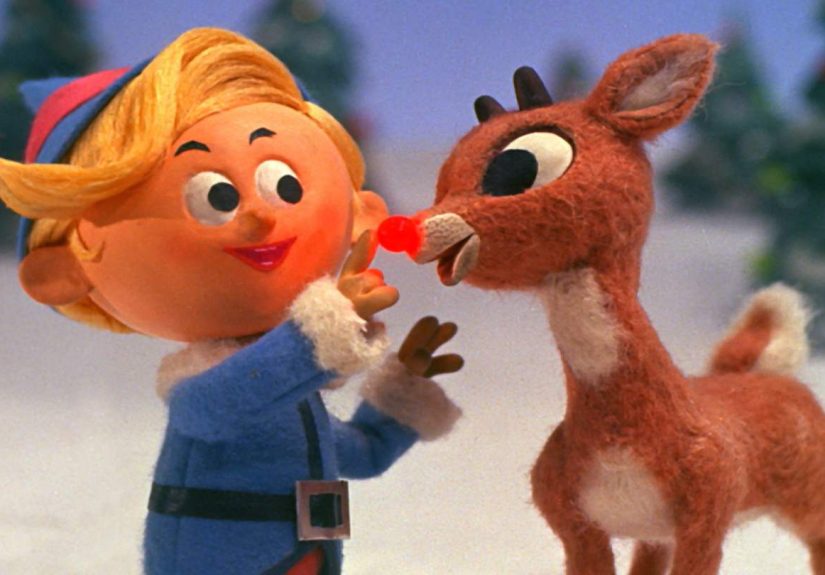
If Rankin/Bass has a crown jewel, it is Rudolph the Red-Nosed Reindeer, which first aired on NBC in 1964. That special did not just succeed. It rewired the expectations for what a Christmas special could be. It mixed music, stop-motion animation, melancholy, comedy, and an unexpectedly sharp sense of social exclusion. That is quite a cocktail for family programming, and somehow it worked beautifully.
What makes Rudolph endure is not only its adorable design or familiar songs. It is the emotional engine under the glitter. Rudolph is mocked for being different. Hermey is mocked for wanting a life that breaks from tradition. The Island of Misfit Toys is basically the saddest support group in holiday history. Yet the special never loses its warmth. Instead, it turns misfit energy into meaning.
That emotional complexity is a huge part of Rankin/Bass’s success. These specials did not treat children as if they could only handle sweetness. They made room for loneliness, embarrassment, longing, and perseverance. In other words, they understood that Christmas stories hit harder when they acknowledge that the world is a little cold before the lights come on.
6. Their Music Was So Good It Escaped the Specials and Took Over December
A lot of Christmas TV is remembered for visuals. Rankin/Bass is remembered for songs that practically rent space in your brain. One reason is the company’s smart collaboration with top musical talent, including songwriter Johnny Marks, writer Romeo Muller, and musical director Maury Laws.
Johnny Marks was crucial to the Rudolph universe. He did not just help popularize Rudolph through song; he also wrote holiday staples like “A Holly Jolly Christmas” and “Silver and Gold,” which became permanently associated with the special’s warm, snowy world. That is an outrageous hit rate. Most people would be thrilled to write one durable Christmas standard. Marks essentially helped soundtrack entire living rooms for decades.
Maury Laws then gave Rankin/Bass productions their musical shape and sparkle. Across multiple specials, his scores and arrangements helped keep the company’s tone consistent: whimsical, melodic, theatrical, and just a little grand. Later specials gave us gems like “Put One Foot in Front of the Other,” “Heat Miser,” and “Snow Miser,” proving that Rankin/Bass never treated songs like filler. In these productions, the music was not decoration. It was architecture.
That is why the songs outlived the credits. Plenty of viewers know “A Holly Jolly Christmas” without remembering exactly which scene it accompanies. Rankin/Bass had the rare ability to turn soundtrack moments into seasonal rituals.
7. Rankin/Bass Specialized in Misfits, Outsiders, and Lovable Weirdos
If you strip away the tinsel, a lot of Rankin/Bass storytelling is about people or creatures who do not fit where they are supposed to fit. Rudolph is mocked. Hermey wants to be a dentist instead of a toy maker. Frosty is literally a snowman trying to survive in the wrong climate. Heat Miser and Snow Miser behave like two bickering uncles trapped in a meteorological opera. Even when the plots are light, the emotional pattern is consistent: difference first feels like a problem, then becomes the story’s heart.
This is one reason the specials still resonate. They are weirdly cozy and weirdly honest at the same time. The characters are not polished symbols of perfection. They are awkward, anxious, eccentric, stubborn, or left out. For kids, that can feel reassuring. For adults, it feels surprisingly modern. Long before “be yourself” became a slogan slapped on everything from tote bags to cereal boxes, Rankin/Bass was building entire holiday worlds around outsiders.
That recurring theme also explains why the specials have lasting emotional depth. They do not merely celebrate Christmas. They celebrate the possibility that there is room at Christmas for the people who feel slightly offbeat, out of sync, or underappreciated. Which, frankly, is a lot of us by December 20.
8. They Were Not Just a Christmas Factory
It is tempting to think of Rankin/Bass as the studio that simply cornered the market on yuletide cheer, but their work stretched well beyond reindeer and snowdrifts. They made Halloween material like Mad Monster Party?, which showed they could take their stop-motion style and tilt it toward spooky camp. They also adapted fantasy works such as The Hobbit, The Return of the King, and The Last Unicorn.
That broader catalog matters because it reveals the full creative range of the company. Rankin/Bass did not just know how to make Christmas specials. They knew how to build self-contained imaginative worlds. The same studio that gave us Santa origin stories could also give us monsters, Tolkien, and melancholy fantasy with serious emotional bite.
The Last Unicorn, in particular, remains a cult favorite because it feels both elegant and emotionally bruised in a way many children’s films avoid. Meanwhile, The Hobbit earned recognition that showed Rankin/Bass could do more than seasonal comfort food. These projects helped prove the studio’s storytelling instincts were bigger than one holiday, even if Christmas remains the realm where their legacy shines brightest.
9. Their Legacy Still Lives in Modern Animation and Holiday Culture
Rankin/Bass did not just make classics. They influenced how later filmmakers thought about animation, atmosphere, and emotional storytelling. Their tactile, handcrafted style helped establish the idea that artificial figures can still feel deeply alive when the design and performance are right. That influence can be felt in later stop-motion work, in digitally animated films that borrow toy-like warmth, and in the broader idea that family entertainment can be strange, sad, musical, and comforting all at once.
The legacy also survives because the objects themselves still feel enchanted. Original puppets from Rudolph have been treated like treasured artifacts, which makes sense. They are artifacts. These productions left behind not just memories, but physical proof of a very labor-intensive art form. Every tiny sleeve, beard hair, and painted face is a reminder that holiday magic was once built by hand, one frame at a time.
Most of all, Rankin/Bass remains alive because families keep returning. Every year, new viewers meet the same characters, laugh at the same songs, and get a little emotional at the same scenes. That is not just nostalgia. That is cultural endurance. Lots of specials air once and vanish like tinsel in January. Rankin/Bass made the kind that come back like migrating holiday geese, only with better sweaters.
Why Rankin/Bass Still Feels So Cozy
There is a specific emotional experience attached to Rankin/Bass that is hard to duplicate. Watching one of these specials does not feel like consuming content. It feels like reopening a familiar room. The minute the music starts and those handcrafted figures appear, the world slows down a bit. The colors are soft, the snow looks powdered, and even the dramatic moments have a kind of wool-blanket warmth around them.
Part of that comfort comes from repetition. Many people first encountered Rankin/Bass the old-fashioned way: at a specific time of year, on a specific channel, with a little anticipation built into the wait. You did not just click and move on. You showed up for it. That ritual gave the specials extra emotional weight. They were not background noise. They were annual events.
But the deeper comfort comes from the way these stories blend innocence and unease. As a child, you might laugh at Hermey, sing along with Burl Ives, or stare wide-eyed at the Bumble. As an adult, you notice other things: the loneliness in Rudolph’s exile, the strange tenderness of the Misfit Toys, the theatrical melancholy of songs like “Silver and Gold,” and the almost old-fashioned sincerity of stories that believe kindness can still matter. The specials age with you because their emotional frequencies are layered.
There is also something deeply reassuring about the handcrafted aesthetic. In an age when so much entertainment is frictionless and polished to a digital shine, Rankin/Bass still feels textured. You can practically sense the hands behind the puppets and the pencil behind the designs. That handmade quality creates intimacy. It reminds you that these worlds were built, not generated. Someone had to imagine the little boots, the toy shelves, the snowbanks, the eyebrows, the moonlight, the songs. You feel the labor, and somehow that makes the magic warmer.
For many families, the experience of watching Rankin/Bass also becomes intergenerational. Parents introduce children to the same specials they watched when they were young. Grandparents hear songs that have followed them for decades. Kids laugh at a snowman while adults quietly realize they still know every line. That kind of shared viewing experience is increasingly rare, which only makes these specials feel more valuable.
And then there is the simple fact that Rankin/Bass understood winter atmosphere better than almost anyone. Their productions do not just show Christmas. They feel cold in the best possible way. The snow glitters. The night sky looks crisp. The characters bundle up. The songs carry a little echo, as if the whole world has been wrapped in December air. Watching them feels like being indoors while the weather does its work outside. It is television as hot cocoa.
That is why Rankin/Bass endures. Not because the specials are flawless, and definitely not because they are trendy. They endure because they create a feeling people want to revisit: a mix of nostalgia, oddity, music, handmade beauty, and emotional generosity. They are cozy without being empty. Familiar without being dull. Strange without being alienating. In other words, they are holiday comfort with character.
Conclusion
Rankin/Bass helped pioneer the Christmas special by doing something that sounds obvious but is actually very difficult: they made holiday stories people wanted to keep. Their productions were visually distinctive, musically rich, emotionally sincere, and unafraid of a little eccentricity. From Rudolph to Frosty to The Year Without a Santa Claus, the studio created a language of Christmas that still feels alive.
So yes, Rankin/Bass gave us talking snowmen, glowing noses, misfit toys, and enough memorable songs to power a department store through December. But they also gave us something even better: proof that family entertainment can be imaginative, handcrafted, emotionally honest, and comforting all at once. That is a pretty nice gift for a production company to leave under the tree.