Table of Contents >> Show >> Hide
- Smart Layout Ideas That Make the Space Work
- 1. Build the layout around traffic flow
- 2. Use a galley layout in narrow spaces
- 3. Turn a hallway into a pantry wall
- 4. Skip a swinging door in tight quarters
- 5. Hide the pantry behind matching cabinetry
- 6. Keep the design connected to the kitchen
- 7. Add a sink if you can
- 8. Reserve real counter space for actual tasks
- Storage Ideas That Keep Clutter Under Control
- 9. Mix closed cabinets with open shelving
- 10. Install pull-out drawers in lower cabinets
- 11. Go all the way to the ceiling
- 12. Create an appliance garage
- 13. Park bulky appliances outside the main kitchen
- 14. Use drawer dividers for small items
- 15. Organize by zones, not by guesswork
- 16. Label shelves and containers
- 17. Use matching containers where it helps
- 18. Add produce bins with airflow
- 19. Include vertical storage for trays and boards
- 20. Keep a stool or slim ladder nearby
- Design Ideas That Look Good and Stay Practical
- Feature Ideas for Everyday Use and Entertaining
- What People Learn After Living With a Butler Pantry
- Conclusion
A butler pantry has officially graduated from old-house curiosity to modern kitchen MVP. Once known as the in-between spot for storing serving pieces and staging meals, it now works overtime as a prep station, beverage bar, overflow storage zone, and clutter catcher. In other words, it is the room that saves your kitchen from looking like a small appliance convention.
If you are planning one from scratch or trying to squeeze a smarter pantry into the space you already have, the best designs balance beauty with everyday usefulness. A great butler pantry does not just look polished in photos. It makes dinner prep easier, keeps countertops calmer, and helps entertaining feel less like a sprint in socks. These butler pantry ideas focus on clean lines, practical storage, and design details that work hard without making a fuss.
Smart Layout Ideas That Make the Space Work
1. Build the layout around traffic flow
The best butler pantry ideas start with movement. Think about how you walk between the kitchen, dining area, and pantry before choosing cabinetry or tile. If the room interrupts your path, it will feel cramped no matter how pretty it is. A smooth pass-through layout keeps prep, serving, and cleanup from turning into a traffic jam.
2. Use a galley layout in narrow spaces
If your pantry is more hallway than room, embrace it. A galley layout with storage on both sides can be incredibly efficient, especially when one side is shallower. This setup keeps essentials close without making you feel like you are cooking in an elegant broom closet.
3. Turn a hallway into a pantry wall
No dedicated room? No problem. A run of cabinetry and counter space in a nearby hall or alcove can create the function of a butler pantry without a full remodel. This idea works especially well for homes that need more storage but cannot spare a whole room.
4. Skip a swinging door in tight quarters
A traditional hinged door can eat up valuable square footage. In a smaller butler pantry, a pocket door, sliding door, or even an open entry can make the space feel larger and easier to use. Less door drama means fewer bruised elbows when you are carrying trays.
5. Hide the pantry behind matching cabinetry
One of the cleanest butler pantry ideas is to conceal the entrance behind cabinet-style doors that blend into the kitchen. The result feels seamless and polished, especially in modern or transitional homes. It is a clever way to keep visual clutter tucked away without sacrificing storage.
6. Keep the design connected to the kitchen
Your butler pantry does not need to match the kitchen exactly, but it should feel related. Repeating cabinet profiles, hardware finishes, or countertop materials creates flow. Then you can add a slightly different paint color, tile, or wallpaper to give the pantry its own personality.
7. Add a sink if you can
A small task sink makes a butler pantry dramatically more useful. It gives you a place to rinse produce, fill a coffee pot, wash barware, or handle quick cleanup away from the main kitchen. Even a compact sink can make the room feel like a true work zone rather than just pretty storage.
8. Reserve real counter space for actual tasks
Countertops are not just decoration. They are landing strips for groceries, staging areas for platters, and homes for your mixer, espresso machine, or toaster oven. Make sure at least part of the counter stays clear enough to be useful, because a pantry covered in canisters is just a shelf with better marketing.
Storage Ideas That Keep Clutter Under Control
9. Mix closed cabinets with open shelving
The sweet spot is usually a blend of both. Closed cabinets hide visual chaos like snack boxes, backup paper towels, and the blender you swear you will use more often. Open shelves keep everyday dishes, glassware, and frequently used staples easy to grab.
10. Install pull-out drawers in lower cabinets
Deep lower cabinets are where good intentions go to disappear. Pull-out drawers make canned goods, snacks, and small appliances far easier to access. They also reduce the classic pantry move of crouching, reaching, and whispering, “I know the cinnamon is back there somewhere.”
11. Go all the way to the ceiling
Floor-to-ceiling cabinetry helps a butler pantry look custom and orderly while maximizing every inch of vertical storage. Keep everyday items at eye level and use the upper zones for seasonal platters, specialty appliances, or entertaining pieces you do not need every Tuesday.
12. Create an appliance garage
A concealed appliance garage is one of the smartest butler pantry storage ideas for a clean kitchen. It hides visual bulk while keeping your coffee maker, toaster, or stand mixer plugged in and ready. Your countertop gets to breathe, and your appliances stop acting like permanent decor.
13. Park bulky appliances outside the main kitchen
Slow cookers, waffle makers, rice cookers, and food processors all deserve homes that are not your main kitchen counter. A butler pantry is the perfect place to store these occasional workhorses, especially if you add sturdy lower cabinets and nearby outlets.
14. Use drawer dividers for small items
Tea bags, snack bars, measuring spoons, cocktail tools, and random packet chaos can quickly take over a pantry. Drawer dividers keep small items sorted and visible. This simple move makes the space feel calmer and prevents the dreaded junk-drawer energy from spreading.
15. Organize by zones, not by guesswork
Group like with like: baking supplies, breakfast items, coffee gear, snacks, serving pieces, and bar tools. A zoned pantry feels intuitive to use because you are not hunting in five places for one thing. It also helps everyone in the household put things back where they belong.
16. Label shelves and containers
Labels do not have to look overly precious to be useful. A simple shelf label or discreet container tag makes a big difference, especially for dry goods and shared spaces. The goal is less visual perfection and more “nobody put the pasta in the tea section again.”
17. Use matching containers where it helps
Uniform containers instantly make a pantry feel more orderly, but this is one place to be strategic. Use them for baking ingredients, grains, cereal, or snacks that come in floppy packaging. You do not need to decant every cracker on Earth, just the items that benefit from being visible and stackable.
18. Add produce bins with airflow
Mesh bins, open baskets, or ventilated crates work well for onions, potatoes, and other pantry produce. They improve visibility and help the space feel more intentional. This is especially helpful if your butler pantry doubles as a food-storage zone instead of just a serving pantry.
19. Include vertical storage for trays and boards
Baking sheets, cutting boards, platters, and serving trays are awkward stackers. Vertical dividers solve that fast. Tucking these items upright beside a cabinet or drawer keeps them accessible and prevents the avalanche effect that usually follows one innocent attempt to grab a sheet pan.
20. Keep a stool or slim ladder nearby
High shelves are only useful if you can actually reach them. A narrow step stool or slim ladder makes upper storage practical without cluttering the room. Bonus points if it tucks neatly into a corner so it does not become the pantry’s most committed resident.
Design Ideas That Look Good and Stay Practical
21. Brighten dark pantries with reflective finishes
If your butler pantry has little natural light, reflective materials can help. Glass-front cabinets, glossy tile, mirrored backsplashes, and polished metal accents bounce light around the room. This keeps the space from feeling cave-like and gives it a little extra sparkle.
22. Layer your lighting
Good lighting is one of the most overlooked butler pantry ideas. Use a mix of overhead fixtures, under-cabinet lighting, and small accent lights inside glass cabinets if you have them. Better lighting improves visibility, makes prep easier, and helps the whole room feel finished.
23. Warm things up with wood details
Wood shelving, a butcher block counter, or a paneled backsplash can soften the room and keep it from feeling too sterile. Natural materials add warmth, especially if your kitchen already leans white, gray, or highly polished. A little texture goes a long way.
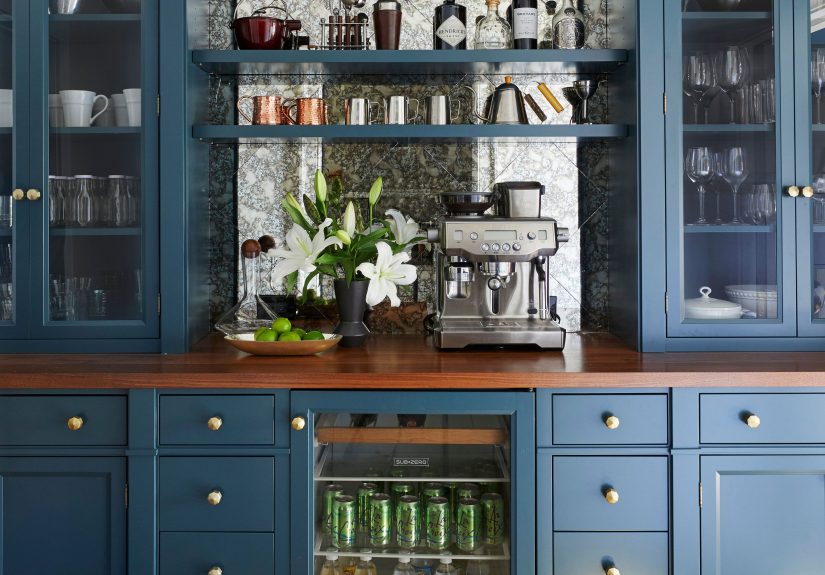
24. Try a moody paint color
Because a butler pantry is usually a smaller, more enclosed space, it is a great place to experiment with darker paint. Navy, forest green, charcoal, or deep brown can make the room feel cozy, tailored, and slightly dramatic in the best possible way.
25. Use glass-front cabinets for display
Glass doors break up heavy cabinetry and give you a place to show off stemware, serveware, or neatly arranged dishes. They also encourage a little discipline, which is helpful. Nobody wants the glass-front cabinet to reveal three mugs, a gravy boat, and pure emotional disorder.
26. Choose open shelving carefully
Open shelves can lighten the room visually, but they work best when you store attractive, practical items on them. Think glassware, white dishes, labeled jars, and everyday staples. If you know you prefer low-maintenance storage, use fewer open shelves and more closed cabinets.
27. Pick a hardworking backsplash
A backsplash gives the pantry personality, but it should also stand up to splashes, coffee drips, and snack-zone chaos. Tile, beadboard, wood paneling, or slab stone can all work beautifully. This is a smart place to add pattern if the main kitchen is more restrained.
28. Choose durable countertops
Since a butler pantry often handles prep, appliances, and serving, the counters need to be durable as well as attractive. Stone, quartz, and butcher block are all popular options depending on your style and maintenance preferences. Pick the one that matches how you actually live, not just how you want your house to look for eleven minutes.
Feature Ideas for Everyday Use and Entertaining
29. Build a coffee station
A coffee station is one of the most popular modern butler pantry ideas for good reason. It keeps mugs, beans, sweeteners, and equipment in one easy spot and frees up the main kitchen. Morning you will be grateful. Pre-coffee you may even call it genius.
30. Add a beverage or wine zone
If you entertain often, dedicate part of the pantry to drinks. A beverage fridge, wine storage, or a shelf for glassware and cocktail tools turns the room into a hosting hub. Guests can help themselves without crowding the main prep area.
31. Make it a flexible prep-and-serving station
The best butler pantry design ideas are adaptable. One day the room stores lunch supplies and cereal, the next it is a dessert station for a holiday dinner. Leave enough open counter space and flexible storage so the room can shift with your routines, your guests, and your future needs.
What People Learn After Living With a Butler Pantry
Across real homes, one lesson comes up again and again: the most successful butler pantry is not the one with the fanciest finishes. It is the one that removes friction from daily life. Homeowners quickly notice whether the coffee supplies are actually together, whether the mixer is easy to access, and whether there is enough open counter space to unload groceries without playing pantry Tetris. A beautiful room matters, but a room that works smoothly at 7 a.m. matters even more.
Another common experience is discovering that closed storage earns its keep. Open shelving looks airy and charming, but if every shelf is exposed, the room can start to feel busy fast. Many people find that a mix of display space and concealed storage gives them the best of both worlds. Pretty dishes and glassware stay visible, while bulk snacks, backup condiments, and oddly shaped gadgets disappear behind doors where they can do no visual harm.
Lighting is another detail people appreciate more after the pantry is finished. Under-cabinet lighting, warm overhead fixtures, and brighter surfaces make a huge difference, especially in windowless spaces. Homeowners often say the pantry becomes more pleasant to use when it is bright enough for real tasks such as making coffee, reading labels, or plating food for guests. Dim lighting may look moody, but it is less charming when you are trying to tell paprika from chili powder.
People also learn that zones save time. A butler pantry works best when it reflects real habits rather than a generic organization system. Families with young kids often keep lunch-making supplies together. Frequent bakers love a section dedicated to flour, sugar, mixing bowls, and measuring tools. Hosts tend to appreciate a beverage corner with glassware, ice buckets, and napkins close at hand. The more the layout mirrors daily routines, the more natural the room feels to use.
There is also a strong emotional payoff to having a butler pantry. Even a modest one can make the kitchen feel calmer because it absorbs the visual noise that usually lands on countertops. Espresso machines, snack baskets, paper goods, spare platters, and party supplies all get a place to live. The main kitchen feels cleaner, which in turn makes the whole house feel more pulled together. It is a design feature, yes, but it also creates a sense of order that many homeowners genuinely enjoy.
Finally, people tend to value flexibility more than perfection. A pantry that can shift from weekday breakfast station to holiday serving zone is far more useful than one designed for only one purpose. That is why the smartest butler pantry ideas leave room for change. You may start with a coffee bar and end up needing a smoothie zone, or begin with servingware storage and later want space for a microwave drawer. A pantry that can evolve with your life will keep earning its square footage long after the paint dries.
Conclusion
The best butler pantry ideas combine storage, prep space, and design in a way that makes your kitchen feel calmer and your home more functional. Whether you have room for a full walk-through pantry with a sink and beverage fridge or just enough space for a pantry wall with hidden storage, the goal is the same: reduce clutter, improve workflow, and make everyday tasks easier. Start with layout, add smart storage, choose finishes that can take real-life wear, and give the room enough flexibility to evolve with your routines. A clean, functional butler pantry is not just a luxury feature. It is one of the smartest ways to make your kitchen work harder and look better.