Table of Contents >> Show >> Hide
- Before You Move Anything: What Makes Daffodils Tick
- Timing 101: When Is the Best Time to Transplant Daffodils?
- Way #1: Transplant the Whole Clump After Dieback (Fast + Forgiving)
- Way #2: Lift, Divide, and Replant (Best for Crowded Clumps)
- Way #3: Transplant “In the Green” (When You Can’t Wait)
- Aftercare That Actually Matters (Aka: How Not to Undo Your Own Work)
- How to Choose the Best Method for Your Yard
- Conclusion
- Experience Notes: What You’ll Likely Notice (and How to React Like a Pro)
Daffodils (aka Narcissus) are the overachievers of spring: they show up early, look cheerful in terrible weather, and somehow multiply while you’re busy forgetting where you put your garden gloves. But even these golden go-getters sometimes need a change of addressmaybe your bed design changed, a tree started hogging the sunlight, or your daffodil clumps got so crowded they’re basically hosting a bulb-only music festival.
The good news: transplanting daffodils is totally doable for regular humans with a shovel, a little timing, and the willingness to get dirt under your nails. The even better news: there isn’t just one “right” way. Below are three reliable methodsfrom the classic “move them when they’re asleep” approach to the more adventurous “in the green” transplant for when life (or construction) refuses to wait.
Before You Move Anything: What Makes Daffodils Tick
Think of a daffodil bulb like a rechargeable battery. After flowering, the leaves keep photosynthesizing for weeks, sending energy back down into the bulb so it can bloom again next spring. That’s why the timing of transplanting matters so much: move them at the wrong moment, and you’re basically yanking the charger out of the wall at 9% battery.
Quick signs it’s time to transplant daffodils
- Fewer blooms even though the leaves look lush (often a crowding issue).
- Clumps expanding outward with flowers mostly around the edges.
- Shady takeover from shrubs/trees that weren’t there when you planted.
- Bed redesign (because you saw one photo online and now everything must change immediately).
Timing 101: When Is the Best Time to Transplant Daffodils?
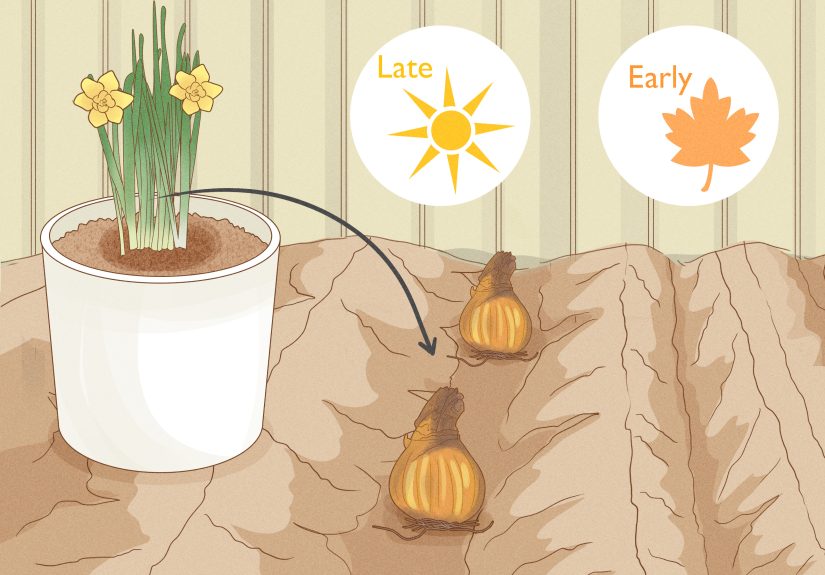
Most gardeners get the best results transplanting daffodils when the plant is done feeding the bulb. That usually means: after the foliage yellows/browns and dies back in early summer or in fall when bulbs are dormant. If you’re moving them in fall, it helps to mark the spot while the leaves are still visible so you’re not digging around like a pirate without a map.
There’s also a third timing optiontransplanting “in the green” (while foliage is still present). It can work, but it’s more delicate and best used when you can’t wait.
Way #1: Transplant the Whole Clump After Dieback (Fast + Forgiving)
This is the “move them while they’re snoozing” method. You dig up the clump after the leaves have naturally died back, move it, and replant it with minimal fuss. It’s ideal when you’re relocating daffodils to a new bed or shifting a drift a few feet to the left because symmetry suddenly matters.
Best for
- Moving daffodils without necessarily increasing your bulb count
- Relocating clumps that still bloom well
- Gardeners who like simple plans and reliable outcomes
Step-by-step
- Wait for natural dieback. Let foliage yellow and turn brown. Don’t cut earlythis is when the bulb is refueling for next year.
- Choose the new location. Daffodils do best with well-drained soil and good spring sunlight. If the area stays soggy, bulbs can rot.
- Dig wide, not just deep. Use a spade or garden fork and lift from several inches outside the clump to avoid spearing bulbs.
- Lift and keep a soil cushion if possible. You don’t need a perfect soil ball, but fewer bruised roots is always a win.
- Replant at the right depth. A common guideline is planting bulbs about three times the bulb’s height (often around 6–8 inches deep for standard daffodils).
- Water once to settle soil. Then water only if conditions are unusually dry. Overwatering dormant bulbs is not a love language.
- Mulch lightly. A thin mulch layer can help stabilize soil moisture and reduce weeds, especially in beds.
Pro tips for Way #1
- Label or map your varieties if you’ve got multiple daffodil types and you care where the short ones end up.
- Don’t panic if blooms pause. A move can cause some bulbs to skip a year if stressed, especially if replanted late.
- Avoid compacting soil around bulbsfirm gently, don’t stomp like you’re putting out a campfire.
Way #2: Lift, Divide, and Replant (Best for Crowded Clumps)
If your daffodils bloom less each year, division is often the fix. Daffodils create “offsets” (baby bulbs) that build up into tight clusters. Eventually the bulbs compete for space and nutrients. Dividing resets the planting, improves airflow, and gives you extra bulbs to spread aroundor to “casually” gift to a neighbor like a plant fairy with a shovel.
Best for
- Clumps with declining flowering
- Naturalized areas that have become crowded
- Gardeners who want more daffodils without buying more daffodils
Step-by-step
- Pick the right timing. Divide after blooming once foliage has yellowed and is heading toward dieback, or once it’s fully brown. You’re aiming for “energy transfer mostly complete.”
- Lift the clump carefully. Slide a fork under the cluster and lift. Shake off loose soil so you can see what you’re working with.
- Separate bulbs gently. Many offsets will pull apart by hand. If they’re stubborn, wiggle rather than yank.
- Inspect like a bouncer at a club. Toss bulbs that are soft, mushy, moldy, or clearly damaged. Healthy bulbs should feel firm.
- Sort by size. Large bulbs usually bloom next spring. Smaller offsets may need an extra year (sometimes two) to size up before flowering.
- Replant promptlyor store correctly. If you’re replanting the same day, great. If you must store, keep bulbs in a dry, airy place out of sun, and don’t let them bake in a sealed plastic bag like forgotten produce.
- Plant at proper depth and spacing. Standard spacing is often 6–12 inches apart depending on the look you want and how long you want them to stay before dividing again.
- Water to settle, then ease off. Water after planting. After that, keep soil lightly moist during root-establishment periods, but never soggy.
Design ideas for your divided bulbs
- Drifts and clusters: Plant in groups of 5–9+ for a “naturalized” look instead of single-file soldiers.
- Layering with perennials: Tuck bulbs near daylilies, hostas, or ornamental grasses that will hide fading daffodil foliage later.
- Edge reinforcement: Use smaller cultivars along paths where they won’t flop into the walkway.
Way #3: Transplant “In the Green” (When You Can’t Wait)
“In the green” transplanting means moving daffodils while they still have leavesoften shortly after flowering. It can work, especially if you move them with a generous soil ball, keep roots intact, and water consistently while they recover. This is the method you use when: you’re moving house, redoing hardscape, repairing drainage, or saving bulbs from imminent doom.
Best for
- Emergency moves (construction, landscaping deadlines, etc.)
- Transplanting potted/forced daffodils into the ground after indoor blooming
- Gardeners who are okay with “it’ll probably be fine… but let’s do it carefully”
Step-by-step
- Move right after flowering (not mid-bloom if you can avoid it). The less stress during peak flowering, the better your odds for next year.
- Dig a large circle. Go wider than you think you need. Your goal is to keep a big chunk of soil around the roots and bulbs.
- Lift the plant with the soil ball intact. Slide a shovel underneath and lift as a unit. If it crumbles, it’s not the end of the worldbut try.
- Plant immediately at the same depth. Don’t let roots dry out in the sun while you take a victory lap.
- Water deeply, then keep soil evenly moist for a couple of weeks. Not swampyjust consistently moist while it re-establishes.
- Let foliage die back naturally. This is still crucial. Even if the leaves look messy, they’re doing important behind-the-scenes work.
What to expect
- Some leaf flop is normal after moving. They’ll look dramatic. Let them have their moment.
- Next spring’s blooms may be reduced compared to dormant transplantingespecially if the move was rough or late.
- Survival rates improve when you keep roots intact and avoid heat stress during the move.
Aftercare That Actually Matters (Aka: How Not to Undo Your Own Work)
Watering
Right after replanting, water to settle soil and eliminate air pockets. After that: daffodils generally prefer soil that’s moist during active growth but not wet while dormant. If your summer soil stays soggy, consider moving bulbs to a better-drained spot or amending soil structure before replanting.
Foliage management
Let leaves stay until they turn brown naturally. Avoid tying, braiding, or “neatening” foliage too early. If the look bothers you, hide the fading leaves by pairing daffodils with perennials that leaf out later.
Feeding
If your soil is poor or your bulbs have been in place for years, a light application of bulb-friendly fertilizer (often lower in nitrogen, with phosphorus and potassium for root and bulb support) can help. Many gardeners feed in fall and/or right after bloom, but avoid overdoing itmore fertilizer does not equal more flowers if drainage and sunlight aren’t right.
Mulch and weeds
A thin mulch layer helps conserve moisture and suppress weeds, but keep mulch from piling directly against emerging shoots. Think “light blanket,” not “burial.”
Pests and problems
- Bulb rot: Usually from poor drainage or overwatering. Fix the soil situation first.
- Rodents digging: In some areas, wire mesh over freshly planted beds can discourage digging until roots establish.
- No blooms: Often crowding, premature leaf removal, too much shade, or bulbs planted too shallow.
How to Choose the Best Method for Your Yard
Not sure which way to go? Use this quick decision guide:
- Your daffodils still bloom well, you just want them elsewhere: Choose Way #1 (move the clump after dieback).
- Blooms are declining and clumps are crowded: Choose Way #2 (lift, divide, and replant).
- You must move them now (life happens): Choose Way #3 (transplant in the green), and baby them a bit afterward.
Conclusion
Transplanting daffodils isn’t complicatedit’s mostly about timing, gentle handling, and good drainage. Move whole clumps when dormant for the easiest success, divide when flowering declines, and use “in the green” transplanting when you’re on a deadline. Do those things well, and your daffodils will keep coming back every spring like they pay rent.
Experience Notes: What You’ll Likely Notice (and How to React Like a Pro)
Here’s the part nobody tells you until you’ve done it a couple of times: transplanting daffodils is less like flipping a switch and more like navigating a tiny plant soap opera. The bulbs are tough, but they’re also very opinionated about timingand they will absolutely show you their feelings if you rush them.
In the first week after a transplant, especially if you used the “in the green” method, expect the leaves to look a little sulky. Some will flop. Some will yellow faster than you expected. This doesn’t automatically mean you failed. It often means the plant is reallocating resources and the roots are adjusting. Your best move is usually boring: keep soil lightly moist (not soaked), avoid disturbing the area again, and let the foliage finish its slow fade.
If you divided a big clump (Way #2), you may feel wildly accomplisheduntil you realize you now own approximately 47 bulbs and only planned space for 12. That’s normal. A practical way gardeners handle this is sorting by bulb size and being honest about bloom timing: the biggest bulbs go where you want maximum spring impact next year, while the smaller offsets can be planted in a “nursery” area or a less-visible edge where they can grow up for a season or two. Watching those smaller bulbs mature is surprisingly satisfyinglike investing in a tiny floral retirement plan.
One very common real-life surprise is discovering how deep (or shallow) your bulbs actually are. In lighter soil, bulbs often settle a bit over time; in heavy clay, they may end up shallower than you intended if the soil heaves. If you dig and find bulbs practically wearing sunglasses at the surface, replant deeper. If you find them in a soggy, compacted layer that smells like “wet basement,” you’ve just diagnosed why blooming declined. In that scenario, changing the site (or improving drainage with organic matter and better soil structure) can do more than any fertilizer ever will.
Another “experience-based” lesson: marking matters more than you think. If you plan to transplant in fall, it’s easy to lose track of bulb locations once foliage disappears. Gardeners use everything from golf tees and paint sticks to phone photos with landmarks (“two feet from the birdbath, three feet from the stepping stone”) to avoid turning the whole bed into an accidental excavation site. It sounds silly until you’ve spent 30 minutes digging up exactly zero bulbs and questioning your life choices.
Finally, your next spring is the real report card. If you transplanted after dieback and replanted at the proper depth, you’ll often get strong blooms. If you transplanted “in the green,” blooms may be fewer or smaller the following yearbut frequently rebound the year after that once bulbs fully recover. The big takeaway most gardeners learn is this: daffodils reward patience. If you give them sunlight, drainage, and time to recharge their bulb “battery,” they’ll keep showing upbright, stubborn, and weirdly cheerfulno matter how many times you rearrange the garden around them.