Table of Contents >> Show >> Hide
- Why Question Games Work (Even With “I’m Not a Games Person” People)
- 28 Fun Question Games to Play with Friends
- 1) Would You Rather
- 2) Never Have I Ever (Clean Edition)
- 3) Two Truths and a Lie
- 4) 20 Questions (Person, Place, or Thing)
- 5) 21 Questions (Get-to-Know-You Mode)
- 6) Most Likely To
- 7) Truth or Dare (Questions-First Version)
- 8) This or That Line-Up
- 9) Rapid-Fire Hot Seat
- 10) The Question Jar
- 11) “If You Could…” Lightning Round
- 12) The “Name That Friend” Quiz
- 13) Caption This (Question Edition)
- 14) Desert Island Draft
- 15) Would You Press the Button?
- 16) The Compliment Interrogation
- 17) “Explain Your Weirdest Preference”
- 18) High-Low-LOL
- 19) Story Sprint
- 20) One-Word Answers Only
- 21) The “SFW Search History” Game
- 22) Guess Who I’m Thinking Of
- 23) Speed Friending
- 24) The Five Whys
- 25) Friendship Quiz Show
- 26) Emoji Answers Only
- 27) Guess the Rule (Yes/No Edition)
- 28) Future Headlines
- How to Pick the Right Question Game for Your Group
- Conclusion
- Experience Notes: How to Make These Games Actually Fun (About )
There’s a special kind of magic that happens when someone asks a ridiculous question like,
“Would you rather fight one horse-sized duck or 100 duck-sized horses?” Suddenly, everyone’s awake, invested,
and arguing like it’s a Supreme Court case.
That’s why question games to play with friends are undefeated: they’re low effort, high laughter,
and they turn “we should hang out sometime” into an actual hangout. Whether you’re at a party, on a road trip,
stuck inside because it’s raining again, or trying to make a group chat feel alive, these games do the job.
Why Question Games Work (Even With “I’m Not a Games Person” People)
Question-based party games are basically social cheat codes. They create instant structure (so nobody has to
carry the conversation alone), they spark stories, and they give everyone an easy way to participateeven the
quiet friend who’s hilarious once you get them rolling.
Quick ground rules that keep it fun
- No pressure: “Pass” is always allowed, no explanations required.
- Match the room: Keep it PG, PG-13, or adults-onlyjust agree before you start.
- Laugh with, not at: Teasing is fine; humiliation is not.
- Keep it moving: If a question flops, celebrate it and move on like a professional.
28 Fun Question Games to Play with Friends
Each game below includes simple rules and a couple of ready-to-steal prompts. Mix and match them for the
ultimate “we accidentally stayed up until 2 a.m.” vibe.
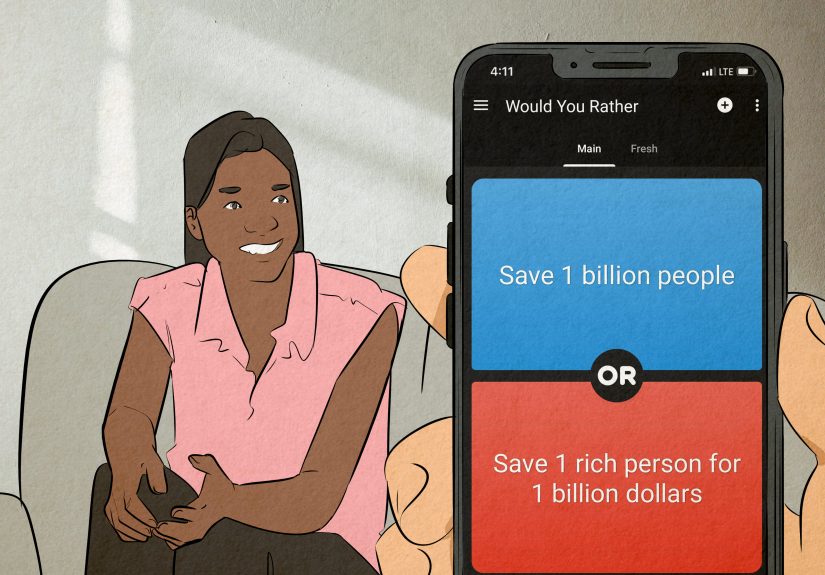
1) Would You Rather
Players must choose between two optionsno loopholes, no third doors. Best part: the arguing is the game.
- Would you rather have free coffee forever or free tacos forever?
- Would you rather be 10 minutes late to everything or 20 minutes early to everything?
2) Never Have I Ever (Clean Edition)
One person says “Never have I ever…” and anyone who has done it admits it (hands up, points, sips, or just vibes).
Keep it light unless everyone explicitly wants spicy.
- Never have I ever laughed so hard I cried in public.
- Never have I ever gone to the wrong place on the wrong day and committed to the mistake.
3) Two Truths and a Lie
Say three statements: two true, one false. Everyone guesses the lie. The secret sauce is confident delivery and
a face that says “I have never lied in my life.”
- Tip: Make the lie boring and the truths weird.
- Bonus: After guessing, ask “How did you decide?” for instant chaos.
4) 20 Questions (Person, Place, or Thing)
Someone picks a secret item and the group asks up to 20 yes/no questions to figure it out. Great for road trips
and waiting in lines like civilized goblins.
- Is it something you can hold?
- Would you find it in a kitchen?
5) 21 Questions (Get-to-Know-You Mode)
Take turns asking and answering questions until you hit 21 total. This is the easiest “new friend upgrade”
in the universe.
- What hobby do you wish you started sooner?
- What’s a “small thing” that instantly improves your day?
6) Most Likely To
Read a prompt and everyone points to the person most likely to do it. The fun is in the debate and the
suspiciously specific explanations.
- Who’s most likely to forget why they walked into a room?
- Who’s most likely to start a business based on a single late-night idea?
7) Truth or Dare (Questions-First Version)
Keep it friendly: everyone chooses truth or dare, but dares stay silly and non-awkward. If someone picks truth,
ask a question that fits your group’s comfort level.
- Truth: What’s the most random skill you’re proud of?
- Dare: Speak only in dramatic movie-trailer voice for one minute.
8) This or That Line-Up
Call out two choices. People physically move to “Team A” or “Team B.” Perfect when you want energy without
anyone needing to be witty on demand.
- Waffles or pancakes?
- Beach day or mountain day?
9) Rapid-Fire Hot Seat
One person gets 60 seconds. Everyone asks quick questions; the player must answer immediately.
No speeches, no TED Talks, just instincts.
- Best comfort food?
- Hidden talent you’d reveal at a talent show?
10) The Question Jar
Write prompts on slips of paper, toss in a jar, and draw randomly. This works because the jar has no mercy and
no favorites.
- What’s a movie you could quote too well?
- What’s something you’re weirdly picky about?
11) “If You Could…” Lightning Round
Everyone answers the same hypothetical quickly. Then you do the most important part: ask why.
- If you could instantly master one skill, what would it be?
- If you could time-travel once, where are you going?
12) The “Name That Friend” Quiz
Ask a prompt, then everyone writes down which friend fits it bestreveal at the same time.
It’s like Most Likely To, but sneakier.
- Who would survive the longest in a zombie movie?
- Who would become famous by accident?
13) Caption This (Question Edition)
Someone shows a random photo (camera roll, meme, anything). The group answers: “What’s the caption?”
Then ask the follow-up: “What’s the backstory?”
- What would you title this photo?
- What happened five seconds before this moment?
14) Desert Island Draft
Everyone drafts items for a fictional scenario: “You’re strandedpick three.” Then argue who drafted best.
- Pick three items for a weekend with no internet.
- Pick three foods you could eat for a month.
15) Would You Press the Button?
Each question has a tempting benefit and a ridiculous consequence. People answer yes/no, then defend themselves
like they’re being cross-examined.
- You can teleport, but you arrive with bedhead forever. Press it?
- You get $10,000, but your laugh becomes a car horn. Press it?
16) The Compliment Interrogation
Ask questions designed to spotlight people (without getting mushy). It’s wholesome, but still funlike a golden retriever in game form.
- What’s one thing this person does that makes the group better?
- What’s their most underrated strength?
17) “Explain Your Weirdest Preference”
Everyone shares one oddly specific preference, and the group asks follow-up questions.
Harmless, hilarious, and surprisingly revealing.
- What’s your most controversial food opinion?
- What’s something you refuse to buy the cheap version of?
18) High-Low-LOL
Go around: share a “high” (good thing), a “low” (meh thing), and a “LOL” (funny moment).
Then ask one question about each.
- What made that the best part of your day?
- What’s the funniest detail you didn’t expect?
19) Story Sprint
Pick a prompt, then each person tells a 30–60 second story. Everyone gets one follow-up question.
Instant connection without oversharing.
- Tell a story about a time you were confidently wrong.
- Tell a story about the most random compliment you’ve ever gotten.
20) One-Word Answers Only
Ask questions, but everyone can answer with only one word. Then the group guesses the story behind the word.
- Describe your last week in one word.
- What’s your personal “villain origin” word?
21) The “SFW Search History” Game
Everyone shares the most harmless-but-weird thing they’ve searched recently. Then: one question from the group.
(Keep it respectfulthis is comedy, not court.)
- What were you trying to solve?
- How did you end up there?
22) Guess Who I’m Thinking Of
Think of a person in the group. Others ask yes/no questions to figure it out. Great for friend groups because
the “clues” are basically inside jokes.
- Would this person survive without Google Maps?
- Is this person always early?
23) Speed Friending
Set a timer for 2 minutes per pair, rotate, and ask the same prompt each round. Ideal for mixed groups and
parties where not everyone knows each other.
- What’s a hobby you’d try if embarrassment didn’t exist?
- What’s your go-to comfort show?
24) The Five Whys
Someone answers a simple question. The group asks “why?” up to five times (gently). It gets funny, then deep,
then funny againlike a conversational roller coaster.
- What’s your favorite snack?
- Why is that your favorite? (Repeat.)
25) Friendship Quiz Show
Split into teams. Ask “about us” questions and score points for correct answers. This is the perfect game for
best friends who love being right.
- What’s Alex’s most used phrase?
- What’s Jordan’s “I will never do that” that they absolutely did?
26) Emoji Answers Only
Ask a question; the answer must be emojis (text or drawn). Everyone else interprets what it means.
Misunderstandings are guaranteed and honestly, that’s the point.
- How was your day? (Emoji-only answer.)
- Describe your personality in three emojis.
27) Guess the Rule (Yes/No Edition)
One person invents a secret rule (e.g., “I only answer questions that contain the letter E”). Others ask yes/no
questions to deduce the rule.
- Can I ask any question I want?
- Does the rule involve the words I use?
28) Future Headlines
Everyone answers silly “future you” prompts. Then the group asks follow-ups like reporters at a press conference.
Congratulations, you’re now famous in an imaginary universe.
- What would your headline be in 10 years?
- What’s the “unexpected twist” in the article?
How to Pick the Right Question Game for Your Group
If you’re with new people
Start with low-stakes icebreaker games: This or That, 20 Questions, Question Jar,
or Speed Friending. These keep things fun without getting too personal too fast.
If you’re with close friends
Go for games that trigger stories and friendly roasting: Most Likely To, Two Truths and a Lie,
Caption This, and Friendship Quiz Show.
If you want deeper conversation (without making it weird)
Use gentle depth: The Five Whys, 21 Questions, and Compliment Interrogation.
Keep the “Pass” rule on the table so nobody feels cornered.
Conclusion
The best friend groups aren’t built on “perfect plans.” They’re built on tiny moments:
laughing too hard, learning a random fact, and realizing you’ve never asked your friend what snack they’d defend in court.
Keep a few of these fun question games in your back pocket and you’ll always have a way to break the ice,
revive the vibe, or turn a regular night into a story you’ll quote for years.
Experience Notes: How to Make These Games Actually Fun (About )
Here’s the part nobody tells you when they list “party question games”: the questions matter, but the momentum matters more.
Most games don’t die because the prompts are badthey die because the energy gets stuck. If you want your game night to feel
effortless, treat it like a good playlist: you’re managing pacing, variety, and mood.
First, start easy. The biggest hosting mistake is opening with a question that sounds like a job interview
(“Where do you see yourself in five years?”) or a therapy intake form (“When did you first feel misunderstood?”).
Begin with “This or That” or “Would You Rather” to get everyone talking without risk. Once people are warmed up,
you can slide into story prompts (“Tell a time you were confidently wrong”) because laughter makes vulnerability safer.
Second, protect the room with one sentence: “You can always pass.” This is the difference between
a fun conversation starter game and an accidental stress test. Ironically, giving people an exit ramp makes them more
willing to participate. It signals respect, and respect makes everything funnier because nobody is busy feeling defensive.
Third, rotate spotlight time. If you notice two friends dominating the answers, switch to formats that distribute airtime:
“One-Word Answers Only,” “Rapid-Fire Hot Seat,” or “Speed Friending.” Timers are your best friend here. A 60-second limit
feels playful, not restrictive, and it keeps stories from turning into a three-act memoir (unless that’s the vibe you want).
Fourth, use follow-up questions like seasoning. Too little and everything tastes flat; too much and nobody can breathe.
A good follow-up is short and curious: “Why that?” “What happened next?” “What’s the backstory?” These tiny questions
unlock the hilarious detailslike the fact that your friend’s “worst date” involved a fire alarm and an overconfident karaoke pick.
Fifth, keep a “vibe filter.” Every group has different comfort levels, and your best game nights happen when the questions
match the people in the room. If it’s a mixed group (coworkers + friends, or new partners joining), choose games with adjustable depth:
Question Jar, 21 Questions (light version), or Most Likely To (silly prompts). Save anything spicier for groups that explicitly want it.
The goal isn’t to “go harder.” The goal is to keep everyone laughing and included.
Finally, don’t be afraid to blend games. A winning combo is: 5 minutes of This or That → 10 minutes of Would You Rather →
one round of Two Truths and a Lie → end with High-Low-LOL. You’ll get energy, debate, surprises, and a warm landing.
That’s how a simple list of questions becomes a night people actually remember.