Table of Contents >> Show >> Hide
- Quick Table of Contents
- 1) A Quiet Place (2018): The Bathroom Birth Sequence (John Krasinski & Emily Blunt)
- 2) Eyes Wide Shut (1999): The Bedroom Conversation That Changes Everything (Tom Cruise & Nicole Kidman)
- 3) Who’s Afraid of Virginia Woolf? (1966): The Verbal Knife-Fight That Still Cuts (Richard Burton & Elizabeth Taylor)
- 4) Key Largo (1948): The Storm-Season Stare-Down (Humphrey Bogart & Lauren Bacall)
- 5) Mr. & Mrs. Bridge (1990): The Quietest Kind of Heartbreak (Paul Newman & Joanne Woodward)
- 6) Creation (2009): Faith, Science, and a Marriage Under Pressure (Paul Bettany & Jennifer Connelly)
- 7) Loving Pablo (2017): The Moment Love Stops Feeling Like Protection (Javier Bardem & Penélope Cruz)
- 8) By the Sea (2015): Grief Behind Closed Doors (Brad Pitt & Angelina Jolie)
- 9) Dream House (2011): The “We’re Not Safe” Family Huddle (Daniel Craig & Rachel Weisz)
- 10) Opening Night (1977): When “Acting” Turns Into a Personal Reckoning (John Cassavetes & Gena Rowlands)
- What Makes Movie Scenes Between Real-Life Spouses So Powerful?
- of Viewer Experiences: Watching Married Co-Stars Hit Different
- Final Takeaway
Hollywood loves to talk about “chemistry” like it’s a mysterious element found only in the wild, under a full moon, during awards season. But sometimes the secret ingredient is much less mystical: two actors go home to the same sink full of dishes.
This list rounds up powerful movie scenes between real-life spousesmoments where married co-stars share the screen and the emotional voltage feels a little… closer to the bone. Not because marriage magically improves acting (it doesn’t), but because long-term partners often bring a rare mix of trust, shorthand, and nothing-left-to-prove energy. When it works, the result can be funny, brutal, tender, or terrifyingsometimes all in the same minute.
Friendly heads-up: I keep spoilers light, but any discussion of “most powerful scenes” can’t tiptoe around story beats forever.
Quick Table of Contents
- A Quiet Place (John Krasinski & Emily Blunt)
- Eyes Wide Shut (Tom Cruise & Nicole Kidman)
- Who’s Afraid of Virginia Woolf? (Richard Burton & Elizabeth Taylor)
- Key Largo (Humphrey Bogart & Lauren Bacall)
- Mr. & Mrs. Bridge (Paul Newman & Joanne Woodward)
- Creation (Paul Bettany & Jennifer Connelly)
- Loving Pablo (Javier Bardem & Penélope Cruz)
- By the Sea (Brad Pitt & Angelina Jolie)
- Dream House (Daniel Craig & Rachel Weisz)
- Opening Night (John Cassavetes & Gena Rowlands)
1) A Quiet Place (2018): The Bathroom Birth Sequence (John Krasinski & Emily Blunt)
The scene
A woman goes into labor in a world where the smallest sound can get you killed. No dramatic screaming. No helpful “push!” chorus. Just a terrifying, painstaking attempt to stay silent while every instinct begs to do the opposite.
Why it hits
What makes this moment powerful isn’t only the premiseit’s the precision. The scene builds tension through ordinary details (breathing, foot placement, a small slip that becomes a big problem) until “quiet” feels louder than a car crash. Emily Blunt sells the physical fear without turning it into spectacle.
The spouse-factor
John Krasinski’s presence in the film (and his direction) gives the family dynamic an extra layer of lived-in tenderness. Their on-screen partnership feels like two people who have practiced communicating without wordsbecause, frankly, marriage will train you for that whether you asked for it or not.
2) Eyes Wide Shut (1999): The Bedroom Conversation That Changes Everything (Tom Cruise & Nicole Kidman)
The scene
A married couple talks late at night, and the conversation slides from casual to destabilizing. A confession lands. An assumption shatters. Suddenly the room feels too small for both of their egos.
Why it hits
This is not an “argument scene” in the normal movie sensethere’s no neat escalation, no tidy apology, no music telling you when to feel sad. It’s psychological whiplash: pride, vulnerability, jealousy, and fear all take turns driving the car. The power comes from how ordinary the setting is; the threat isn’t a monster outside the door, it’s what two people are finally willing to say out loud.
The spouse-factor
Real-life couples can risk small, messy choicesan eye-roll that’s a little too accurate, a pause that feels like it has history. Cruise and Kidman play the scene like two people who know each other’s buttons… because they do. It’s a reminder that intimacy isn’t always soft. Sometimes it’s a spotlight.
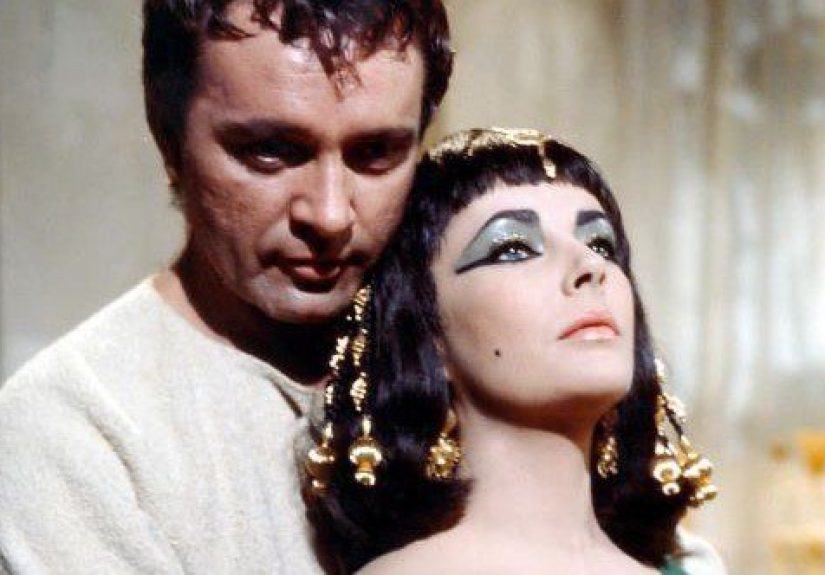
3) Who’s Afraid of Virginia Woolf? (1966): The Verbal Knife-Fight That Still Cuts (Richard Burton & Elizabeth Taylor)
The scene
Over the course of a long night, a couple turns conversation into combat. Jokes become traps. Pet names become insults. The room fills with words that sound like they’ve been sharpened for years.
Why it hits
This film’s most powerful moments aren’t about who “wins” the argumentthey’re about what gets exposed while they’re trying to win. The scene (and really, the whole pressure-cooker evening) shows how people can use humor as a weapon, performance as armor, and cruelty as a way to avoid grief. It’s exhausting in the way real conflict is exhausting: not cathartic, just revealing.
The spouse-factor
Burton and Taylor don’t play tension; they inhabit it. The emotional bruises feel familiar, not theatrical. Their marriage gave the performances a sense of risklike the actors weren’t just “acting mad,” they were daring the scene to go further.
4) Key Largo (1948): The Storm-Season Stare-Down (Humphrey Bogart & Lauren Bacall)
The scene
In a hotel trapped by a hurricane and criminal pressure, two characters share a quiet exchange that’s equal parts longing and realism. It’s not flashyjust two people trying to decide what kind of courage they can afford.
Why it hits
Classic Hollywood often hides emotion under polish, but this scene lets it seep through the cracks. Bogart’s restraint feels like someone holding back an entire life. Bacall’s presence is steady, intelligent, and quietly disappointed in the worldlike she’s seen the heroic version of the story and doesn’t fully buy it anymore.
The spouse-factor
Their chemistry isn’t “sparks flying”; it’s gravity. They look at each other with a comfort that suggests private jokes, shared disappointment, and a bond that doesn’t need speeches. It’s the kind of connection that makes a simple glance feel like a paragraph.
5) Mr. & Mrs. Bridge (1990): The Quietest Kind of Heartbreak (Paul Newman & Joanne Woodward)
The scene
A married couple sits inside a carefully maintained lifenice home, good manners, socially approved everythingand still manages to feel miles apart. In one of the film’s most affecting exchanges, the pain isn’t shouted. It’s politely swallowed.
Why it hits
This is power through understatement. The scene lands because it captures a specific kind of loneliness: being surrounded by people, schedules, and “proper behavior,” yet starving for emotional language. The most devastating moments are the ones where someone almost speaks honestlyand then chooses tradition instead.
The spouse-factor
Newman and Woodward were famous for big-screen charisma, but here they use something rarer: familiarity as friction. Their long marriage helps sell the idea that these two have had the same conversation for decadesjust with different words each time.
6) Creation (2009): Faith, Science, and a Marriage Under Pressure (Paul Bettany & Jennifer Connelly)
The scene
Charles Darwin and his wife, Emma, talk through the unglamorous core of partnership: grief, fear, health worries, and the question of what you do when the truth you’re chasing might cost you your peace.
Why it hits
The film’s strongest moments are intimate rather than grand. A conversation about belief becomes a conversation about family. A disagreement about ideas becomes a disagreement about identity. The scene feels powerful because both people are right in a human way: one needs honesty, the other needs meaningand neither need is a villain.
The spouse-factor
Bettany and Connelly play the scene like two people who love each other but don’t have matching maps. That’s the secret sauce: real partnerships aren’t built on constant agreement; they’re built on the ability to stay in the room when agreement fails.
7) Loving Pablo (2017): The Moment Love Stops Feeling Like Protection (Javier Bardem & Penélope Cruz)
The scene
A relationship that once felt thrilling turns claustrophobic. In a pivotal confrontation, the glamour drains away and what’s left is a harsh calculation: what does it cost to be close to a powerful, dangerous person?
Why it hits
The power here comes from contrast. The scene takes the language of romanceattention, devotion, “we’re in this together”and shows how easily it can be repurposed as control. Cruz plays the dawning realization with clarity: the point isn’t “I’m scared,” it’s “I can’t pretend this is normal anymore.”
The spouse-factor
Bardem and Cruz have a grounded, lived-in rhythm even when the story is volatile. Their scenes feel less like two actors performing romance and more like two adults negotiating boundariesone of the hardest, most real things people do.
8) By the Sea (2015): Grief Behind Closed Doors (Brad Pitt & Angelina Jolie)
The scene
In a seaside hotel, a couple circles each other through silence, resentment, and half-finished sentences. The film’s most powerful moments arrive when the characters finally stop performing “fine” and admit what’s broken.
Why it hits
This isn’t a fast, plotty argument; it’s a slow burn of emotional fatigue. The scene lands because it shows how distance is created: not by one huge betrayal, but by thousands of tiny withdrawalstone, timing, avoidance, pride. The tension is not “Will they explode?” but “Will they ever be honest?”
The spouse-factor
When real-life spouses play a failing relationship, viewers bring extra curiosity to the screen (fair or not). But the real impact is simpler: Pitt and Jolie commit to discomfort. They let the scene sit in awkwardness long enough for it to feel true.
9) Dream House (2011): The “We’re Not Safe” Family Huddle (Daniel Craig & Rachel Weisz)
The scene
A couple tries to hold their family together while their home feels increasingly unstable. In one of the film’s most affecting passages, fear becomes strangely domestic: whispered plans, protective gestures, and the fragile hope that love can outmuscle panic.
Why it hits
Thrillers often go bigrunning, screaming, plot twists doing backflips. This scene works because it goes small. It treats marriage as a practical alliance: two people deciding who does what, how to protect their children, and how to stay calm when calm feels impossible.
The spouse-factor
Craig and Weisz share an ease that makes the family unit believable. The scene has that “we’ve rehearsed emergencies before” energylike the couple already trusts the other person to grab the keys, lock the door, and keep it together.
10) Opening Night (1977): When “Acting” Turns Into a Personal Reckoning (John Cassavetes & Gena Rowlands)
The scene
A stage actress spirals during rehearsals, and her directorpart coach, part enabler, part emotional collisiontries to pull a performance out of chaos. In their sharpest exchange, the lines between role and reality blur until nobody knows what’s being performed and what’s being confessed.
Why it hits
This is raw, uncomfortable power: the scene doesn’t aim for polish, it aims for truth. The director wants control. The actress wants escape. The scene becomes a battle over identitywho she is, who she’s allowed to be, and who gets to decide. It’s compelling because it refuses to simplify the problem into “she’s fine” or “she’s broken.” It shows the messy middle where artistry and vulnerability overlap.
The spouse-factor
Cassavetes and Rowlands move like partners who know each other’s timing the way musicians know rhythm. When the scene swerves, it feels like it’s swerving on purpose. That’s trustand trust is what lets a performance go to the edge without tipping into fake.
What Makes Movie Scenes Between Real-Life Spouses So Powerful?
Let’s be honest: the internet sometimes treats married co-stars like a guaranteed shortcut to “real.” But the best scenes on this list aren’t powerful because the actors share a last name (or once did). They’re powerful because real-life partnership can quietly add a few advantages:
- Comfort with silence: Couples often communicate without constant talking. On-screen, that can turn a pause into a punchlineor a gut-punch.
- Permission to be unflattering: Spouses can risk looking messy, petty, defensive, tiredbecause the relationship (and the craft) can handle it.
- Micro-history in the eyes: A glance can carry years. When actors know each other deeply, they can “load” a moment without overplaying it.
- Better conflict choreography: Great screen arguments have rhythm. Couples who’ve navigated real disagreements often understand timing: when to push, when to stop, when to soften.
Still, a crucial note: marriage doesn’t automatically create great art. Plenty of spouses share the screen and feel perfectly finelike two talented people doing their jobs. The magic happens when the project earns intimacy and the actors choose to go there.
of Viewer Experiences: Watching Married Co-Stars Hit Different
If you’ve ever watched a scene and thought, “That felt too real,” you’re not alone. Seeing actors married in real life share an emotionally intense moment can create a strange double-vision experience: you’re watching characters, but your brain keeps whispering, “Yes, but also… spouses.” It’s not gossipmore like a natural curiosity about how two people with a shared life translate that closeness into art.
One common experience is noticing how small gestures suddenly feel enormous. When Emily Blunt and John Krasinski communicate with minimal sound in A Quiet Place, you may catch yourself reading their body language the way you read people you actually knowshoulders, breath, posture, the tiny tilt of the head that says “I’m with you.” It can feel less like “movie acting” and more like eavesdropping on a private language.
Another experience is the discomfort of recognition. Scenes like the late-night conversation in Eyes Wide Shut or the slow erosion in By the Sea can trigger that awkward “oh no” laughthe one you do when a scene nails a real human behavior you’ve seen before. Not because you’re happy about it, but because it’s painfully accurate: defensiveness disguised as logic, hurt disguised as jokes, silence disguised as maturity. When married co-stars pull that off, it can feel like the film is holding up a mirror and refusing to let you look away.
There’s also a specific kind of tension that comes from trusting the performers. When Paul Newman and Joanne Woodward play a restrained, traditional couple in Mr. & Mrs. Bridge, the emotional chill lands harder because you sense the actors are choosing restraint, not lacking emotion. The viewer experience becomes: “They could turn the volume up at any second… and the fact that they don’t is the point.”
Sometimes the experience is pure fascination with craft. In Opening Night, Cassavetes and Rowlands make the boundary between “role” and “self” feel porous. Watching spouses do that can make you appreciate how acting isn’t just pretendingit’s precision. It’s deciding what to reveal, what to hide, and how long to stay inside discomfort without losing control of the scene.
Finally, there’s the emotional aftertaste. Powerful scenes between real-life spouses often linger because they mix two truths: the fictional truth of the story and the human truth of partnershipmessy, tender, complicated, resilient. You finish the scene thinking not only about the characters, but about the quiet wonder that two people can build a life together and still surprise each other on camera. That’s not just chemistry. That’s historywith good lighting.
Final Takeaway
The best movie scenes between real-life spouses don’t rely on celebrity trivia. They rely on something sturdier: a willingness to be emotionally specific. Whether it’s silent teamwork, brutal honesty, or the ache of distance, these scenes work because the actors treat marriage not as a gimmick, but as a complex human factone that can make a single look feel like a whole backstory.