Table of Contents >> Show >> Hide
- What Makes a Dish Garden Work (and Not Turn into a Swamp)
- Quick Setup Checklist (So You Don’t Have to Repot Everything Twice)
- 10 Dish Garden Ideas That Bring the Outdoors In
- 1) The Classic Succulent Bowl Centerpiece
- 2) Open Desert Dish Garden (Cactus + Friends)
- 3) Mini Woodland Dish Garden (Moss + Fern Look, Without the Forest Lease)
- 4) “Rainy Day” Tropical Foliage Dish Garden
- 5) Indoor Herb Dish Garden for a Sunny Kitchen
- 6) A Mini Fairy Garden Dish (Whimsy, but Make It Plant-Smart)
- 7) The “Monochrome Moment” Dish Garden (One Color, Many Textures)
- 8) “Desert Meets Modern” Minimalist Stone Bowl
- 9) The “Propagation Party” Dish Garden (Cuttings That Become Decor)
- 10) The “Seasonal Swap” Dish Garden (Same Container, New Mood)
- Care Tips That Save Dish Gardens (and Your Reputation as a Plant Parent)
- of Real-World Dish Garden Experience (Things People Learn the Fun Way)
- SEO Tags
A dish garden is basically the “group chat” of the plant world: multiple plants sharing one shallow container,
making your home look like it has its life together. Done right, it’s low-fuss, high-style, and gives you a
tabletop slice of the outdoorswithout the bugs, sunburn, or surprise rainstorm.
The trick is simple (but important): choose plants that actually like the same conditions. If you pair a thirsty
fern with a desert cactus, somebody’s going to have a bad week. In this guide, you’ll get 10 dish garden ideas
from succulent bowls to mini woodland scenesplus practical setup and care tips so your masterpiece doesn’t turn
into “compost chic.”
What Makes a Dish Garden Work (and Not Turn into a Swamp)
1) Match plants by light + water needs
Think in “plant neighborhoods.” Succulents want bright light and dry soil. Moss and ferns prefer moisture and
gentler light. Tropical foliage likes evenly moist soil and warmth. When you keep neighbors compatible, everyone
thrivesand you don’t have to memorize 12 different watering schedules.
2) Pick the right container (drainage is your best friend)
A shallow bowl is classic, but any wide container can work. If it has a drainage hole, your odds of success jump
dramatically. If it doesn’t, you can still do ityou just need to treat watering like seasoning: you can add more,
but you can’t take it out once you’ve overdone it.
3) Use a soil mix that fits the plants
Most dish gardens fail for one reason: soil that holds too much water. Use cactus/succulent mix for desert-style
gardens, and a light potting mix for tropical foliage. For humidity-loving terrarium-style gardens, you want a mix
that holds some moisture but still drains well.
4) Plan your layout before you plant
Do a quick “dry fit.” Set plants (still in their nursery pots) in the empty container and rearrange until it looks
balanced. Taller plants usually go toward the back/center, and trailing plants can spill over the edge for that
effortlessly-styled look (that took you 17 minutes and a deep sigh to achieve).
Quick Setup Checklist (So You Don’t Have to Repot Everything Twice)
- Container: shallow bowl, dish, wide pot, or glass vessel
- Drainage strategy: hole (ideal) or no-hole (requires extra care)
- Base layer (optional but helpful for no-hole containers): small gravel/pebbles
- Optional “freshness layer”: a thin sprinkle of activated charcoal (especially in glass containers)
- Soil: succulent/cactus mix OR light potting mix (depending on plants)
- Tools: spoon/trowel, scissors, chopstick (great for nudging soil into corners), spray bottle (for moss gardens)
- Decor (optional): stones, bark, mini figurines, driftwood, sand, tiny trellis
10 Dish Garden Ideas That Bring the Outdoors In
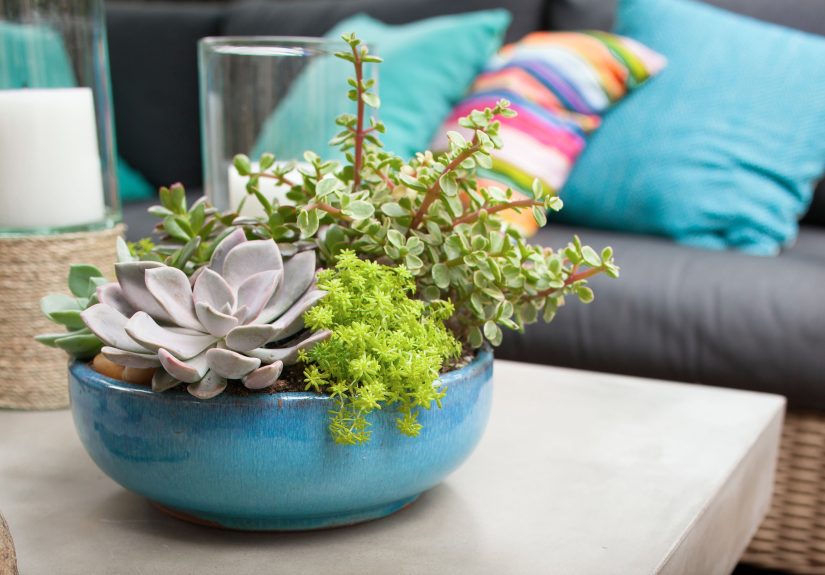
1) The Classic Succulent Bowl Centerpiece
Vibe: desert chic, “I drink water but my plants don’t.”
Plants to try: echeveria rosettes, haworthia, small sedum, crassula (jade), mini aloe, gasteria.
Container: shallow bowl with drainage (terracotta is a winner).
Use a gritty succulent mix and leave a little space between plants so air can circulate. Top-dress with small gravel
to keep leaves from sitting on damp soil. Place in bright light (a sunny window is ideal), rotate weekly for even growth,
and water only when the soil is fully dry. If you’re unsure, wait another daysucculents prefer neglect over soggy attention.
2) Open Desert Dish Garden (Cactus + Friends)
Vibe: tiny Arizona road trip, minus the sunburn.
Plants to try: small cactus varieties, haworthia, gasteria, lithops (with caution), compact euphorbia (handle carefully).
Pro tip: keep it openno lids, no closed terrariums.
Stick to plants that truly like dry conditions, and don’t mix in moisture-lovers “because they’re cute.”
Add rocks for a natural desert look, and use sand sparingly (sand alone can compactgrit is better than beach vibes here).
Water lightly and infrequently; too much moisture is the fast lane to rot.
3) Mini Woodland Dish Garden (Moss + Fern Look, Without the Forest Lease)
Vibe: shady trail stroll in a bowl.
Plants to try: sheet moss (as a top layer), small fern varieties (like button fern), baby tears, fittonia (nerve plant).
Light: bright indirect to medium light.
This style shines in a low, wide container. Use a light potting mix that holds some moisture, and mist moss to keep it plush.
Add bark chips or small stones as “paths.” Keep soil evenly moistnot waterloggedand avoid hot direct sun that can crisp delicate foliage.
4) “Rainy Day” Tropical Foliage Dish Garden
Vibe: living-room jungle, politely scaled for a coffee table.
Plants to try: fittonia, small peperomia, compact pothos cuttings, dwarf dracaena, small philodendron varieties (compact types).
Design move: mix leaf shapesround, striped, speckledfor instant texture.
Choose plants that like similar moisture levels and indoor temperatures. A dish garden like this prefers consistent care:
water when the top inch of soil feels dry, and keep it away from heat vents. Add a little piece of driftwood or a stone cluster
to make it look like a tiny landscape rather than “a bunch of plants I panic-bought.”
5) Indoor Herb Dish Garden for a Sunny Kitchen
Vibe: “I cook” energy (even if you mostly reheat).
Plants to try: thyme, oregano, chives, parsley (note: basil is fussier indoors).
Light: the brightest window you have, ideally 6+ hours of sun.
Herbs want strong light and decent airflow. Use a container with drainage and don’t crowd plants too tightly.
Snip often to keep herbs bushy. If your kitchen is more “mood lighting” than sunlight, a small grow light can turn
this from a hopeful idea into an actually-harvesting situation.
6) A Mini Fairy Garden Dish (Whimsy, but Make It Plant-Smart)
Vibe: storybook cute, surprisingly calming.
Plants to try: baby tears, small mosses, fittonia, spike moss, compact groundcovers.
Decor: tiny house, pebble “river,” twig “bench.”
Keep the scale consistent: small-leaf plants sell the illusion. If you add figurines, place them after planting and
watering so they don’t end up face-down in soil like a tiny soap-opera plot twist. Water gently (a squeeze bottle helps),
and keep it in bright indirect light to avoid algae or mold outbreaks.
7) The “Monochrome Moment” Dish Garden (One Color, Many Textures)
Vibe: designer look with minimal effort.
How it works: pick a color themesilver-green, deep green, or burgundyand combine plants with different shapes.
For silver-green: try a mix of small succulents with dusty leaves and pale stones. For deep green: use compact tropical foliage and moss.
The magic is contrast: rosettes + spikes + trailing forms. Keep care consistent by sticking to one plant “climate” (all succulents or all tropical),
so your color story doesn’t become a care nightmare.
8) “Desert Meets Modern” Minimalist Stone Bowl
Vibe: clean lines, calm brain.
Plants to try: one statement succulent (like a larger echeveria or aloe) plus a few smaller companions.
Design rule: fewer plants, more negative space.
This is the dish garden equivalent of a capsule wardrobe. Use a neutral bowl, top-dress with fine gravel, and keep the arrangement airy.
It looks intentionaland it’s easier to maintain because you’re not cramming 14 plants into a container that can barely handle three.
9) The “Propagation Party” Dish Garden (Cuttings That Become Decor)
Vibe: budget-friendly plant expansion with a side of bragging rights.
Plants to try: pothos cuttings, peperomia cuttings, small philodendron cuttings, succulent offsets (species-dependent).
Best for: people who like tweaking and watching progress.
Use a shallow container with drainage and a light potting mix. Group similar cuttings together so you can water consistently.
Label a couple if you’re experimentingfuture you will not remember which tiny leaf is which, and future you deserves kindness.
10) The “Seasonal Swap” Dish Garden (Same Container, New Mood)
Vibe: refresh your space without redecorating your entire personality.
How it works: keep one great container, then rotate themes through the year.
Spring: moss + pastel-toned foliage plants. Summer: herbs or bright succulents. Fall: deeper foliage tones, tiny pumpkins (decor onlyplease don’t bury snacks).
Winter: minimalist succulent bowl with stones and a clean palette. This approach saves money and keeps you from collecting 47 containers “for a future project.”
Care Tips That Save Dish Gardens (and Your Reputation as a Plant Parent)
Watering: the #1 make-or-break habit
- Succulent dish gardens: water deeply only when soil is completely dry.
- Tropical foliage dish gardens: water when the top inch dries; don’t leave soil soggy.
- Moss/woodland dish gardens: keep lightly moist; mist moss as needed.
Light: enough to grow, not enough to fry
Bright indirect light works for most non-succulent dish gardens. Succulents need stronger lightoften some direct sun.
If plants stretch (leggy growth) or lose color, it’s usually a light issue, not a “they’re bored” issue.
When your container has no drainage hole
You can still succeedjust water sparingly and slowly. Consider a thin gravel layer at the bottom and be extra cautious:
standing water collects out of sight and invites root rot. If you notice persistent fungus gnats, sour smells, or mushy stems,
scale back watering and consider repotting into a container with drainage.
Grooming + maintenance
- Trim fast growers so they don’t shade slower plants.
- Remove yellow leaves quicklythey’re basically a welcome mat for pests and mold.
- Rotate the container weekly for even light exposure.
- Use a soft brush to remove dust from leaves (yes, plants get dusty toojust like your shelves).
of Real-World Dish Garden Experience (Things People Learn the Fun Way)
Dish gardens have a sneaky way of teaching you about patience, observation, and the fact that “just a splash more”
is how most plant tragedies begin. One of the most common first-time experiences is the confidence spike:
you plant everything, it looks incredible, and you start thinking you should probably open a boutique. Then week two hits,
and one plant is thriving, one is sulking, and one is doing an impression of a sad noodle. That’s when you learn the
biggest dish garden lesson: plants don’t care about your aestheticthey care about their conditions.
A second classic experience is the “no-drainage container temptation.” Decorative bowls are gorgeous, and they photograph
like they’re on a magazine cover. But if there’s no drainage hole, watering becomes a precision sport. People often learn
to switch from pouring to measured wateringusing a small cup, squeeze bottle, or even a turkey baster
(the most glamorous tool in indoor gardening). When you water slowly and stop early, your dish garden stays fresh longer,
and you’re not left wondering why the center plant looks suspiciously mushy.
Then there’s the “light reality check.” Indoors, light is rarely as bright as we think it isespecially in winter.
Many dish gardeners discover that a “bright room” and “bright light” are not the same thing. Succulents will tell you
first by stretching toward the window like they’re trying to overhear gossip outside. Tropical foliage might survive,
but it won’t look as lush. This is where small upgradeslike moving the garden closer to a window or adding a compact
grow lightsuddenly feel like wizardry.
Another real-world moment: you learn to embrace editing. A dish garden isn’t a “set it and forget it” sculpture; it’s
a living arrangement. Fast growers will crowd out the slow-and-steady plants if you let them. People who keep dish gardens
long-term often treat them like a haircut: a quick trim here, a tidy leaf removal there, and suddenly the whole thing looks
intentional again. It’s surprisingly satisfyinglike cleaning your kitchen, but greener.
Finally, the best dish garden experience is the one you didn’t plan: noticing how it changes your space. Even a small
bowl of plants can make a desk feel calmer, a kitchen feel warmer, and a living room feel more “alive.” You start catching
yourself checking new leaves, adjusting a pebble path, or swapping a plant that never really loved that spot. Over time,
your dish garden becomes less of a decoration and more of a tiny indoor seasonsomething you subtly tune as your home
(and your mood) shifts.